
Have you ever watched someone’s facial expression the first time they see a surfer on an eFoil rise out of the water? You can almost see their mental gearbox scratching and slipping like someone who never learned to drive stick. And, even you probably also think some sorcery is involved. But fear not; no magic rituals were involved, just some magical science.
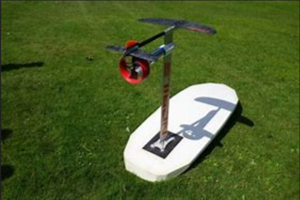
An electric hydrofoil, or “eFoil,” is a board that has an electrically powered propeller attached to a foil or wing below the board. Much like an airplane wing, the foil causes a pressure difference which creates lift, and when the board reaches higher speeds, the board starts to “fly” over water.
A few years ago, many people wrote of the eFoil as a novelty that would probably come and go pretty quickly. However, fast forward to today, and eFoils have become increasingly popular, and truthfully, it’s not all that hard to see why. Not only are they extremely fun to ride, but they’re easy to learn and can be used in almost any condition.
Table of Contents
How Does An eFoil Work?
If you enjoy chewing on interesting scientific titbits, the eFoil is bound to satisfy some of that craving. Surprisingly, the idea of the hydrofoil dates back further than 150 years, with the attempts dating back to 1861. Interestingly, that makes the idea older than the first invented airplane, although the airplane and the hydrofoil share the same basic principle.
When air moves around an airplane wing, the air at the top is compressed and sped up, compared to the air below, which is obstructed and slows down. The increase in speed at the top of the wing causes the pressure above the wing to drop, while the slower speed at the bottom increases pressure.
The higher pressure below pushes toward the lower pressure above, causing the wing to lift. The faster you go, the bigger the pressure gap and the more lift is generated.
In simple terms, the idea of a hydrofoil is to take a wing, and slap it onto the bottom of a boat, causing the boat’s hull to essentially fly above the water. And wouldn’t you know it, but the idea worked. In fact, there have even been hydrofoil warships in service in the US Navy.
So, someone thought, “If a foil can make a warship fly, then why not a surfboard?” Well, obviously, it can, but with one limitation: speed. For a foil to generate lift, it needs to reach a certain speed, which means that a surfboard with a foil underneath becomes extremely impractical because you can’t precisely paddle it up to speed.
This problem was resolved by adding an electric motor and propeller, which is controlled by the surfer with a handheld remote control, like an electric skateboard.
The Price Of eFoils: Is It Worth It?
Well, the technology of eFoils is impressive, but the same cannot exactly be said about their prices. Unfortunately, it doesn’t matter which angle you look at; eFoiling is a very expensive hobby.
Currently, the cheapest board on the market will still set you back around $6 000 plus shipping and tax. However, if you want the most popular brands like Lift and Fliteboard, be ready to spend upwards of $12 000. Ouch.
This steep price does pose the obvious question of whether it’s worth it, and the answer should be equally obvious; maybe.
If you live a stone’s throw away from the sea or a lake and have been saving up to get a water toy like an eFoil or a jetski, it’s absolutely worth it. Unlike a jetski, eFoils don’t become monotonous to ride. If you find yourself lacking a challenge, you can swap out the wing for a more difficult one that can allow you to do some epic tricks. Or you can learn to ride waves.
But, if you’re considering an eFoil to use on your once-a-year holiday, it’s better to rent one than to spend all that cash for something that will sit in storage.
Advantages And Challenges Of eFoils
There are several upsides to an eFoil. Firstly, they are reasonably easy to get the hang of, especially if you are an experienced surfer. In fact, even if you have zero surfing experience, they’re still reasonably forgiving. Sure, you will fall off in the beginning. A lot. But after an hour or so, you should start finding your feet.
They also have the advantage of handling nearly all conditions, from a mirror-smooth lake to curling surf. You also aren’t limited by your fitness, so you can even take a nice long cruise if the weather allows.
Furthermore, they are super-fast, with some models easily reaching speeds upward of 30 miles per hour.
However, it’s not all smooth sailing for eFoils. Their drawbacks include being battery-powered, which means that your ride time is limited to the size of the battery. That varies from about 40 minutes to a couple of hours, but there isn’t one that’ll last you the whole day. And if it dies on you when you’re far from home, you better be fit for the paddle back.
Speaking of that battery, while it is maritime-grade, the ocean will eventually corrode just about everything. So, you must prepare for regular, thorough cleaning and maintenance if you want your board to last.
Another drawback is the very thing that makes it awesome, which is the foil. Because it sits quite deep in the water, you can easily hit a rock or sandbank, which can cost quite a bit in repairs.
Finally, eFoils do have an inherent safety risk. The foils and props are thin and sharp, and people have had pretty severe cuts from them.
Some Tips For Riding An eFoil: Beginner To Advanced
To take a deep dive into riding an eFoil would be a whole topic on its own, but here are some top tips.
Tip 1: Always Wear Safety Gear
An important tip, especially for learner riders, is to always wear safety gear, including a helmet, lifejacket, etc. Not only will the lifejacket keep you above water when you fall off, but the gear will protect you from the knife-sharp wing of the board.
Tip 2: Learn On A Lake
We all want to go out and tackle the big surf on an eFoil, but it’s the worst place to learn. So instead, learn on a lake during calm weather so that you can focus more on riding and less on surviving. When you start off, use it as a bodyboard. As you get comfortable, you can work your way up to your knees and, eventually, your feet.
Tip 3: Launch It Upside Down In The Surf
This tip is for the intermediate riders ready to take the eFoil out in the surf zone for the first time. When you launch your board from the shore, turn it upside down so the foil is above the water.
This will help prevent an accident where a sneaky breaker pops up, rips the board from your hands, and slams your wing into the ground.
Tip 4: How To Jump Your eFoil
There’s no feeling quite like jumping your eFoil for the first time. Doing it is perhaps a little easier than you think, provided you have a reasonably powerful motor. Before you start, ensure you have foot straps installed, as this will greatly help you.
Start by going forward at a medium speed, with your foil relatively deep. Then start increasing your speed slightly while shifting your weight forward. As soon as you are ready, shift your weight to the back foot and give your board full throttle. This should drive the nose of the board upward.
As the board leaves the water, keep your knees bent to pull the board up, and keep the throttle wide open for the landing. As you come down, you want to land on your back foot.
Conclusion
eFoils are essentially surfboards that have a hydrofoil wing underneath that causes lift and allows you to ride above the water. They are great fun and extremely versatile, but unfortunately, they are very expensive. They can also be more dangerous because of the sharp wing and propeller.

Luke Morris is an avid athlete and the driving force behind Surfhungry, a vibrant online platform dedicated to sharing the joy and passion of surfing and water sports with enthusiasts around the world. With a deep-rooted love for the ocean and a lifelong commitment to riding waves, Luke’s journey as a surfer has inspired him to create a community where like-minded individuals can come together to celebrate their shared passion.