Best Women’s Surf Camps for 2026

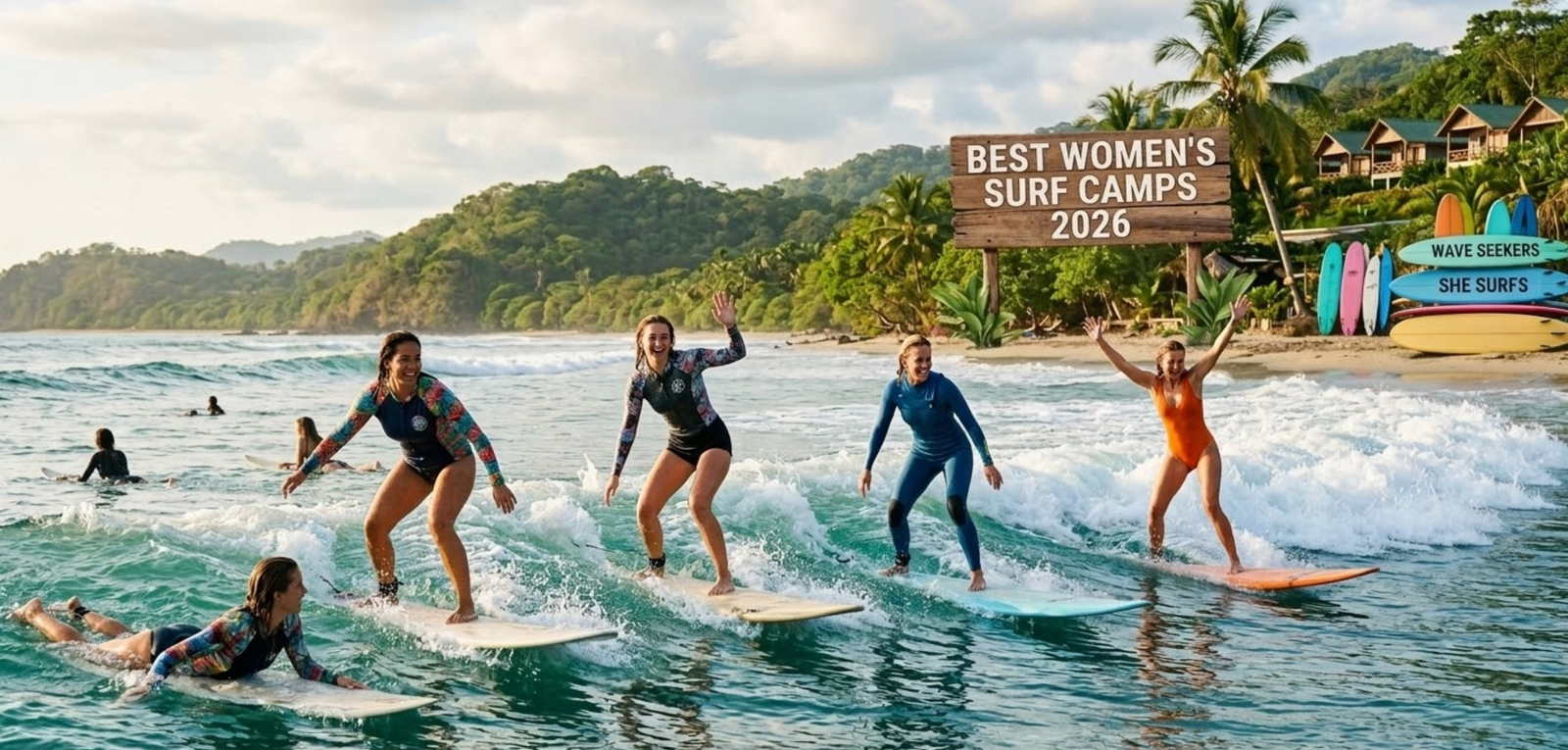
Looking for the best women’s surf camps in 2026? Nothing compares to the feeling of planning and looking forward to a surf travel adventure in a womens surf camp, one that brings women from all walks of life together to share their passion for surfing. These camps or women’s surf camps offer a supportive and safe environment to grow and learn their surfing skill and unwind. If you love surfing, whether you are a complete beginner or an expert, a womens surf camp provides you access to top-notch equipment and facilities to revamp your skill. Beyond surfing, these camps offer a range of mindfulness and wellness activities like yoga, spa, etc. Read on to learn more about the top women surf camp to visit in 2026. In this guide, we compare the top women’s surf camps worldwide — including pricing style, skill level suitability, accommodation type, sustainability focus, and wellness add-ons like yoga and spa experiences. You’ll also be able to request availability directly from selected surf camps through our partner form. Best Beginner Surf Camps for Women If you’re new to surfing, choosing the right camp can make or break your experience. The best women’s beginner surf camps focus on safe conditions, structured coaching, and confidence-building, rather than throwing you into challenging waves too quickly. Beginner-friendly camps typically offer: Soft, sandy beach breaks (ideal for learning) Small group coaching with high instructor attention Step-by-step progression (pop-up, paddling, wave timing) All-inclusive packages with equipment included Many women find that women-only surf camps are especially effective for beginners, as the environment tends to be more supportive, less intimidating, and focused on progression at your own pace. If you’re starting from scratch, prioritize coaching quality over destination. A good instructor in average waves will help you progress faster than perfect waves without guidance. Women’s Surf and Yoga Retreats For many travelers, the best women’s surf camps are no longer just about surfing—they’re about total mind-body reset. That’s where surf and yoga retreats come in. These camps combine daily surf sessions with yoga, mobility work, and wellness practices designed to: Improve balance and flexibility for surfing Speed up recovery between sessions Reduce stress and mental fatigue Create a more holistic travel experience In 2026, surf + yoga retreats are one of the fastest-growing segments in surf travel, especially among women looking for both adventure and wellness. Best Surf and Yoga Retreats from This List Soul & Surf (Portugal) – Strong focus on sustainability, mindfulness, and daily yoga integration Surf Goddess (Bali) – Luxury experience with spa treatments, yoga, and high-end accommodation Surf With Amigas (Costa Rica/Nicaragua) – Combines performance coaching with daily yoga and adventure activities Chica Brava (Nicaragua) – Offers a balanced mix of surfing, yoga, and relaxation If your goal is not just to improve your surfing—but to reset mentally and physically—these retreats offer significantly more value than standard surf camps. Top 8 Womens Surf Camps Catching a wave rejuvenates the mind and body. Whether it is a combination of physical activity or ocean therapy, surfing is an excellent way to unwind. Even if you need to learn how to surf, professional guides at these camps will educate you on how to catch your first wave. Below are some of the best women surf camps to consider visiting across the globe!   Surf Camps Location Best For Skill Level Yoga/Wellness Sustainability Focus Chica Brava Nicaragua Sisterhood & All-inclusive Beginner–Intermediate Yes Moderate Surf Diva California, USA Beginners Beginner Optional Low Surf With Amigas Nicaragua, Costa Rica, El Salvador Adventure + Coaching All Levels Yes Moderate Soul & Surf Portugal Eco-conscious surfers Beginner–Intermediate Strong focus High Las Olas Surfing Mexico Personalized coaching All Levels Yes Moderate Surf Goddess Bali Luxury camp Beginner–Advanced Strong Moderate Mahina Hawaii Oahu, Hawaii North Shore experience All Levels Yes Moderate Rapture Surfcamps Multi-country Social surf experience All Levels Optional Strong Chica Brava                                 Typical Price Range: $2,750 – $2,950+ per week The Villa: ~$2,750 per person Cloud Farm: ~$2,950 per person Room upgrades + private options cost more. Best Season: Dec – Apr (dry season)Notes: All-inclusive surf coaching, meals, yoga, massage, small groups. The Chica Brava is one of Nicaragua’s best women’s surf camps. Chica Brava camp, located on over 500 acres of tropical reserves, brings the sisterhood to the sea. It also comes with a large 1200 feet pool just above the bay. A trip to this women’s surf camp Nicaragua is an excellent way to deal with stress and relax. You can get an all-inclusive experience at this camp, including meals, accommodations, and surf lessons. The main focus of this csmp is to provide women with a supportive environment that is safe to learn and improve their surfing skills while connecting with other like-minded women. Furthermore, Chica Brava is a destination to get a peek at some wildlife, including Sloths, Monkeys, Bugs, and so much more. At Chica Brava, you will reconnect with nature. Other activities you can consider getting at Chica Brava include a yoga session or a massage wrapped in one package. Overall, Chica Brava is a destination many recommend, as it will truly get you feeling Zen at the end of the day. Request availability through our partner form below. Surf Diva                                 Typical Price Range: $230 – $350+ per clinic / weekend Women’s Surf Clinics: ~$230 per person for 2‑day clinic (intro) Best Season: Year-round, beach conditions vary seasonallyNotes: Not a traditional week‑long retreat; more focused on weekend clinics and lessons in La Jolla. Consider adding a related Hawaii/Maui Maui Surfer Girls one‑week retreat for fuller travel pricing. Next on our list of desirable destinations to add to your list is this Surf Diva. This women’s surf camp inCalifornia offers an immersive experience for any surfer looking to improve their skills. Based in La Jolla, California, this camp for women is … Read more

The Art Of Longboard Surfing: Tips

The Art of Longboard Surfing

Longboard surfing is an immensely popular surfing discipline that follows a different “rule set” to regular surfboarding. If you’re considering taking up the art of longboard surfing, this article provides some great tips for mastering this classic style. Longboard surfing is the oldest form of surfing, and although it’s experienced several changes over the millennia, the “heart” is the same. Longboarding lacks the aerial displays of other surfing but requires excellent balance, patience, practice, and a healthy respect for the ocean. Longboard surfboards often have a stigma of beginners’ boards; however, the unique discipline is immensely popular amongst new and experienced surfers alike. These boards allow you to surf in water other surfers can’t while looking elegant and stylish on the waves. Below we’ll look at how to perfect your techniques for longboard surfing to show short-boarders what it’s all about. What Is Longboard Surfing? Although longboarding and regular surfing share many similarities, longboarding has a deep-set history and an entirely different “feel.” The movements are elegant, the pace is slow, the tricks involve less flipping and zigzagging around the wave and more fancy footwork, and the image is immaculate. Longboard surfing (as the name implies) involves riding waves on a longer and (usually) wider surfboard than those used in competitions. Longboards are surfboards over 8′, but most longboards start at 9′ and reach 12′. However, there are some 14′ boards. Longboards usually have rounded noses. One of the best ways to explain longboard surfing to a newcomer is that it’s like dancing with the waves (as opposed to other surfing, which is like attacking the waves). Unlike shortboard surfers, longboarders are at home in gentle swells (between 1 and 3′), in water that is ankle-deep to the swells at the back. Why Would You Use A Longboard Surfboard? Longboarding focuses on a sustained ride, gracefully gliding along the wave. At the same time, shorter surfboards (like thrusters and fish) are better suited to quick turns, higher speeds, flips, and other aerial maneuvers. Thanks to their length, longboards are easier to paddle and balance on, making them ideal for beginner surfers trying to learn the tricks of the trade. However, longboard surfing is not limited to beginners. Many riders who prefer the “soul surfing” experience stick with longboarding, which has its surfing subculture. Longboards are also ideal for calm water conditions when the swell is too small for shorter boards. How to Choose the Right Longboard Surfboard The first step to becoming a longboard surfer is to select the correct board. An important value when choosing a surfboard is its volume (measured in liters) which is a product of the board’s length, width, and height (i.e., if you filled up the board, how much liquid it could hold). Longboards are usually in the range of 50 to 100 L. Aside from the physical dimensions, there are different longboard types on the market, each designed to meet a specific goal, and choosing can be tricky as they don’t perform in the same way. The Different Longboard Surfboard Types There are two main types of longboard surfboards, the nose rider/classic longboard and the performance longboard (there are also a couple of hybrid surfboards). The type of longboard you choose depends on what you want to surf, the conditions you are most often faced with, your physical build, and your experience level. Classic, Single Fin Longboards These are the traditional longboards. They are ideal for calmer water, where the swell is small to average-sized. These boards are fantastic for all skill levels, and while you won’t perform any aerial maneuvers, you’ll cross-step, nose-ride, hang, and “dance” across the board. They are incredibly stable and are the easiest boards to catch waves on, thanks to their rounded nose, wider bodies, flatter curves (rocker), rounded rails, and greater volume. The single-fin design is ideal for holding your course and “riding out” a wave. These boards are also called ”noserider longboards,” thanks to the technique of walking to the front and standing on the surfboard’s nose. Performance Longboards Performance longboards differ from their traditional counterparts in their fin setup. While traditional logs (longboards) have a single fin, performance longboards have a “thruster” setup where three fins are arranged in a triangle “pointing” to the rear of the board (two lateral fins and a central fin further back). The thruster setup is the most commonly used fin arrangement because of its effectiveness and all-purpose use. These setups are ideal for maximizing balance, control, and speed. Alternatively, performance longboards may have quad fins (two lateral fins on either side, one pair outside, the other slightly further back and inside) or a 2+1 setup (like a thruster, but the lateral fins are shorter). These longboards are narrower than nose riders and have a sharper curve (rocker). These boards are better suited to larger swells and steeper and faster waves thanks to their design. These boards cater to experienced surfers, as beginners will find them more challenging to ride. Hybrid Longboards A hybrid surfboard borrows elements from other boards. Some examples of hybrid longboards include: The Gun The gun is a surfboard adaptation with a pointed nose and a narrower body than traditional longboards. Between 6 and 10′, these boards are for catching large waves (giving them the name “elephant gun” – the surfboard for hunting large waves). These boards require more skill than a traditional longboard but are faster, more maneuverable, and work better in bigger water. Most surfers won’t fully appreciate a gun’s potential, as they were designed to face the biggest waves. These boards are ideal for brave/crazy, experienced surfers who enjoy pushing themselves to the limit. Funboard/Malibu-Mini The funboard is a hybrid between a long and a shortboard. These boards have fantastic maneuverability, good balance and are easy to paddle. They are between 6’5” and 8’5” (just big enough to be considered longboards). Most have a rounded nose, a wide body, rounded square tails, and a thruster fin setup. These boards are slightly wider than … Read more

What Is Goofy Foot Surfing? | A Look at the Surfing Stance

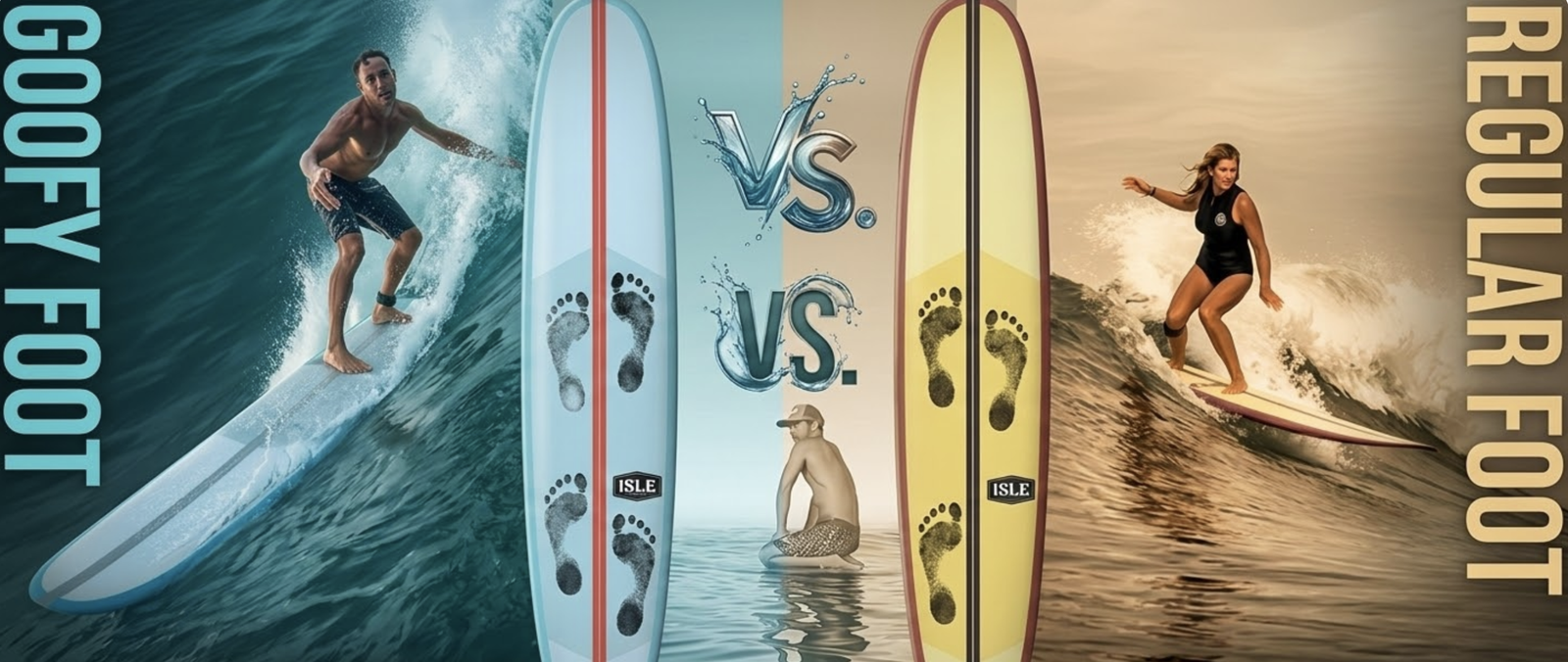
Every surfer falls into one of two categories: regular foot surfer and goofy foot surfer. You may have heard of goofy and regular. These are frequent terms in surfing and skating, windsurfing, snowboarding, and wakeboarding. Before you start learning how to surf, you need to figure out your surfing stance. This determines which foot is in front of the other when you stand up on your surfboard. There is no right or wrong stance – it all boils down to what makes you comfortable when you try to balance. Goofy foot surfing always intrigued beginners, primarily because of what it is called. This article is all about what goofy foot surfing is and everything you need to know about this stance. What Is Goofy Foot Surfing? Goofy foot surfing or goofy footed surfers refers to the stance where the surfer places his right foot forward and left foot back. A goofy foot surfer is less common than a regular foot surfer, in the same way, there are more right-handed people than left-handed. The goofy foot is one of the oldest terms in surfing that is still widely used as surfing jargon. But, where does the term “goofy” come from? Theory One: Disney’s “Hawaiian Holiday” Theory one relates it to Walt Disney’s 1937 animated film “Hawaiian Holiday.” The film featured Mickey Mouse, Minnie Mouse, Pluto, Goofy, Donald Duck, a crab, and a starfish. Goofy was in his surfing sessions, and he showed a right-foot forward stance before falling off into a horrendous wipeout. The hitch was – in the movie, Goofy also rides regularly with his left foot forward. Moreover, the term “goofy” originally coined from the word “goff” was by then a derogatory word meaning “fool,” “weird,” or “silly.” Perhaps, it was why Disney named his character “Goofy,” being a clumsy anthropomorphic dog. Theory Two: Desmond Muirhead’s “Surfing in Hawaii” Muirhead was an internationally renowned golf course designer. A former Hawaii resident around the 1960s, he was a frequent visitor in the following years and was described by different golf publications as the most innovative golf course architect. One of his projects was the five golf courses he designed in partnership with Jack Nicklaus. His controversial designs proved hypocritical criticisms from the world of golf and golf architecture. His visits back to Hawaii led him to fall in love with surfing. He took lessons and later on became a well-rounded surfer. After his first contact with Waikiki’s perfect waves, he felt like writing a book, so he published one entitled “Surfing in Hawaii.” In his book, the first-ever written reference to “goofy-footed surfers” can be read. In Chapter V, “The Beginner and the Philosophy of Surfing.”, page 51, it said; “People who put their right foot forward are called ‘goofy foots.’ Personally, I find this position the most comfortable.” Muirhead’s daughter brought the book back to life when it was republished on SurferToday.com. Looking at the timeline, Muirhead only started surfing around 1956. His book was published in 1962. This sequence makes it plausible that the expression “goofy-footed” has been in use before 1962. How To Find Out What Stance You Are? The simplest way to determine whether you are a regular-footed surfer or a goofy-footed surfer is to identify your dominant foot. The “Push Test”: Stand still and have someone gently push you from behind. Whichever foot you instinctively step forward with is likely your leading foot on a surfboard. Skateboard Test: Try riding a skateboard. The foot you place forward while skating will generally be the same when surfing. Comfort and Natural Movement: Above all, your surfing stance should feel natural and comfortable. If Goofy Foot feels right, then it’s your stance. Again: Left foot forward = regular foot surfing Right foot forward = goofy foot surfing Most right-handed people have their right foot as their dominant foot, too. The same goes with most left-handed people who have left as their dominant foot, as well. This is why most right-handed people have a regular foot-surfing stance, while most left-handed have a goofy foot-surfing stance. However, this won’t always be the case. As with most sporting activities, it may also rely on how comfortable you are. Some right-handed people prefer goofy foot surfing, and some left-handed prefer regular. Learning to Surf as a Goofy Footer Starting your surfing journey as a Goofy Footer can be a unique experience. While most surf instructors teach Regular Foot first, it’s important to stick with what feels right for you. Beginner Tips: Focus on your balance and foot placement early on. Practicing pop-ups (the motion of standing up on your board) can help you get comfortable with your Goofy Foot stance. Common Challenges: You may find certain waves or maneuvers more challenging due to the stance. However, with practice and persistence, these obstacles can be overcome. Adapting to Waves: Different waves may require slight adjustments in your stance and approach. Learning to read the waves and how they break will help you adapt your surfing style. Frontside and Backside Surfing Now that we are clear with the surfing stance, we need to understand the subsequent terms closely related to goofy foot and regular foot surfing – frontside and backside. These two terms relate to the direction your body faces when you ride a wave. Frontside This is when a surfer’s chest and toes are facing the wave. Most regular-footed surfers ride frontside on the waves that are breaking to their right. On the other hand, they ride backside on waves that are breaking to their left. Backside This is when a surfer’s back and heels are facing the wave. Most goofy foot surfers ride frontside on waves that are breaking to their left. They ride backside on waves that are breaking to their right. By and large, most surfers prefer surfing frontside to backside since it makes the ride feel more natural, especially when going down the line. As a result, learning how to surf the back side will be more difficult … Read more

Surfing Competitions: How Do They Actually Work? + Guide

Anything related to surfing is cool. The ocean is a given. Who wouldn’t agree that the ocean is cool, especially during warmer days?  Surf brands that market apparel, gear, and anything surf related are in and a lot of people are into them even when they don’t know how to surf. That is just how appealing surfing is to the world. With that said, I bet you would agree that surfing events and competitions aren’t the last on the list of cool things! They are fun to watch. They give us thrills and excitement. They connect us to our surfing heroes. To top it off, it just feels good to see people slay on the waters.  Surfing Competitions: How Do They Work? The world of surfing is fun. But, when it comes to competitions and events, it can be quite confusing. You would not want to look clueless the next time you attend a surfing event so we’re breaking it down for you.  After this, you will be ready to talk about heats, priorities, and wildcards like you really know what you are talking about. Not just ready but confident to understand and talk about it.  Rules and Regulations   As with a lot of competitions, surf ones work comparatively the same way – there are those big international events, then the national ones. Generally, there are heats that a surfer needs to hit to step to the next round. WSL (World Surf League) synchronizes the annual tour of pro surf competitions taking in men’s and women’s CT (Championship Tours), the QS (Qualifying Series), the Longboard Championships, the Junior Championships, the Big Wave Tour, and the XXL Big Wave Awards.  The rules are not too complicated although it is worth getting to understand as you watch the sport. Pretty much, these rules are in place to guarantee athletes’ safety, competition fairness, and more importantly, to encourage the best surfing experience in the field of live competition.    WSL basics are: Judging and points Rankings  Priority Interference Heat Restart  Doping and Drug Use Judging and Points Surfing events are composed of rounds that are made up of heat. Heat comprises two to four participants at a time – all coming from a pre-determined competition zone. They have between twenty to thirty minutes max to catch and ride the best waves possible.  These surfers should lock in their two highest-scoring waves – both out of likely 10 points for a possible 20-point heat total. A group of 5 judges will score each wave on a scale of 1 to 10. For each ride, both the highest and the lowest scores are discounted into which the rider will receive the average of all scores.  Scoring the waves will be based on the following elements: Commitment and level of difficulty Original and progressive maneuvers Arrangement of major maneuvers Variety of maneuvers Speed, power, and flow These elements are judged by the following scales:  0.0 – 1.9: Poor 2.0 – 3.9: Fair 4.0 – 5.9: Average 6.0 – 7.9: Good 8.0 – 10.0: Excellent Rankings   Each surfer gets points based on their individual performance. The better they perform, the more points they get. These points get accumulated from every tour. For instance, on CT, the surfer that gets 10,000 points places 1st, 8,000 points places 2nd, and so on.  These make up their CT Rankings. By the end of the year, the male and female surfers with the highest points get to the top of the rankings and become the WSL Champions.    Priority The unconditional right of way to catch any waves is given to the surfer with priority. Other surfers present in the heat can paddle and catch the same wave provided that they do not impede the scoring possibility of the surfer with priority.  Surfer loses priority once they snag a wave/or paddles for it but misses it. If two or more surfers are catching a wave, the first one to make it to the take-off zone gets the priority.  Interference During the heat where surfers can chase the same wave considering the rule of priority, the surfer who hampers the scoring potential of the one with priority will be awarded an interference penalty. Most of the time, it results in their heat score getting calculated only based on their best-scoring wave.  This is not applicable for BWT (Big Wave Tour) though. In this case, if a surfer causes double interferences during a heat, they will be barred from the heat.  Heat Restart Exclusive to BWT, the heat restart rule can be directed by a judge in case no one catches a wave by the first 10 minutes of heat.  Anti-Doping Rule It was just in 2012 when WSL instituted Anti-Doping Policy. This aims to cover the use of both performance-enhancing and illicit substances. The rule applies not just to the surfer but to their active support staff, too.  Events and Competitions   Surfing competitions started in a relaxed and lenient way. The first held surfing events were friendly races run by Hawaiian Outrigger Canoe Club and the then-existing local surfing club. Photography during such events tickled the fancy of a lot of surfers and it began attracting surfers from all around Corona del Mar and all the spots that held surfing events.  At present, more than 45 events are running every year around the world. They happen at both well-known and less popular surfing destinations for pro and amateur surfers. They have covered life and are sponsored by corporate and TV ads.  Championship Tours The WCT (World Championship Tour) is the peak-level circuit. This is where the likes of Kelly Slater, Julian Wilson, Filipe Toledo, Stephanie Gilmore, Coco Ho, and Carissa Moore belong. In WCT, the surfers’ goal is to bag the best-ranking position by the end of the year. Who makes it to the WCT? In the men’s division, they are:  The 22 highest-ranking surfers of the CT  The top 10 QS surfers get to enter the CT 2 … Read more

How Much Do Pro Surfers Make in 2026?

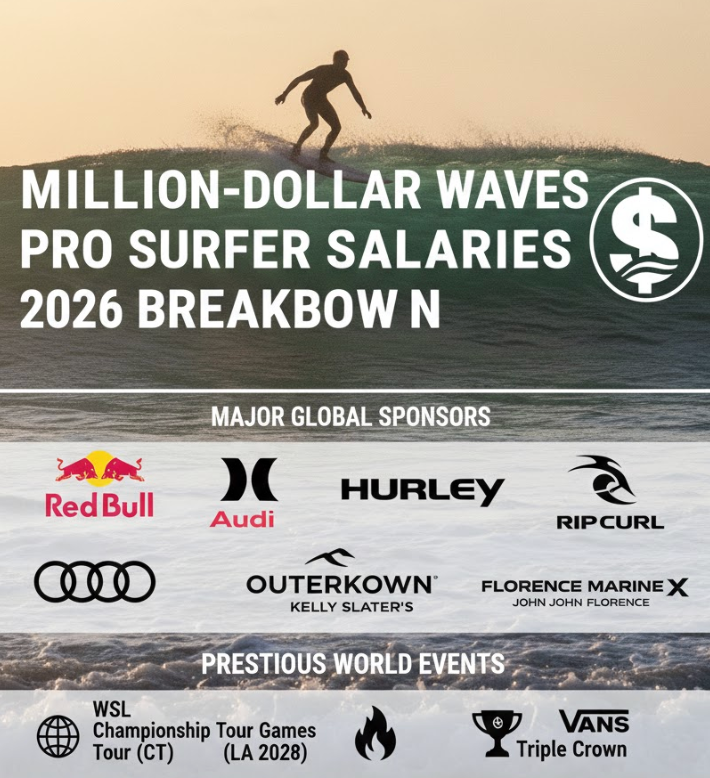
In 2026, a top-tier professional surfer on the World Surf League (WSL) Championship Tour earns an average of $350,000 to $600,000 USD annually. However, elite “megastars” like John John Florence and Gabriel Medina exceed $5 million+ through private brand ownership and global endorsements. Revenue is now split across four main pillars: WSL Prize Money, Endorsement Contracts, YouTube/Social Media Ad Sense, and Personal Brand Equity. Introduction Surfing is no longer just a recreational pastime; in 2026, it is a multi-billion dollar pillar of the global sports industry. Following the massive success of surfing in the 2024 Paris Olympics and the lead-up to LA 2028, the financial landscape for pro surfers has shifted from simple “stickers on boards” to complex multi-platform media deals. To most of us on the sidelines, professional surfing looks like surfers hanging out and waiting until their turn to paddle out and surf. We think pro surfers traveling to exotic destinations almost every month, appearing in surf magazines, and partying.  “This is the life,” you might say. Is it really so? Is it worth it? It may look like the “dream job.” After all, who doesn’t want to get paid to catch waves? But did you ever wonder how to be a pro surfer, how pro surfers make money and how much they earn a year? In this article, we’ll find out: How much do pro surfers make? Pro Surfing’s Highest Earners and Highest Net Worth 2021-2026 When Is a Surfer Considered a Pro Surfer? Popular Surfing Competitions   The 2026 Earnings Breakdown at a Glance Elite (Top 10 WSL): $2M – $6M+ USD/year Mid-Tier (Championship Tour): $350,000 – $750,000 USD/year Qualifying/Challenger Series: $20,000 – $60,000 USD/year (Often operating at a net loss) Free Surfers (Content Creators): $100,000 – $1M USD/year (Based on views/subscribers) How Do Surfers Get Paid? Pro surfers devote their lives not only to traveling and riding the waves but to day-to-day surf training, too. They wake up at 6 in the morning every day to train, be fit, and be ready for the next competition. But are they earning enough to compensate for their daily challenges? Pro surfers, especially those who are ranking, earn prize money, which can add up to a respectable sum when combined with sponsorship income.  Prize Money and Surf Contest Winnings In 2011 Owen Wright took home $300,000 in what is the biggest prize purse ever won by a professional surfer. The event was his first ever WCT event win held at Long Island, New York. Despite this hefty example, contest winnings make up the tiniest part of a pro surfer’s income. For instance, the Vans US Open of Surfing, one of the biggest surfing competitions, sponsored by the mega-company Vans, gives a first-place cash prize in the USD $20,000 range (with equal prize money for both male and female surfers).  That makes you wonder how many competitions does an average pro surfer wins if he earns about $250,000 to $400,000 a year? In reality, pro surfers don’t need to win massive amounts in competitions per year to be part of the top echelon of pro surfers.  In professional surfing, how brands regard you matters just as much if not more than the titles you bring home.  So, if a pro surfer doesn’t win the contest, how much money does he or she make? The cash prizes tend to dwindle after the top five contestants.  These numbers are why surfers tend to rely more on sponsorships to make it to the top of the highest-earning surfers’ list.  Sponsorships Aside from competition earnings, pro surfers earn money by representing brands. This representation bound by signed contracts and agreements is called sponsorship, much like how the brand Vans sponsors the Vans US Open, only the brand sponsors individual surfers who have been recognized as best of the best. The most lucrative sponsorship deal in history was a $30 million-dollar, 8-year deal given to Jon Jon Florence (pre Covid pandemic) by Hurley. This deal saw Jon Jon net $5,300,000 per year in sponsorship money alone! The brand sponsorship pays the pro surfers to bring publicity to the company. The pro surfers get to travel to different surfing locations and surf. They take video footage and photos of their surf trip that the brand uses to generate buzzworthy content.  Joel Parkinson, an Australian surfer who used to compete on the World Surf League, was reported to have signed a contract with Billabong in 2008 for $1.5 million over five years. Imagine what that would be worth today, in 2026! Best known for his unprecedented 11 world surfing championships, Kelly Slater made a sponsorship deal with Quiksilver for $2 million over five years, again, imagine what sort of money that would equate to today!  Products Another way pro surfers earn money is from products that bear their name. Australian magazine “Stab” reported Mick Fanning’s earnings of more than $450,000 in 2008 from the Reef sandal he helped design. Mikael Pikon makes money from the surfing underwear he designed with a well-known brand. Dane Reynolds also gets royalties from the surfboards that bore his signatures.  In 2026, surfers sign “Category Specific” deals. A pro might have separate contracts for: Technical Gear: (Wetsuits/Boards) Lifestyle/Luxury: (Audi, Breitling, or Ralph Lauren) Wellness/Tech: (Whoop, Apple Watch, or Athletic Greens) YouTube Earnings  Digital projects also add up to the earnings of pro surfers. Their footages uploaded on video sharing platforms like YouTube rake them salaries, too. So much that it can be surprisingly more than average competition winnings. Surfers who have high followings across social media, like Jamie O’Brien, can make money based off of their personal platforms even if they’re not competing. In 2026, a surfer with 500k subscribers can generate $15,000–$30,000 USD monthly in AdSense and integrated “collabs,” often out-earning surfers ranked in the Top 20 on the competitive tour. Personal Brand Equity (The “JJF” Model) The biggest shift in 2026 is surfers owning their own brands rather than just being “billboards.” John John Florence’s Florence Marine X and … Read more

Banzai Pipeline: Hawaii’s Iconic North Shore Wave

Banzai Pipeline

If there is a wave most filmed and photographed in the world, it is the Banzai Pipeline. Considered one of the most competitive waves on the planet, it is the birthplace of tube riding and the spot that gave name to an esteemed surfing contest – the Pipeline Masters. For over 50 years, Pipeline has been the beating heart of winter surfing in Hawaii. Every season, thousands of surfers travel to the North Shore for a chance to experience its world-class power, its perfect-but-deadly tubes, and its undeniable place in surf lore. What’s behind the most iconic waves in surfing history? Let’s unravel the mystery that wraps the barrelling waves and difficult conditions daredevils sought after. Below follows a complete breakdown of the history, geology, surf conditions, dangers, competitions, and FAQs surrounding Pipeline. Origin Of The Name – Banzai Pipeline Inspired by the ancient Samurai’s commitment to suicide over capture, the Japanese government during the Pacific Wars in 1941 taught its soldiers it was far more honorable to die than to surrender. The battle cry for this act – “Tennōheika Banzai,” which translates to “long live his majesty, the emperor,” knew far too well this cry and the attack that accompanied it. This battle cry was usually shortened to just “Banzai!” during those instances due to time constraints. What does it have to do with the world’s famous surf site, you ask? After the war, several surviving American soldiers settled in Hawaii. The GIs first named the long stretch of Oahu’s north shore as “Banzai Beach.” Apparently, it was because of the deadly-looking huge waves that regularly pound on its shore. Fast forward to 1961, two visiting Californian surfers – Phil Edwards and Mike Diffenderfer paddled out and caught what are widely acknowledged as the first-ever waves ever ridden at Banzai Beach. The following day, the two came back to the surf spot with Endless Summer director Bruce Brown. Brown captured the ensuing session. Most of what he got that day was included in his 1962 film Surfing Hollow Days. As they were leaving the beach, Diffenderfer spotted a series of gigantic concrete pipes used on a nearby building site. He noted their similarity to the waves he had just been surfing and suggested to Brown that the spot be named Pipeline. Geological Formation of Pipeline’s Reef  The power and shape of the Banzai Pipeline come from its unique volcanic reef structure, formed thousands of years ago during Oahu’s volcanic activity. The reef’s jagged edges and uneven coral shelves sit extremely close to the surface, forcing swells to rise quickly and pitch into perfect, hollow cylinders. Pipeline’s reef includes: A shallow plateau that causes the sudden, vertical takeoff Deep caverns that trap and release air, creating explosive boils A sharp drop-off immediately past the impact zone This geological setup makes Pipeline both unbelievably photogenic and notoriously dangerous. No machine-made wave pool can replicate the combination of power, precision, and raw chaos created by this reef. Banzai Pipeline – The Queen of All Waves Banzai Pipeline on the North Shore is the “happenin’” place to be. It has one of the most impressive and notorious waves in the world. This picture-perfect surfer’s dream is a reef break located in Hawaii, on Oahu’s North Shore. The break is situated off Ehukai Beach Park in Pupukea. The massive hollow tubes that break over a sharp and shallow reed is one of the most dangerous waves in the world – but is also one of the most sought after. The deadly waves of blue cylinders sent hundreds of athletes to hospital beds and even claimed the lives of several other riders. Some of those who braved the Pipeline but didn’t come out alive were Andy Chuda in 1989, Travis Mussleman in 2000, Moto Watanabe in 2004, Jon Mozo and Malik Joyeux in 2005, Joaquin Velila in 2007, and Joshua Nakata in 2008. Aside from being notoriously deadly, Banzai Pipeline also became a famous symbol of surfing thanks to its world-renowned competitions, surf film appearances, and all the surfers who earned their chops riding its waves. Under the Pipeline reefs are large caverns. Massive air bubbles rise from the caverns as the wave breaks over these reefs. These create the perfect wave crests that Banzai is famous for. Moreover, the steep takeoffs and the really heavy waves are tremendous rewards for the surfers who get it right. Banzai Pipeline has many faces that include a series of different reefs spaced out in gradually deeper parts of the ocean. The size of the incoming swell usually tells the reef that breaks. The breaks include for different waves: Pipeline or the First Reef – The left break of the Pipeline and the most popular and famous wave. This is usually the closest break to the shore. Backdoor Pipeline – This Pipeline is a right break that occurs when a north swell hits the first reef. The north swell triggers an A-frame at the peak. Then the left break starts to close out. Backdoor is the right break of this. Second Reef – This is further out in the ocean after the First Reef. It is a more profound wave that breaks when the swell gets more extensive. These waves reach somewhere around 12 feet and above. The Second Reef is famous for its more giant waves and longer walls. Third Reef – The most intimidating Pipeline break is the Third Reef. This wave only breaks in massive conditions, resulting in some colossal waves. The Third Reef is the most profound break. Best Conditions for Surfing Pipeline Pipeline is a left-hander that performs best under specific conditions: Best swell direction: west-northwest (WNW) northwest (NW) Best winds: light trade winds or offshore winds Best season: October to March (peak: November–February) Ideal wave size: Pipeline’s classic vision is the white lip throwing over into a perfectly cylindrical barrel—followed by a violent closeout over shallow reef if things go wrong. The best size of waves to surf the Pipeline is … Read more

Blonde Surfer Hair: Secrets Behind the Iconic Sun-Kissed Look and How to Get It Naturally

Blonde surfer hair with natural beach waves and sun-kissed golden highlights. Smiling woman on a beach at sunset, with surfboards in the background.

Surfer hair is more than just a beachy hairstyle — it’s a symbol of sun, sea, and laid-back coastal living. Whether you’re riding waves daily or just chasing the effortless “I live by the ocean” vibe, blonde surfer hair is a look many people want to achieve naturally. But what actually causes it — and how can you get that iconic sun-kissed look yourself? Surfers are often portrayed with sun-bleached blonde hair in movies and TV shows. For example, in Point Break, Patrick Swayze’s character sports the classic surfer look with naturally lightened hair — a style that’s become symbolic of surf culture. Blonde hair is so common among surfers that many people see it as the “standard” look. But what actually causes surfer hair to become blonde? Blonde surfer hair is a result of the sun’s rays bleaching it. Not only that, but when paired with the sun, the saltwater lightens the hair. The more time surfers – or anyone who enjoys the beach – spend in the sun, the lighter their hair becomes. Read more to fully comprehend why blonde surfer hair happens as we dig into the transformation process in detail. How Surfers Naturally Get Blonde Hair Surfers are exposed to the sun for long periods. The longer a person spends at the beach and in the water, the lighter their hair becomes naturally. The sun, saltwater, melanin, and keratin are essential components in the hair lightening process. Blonde surfer hair results from the sun and saltwater combined, affecting a human’s natural hair color. Your skin darkens after a day spent lounging on the beach, taking up the sun’s UV rays. Melanin production in the skin is stimulated by exposure to the sun. Melanin is the pigment in your skin, and the more melanin it generates, the darker you get. When it comes to your hair, though, the opposite is true. The sun’s rays tear down your hair’s melanin, causing it to generate less and less. The sun fades the natural color of your hair. Surfing men and women are the ones who spend the most time at the beach. Surfing is one activity that draws people to the beach and keeps them there for hours on end, day after day. The hair color changes from a darker to a lighter tone after these many hours of sun exposure. It’s unlikely that your dark brown or black hair, or even red hair, will turn blonde. Light brown hair may transition to blonde considerably more quickly. But, even after a lot of sun exposure, a dark-haired woman will keep her dark locks. How Saltwater Changes Hair Color Bleached Hair We’ve seen how the sun’s rays break down melanin in the hair, thereby bleaching out the color. There’s one more stage to going blonde, and that’s where surfing comes in. Surfers spend hours on the water, either floating, paddling, or being challenged by larger and larger waves. Wet hair is the natural state of hair in the water. On the other hand, damp ocean hair isn’t the same as wet tap water hair. Because it’s saltwater, the difference will affect hair color. Keratin is an elastin-like “protective protein.” Its function is to protect bodily parts where it is found, such as nails, skin, and hair. The salt in ocean water depletes your hair’s keratin supply, separating microscopic elastic keratin connections and exposing your hair to the salt directly. The salt opens up the cuticles in your hair, which depletes the keratin and moisture in your hair. The salt in the water gradually fades hair color. Consistent, regular surfing will eventually result in blonde surfer hair. The sun’s rays also clobber hair. The combination of saltwater and the sun’s rays will result in naturally lightened hair. Dry and Brittle Hair Salt is hygroscopic, which means it can absorb water from the air due to its positive ion charge. Salt, in a nutshell, draws water. When you spend time in the ocean, the salt takes moisture from your hair and scalp, leaving them dry. This causes dry, damaged, and frizzy hair over time. Surfers’ hair is stiff and straw-like rather than smooth and flowy, partly due to a lack of moisture. Saltwater Adds Minerals to Hair and the Scalp Magnesium, potassium, and selenium are among the salts and minerals found in the water. These minerals and vitamins are absorbed into the scalp over time, which can help to soothe itchy dry scalps and add body to the hair. DSW (deep seawater) and its possible health advantages were the subjects of one investigation. The study discovered that the DSW has beneficial impacts on skin disorders, among other things, due to its freezing temperatures, absence of photosynthesis, and high mineral count. Even though DSW is not the same as surface water, the data suggest that ocean water has beneficial benefits on the skin and, as a result, may help hair health. Do Surfing Season Matter in Hair? Surfers’ hair will be lighter in color in the summer than in the winter. One of the causes is the number of hours of sunlight each day is longer in the summer than in the winter. When the weather gets warmer, so does the temperature of the ocean. Surfers will spend more time in the summer than in the winter since the water is warmer. Surfers prefer oceans with many swells, and greater waves can be found at different times of the year. However, if the weather is beautiful, many surfers will go out anyhow, paddle around on their boards, and catch whatever waves come their way. When you’re out on the water, the sun and the salt combine to lighten your hair. Tips to Achieve the Blonde Surfer Look Since the late 1950s, surfer hair has been a fashion statement, and it’s still going strong. With songs like “Surfin’ USA,” “Catch a Wave,” and “Little Surfer Girl,” bands like The Beach Boys popularized the Southern California surfing lifestyle. Even though surfing had already become … Read more

Top 6 Best Surfing Wetsuits | Reviews (O’Neill, XCEL)

best surfing wetsuits

Surfing wetsuits have come a long way since Hugh Bradner invented the first neoprene version in 1952. What started as a simple layer of foamed rubber has evolved into high-performance gear built from advanced materials like limestone neoprene, recycled fabrics, and water-repellent coatings. Today’s wetsuits don’t just keep you warm — they boost buoyancy, improve paddling efficiency, and protect you from UV rays, abrasions, and even stings from marine life. Whether you’re chasing summer swells or braving icy winter waves, the right wetsuit can dramatically improve your comfort, safety, and performance in the water.   Choosing the Right Wetsuit Thickness Wetsuit thickness is usually measured in millimeters (mm), with two or three numbers indicating the neoprene thickness across different parts of the suit. The first number refers to the torso (for warmth), and the second or third to the limbs (for flexibility). 1–2mm: Best for tropical climates and water above 70°F (21°C). Great for summer surf sessions. 3/2mm: The most versatile choice for spring and autumn waters ranging from 56–68°F (13–20°C). 4/3mm – 5/4mm: Designed for colder waters below 55°F (12°C) with added insulation. 6/5mm+: Extreme cold-water suits often with integrated hoods, gloves, and boots. Always balance warmth and flexibility — thicker suits are warmer but slightly restrict movement, while thinner suits offer more freedom but less insulation.   Best Surfing Wetsuits With the wide range of surfing wetsuits in the market, it helps to know the factors to consider before picking one. But, the most helpful is when someone narrows down your choices for you. And, that’s what we are here for. The following surfing wetsuits were carefully selected based on the factors listed above, combined with our thoughts regarding the brand, user reviews, and price tag. O’Neill Men’s 3/2mm Full Surfing Wetsuit Seavenger Navigator 3mm Neoprene Wetsuit XCEL Drylock X 5/4mm Hooded Wetsuit Quiksilver Men’s 3/2mm Full Flatlock Wetsuit O’Neill Hyperfreak 4/3mm Comp Zipless Full Wetsuit Rip Curl Dawn Patrol Back Zip 3/2 Wetsuit   #1. O’Neill Men’s 3/2mm Full Surfing Wetsuit – Best Entry Level Wetsuit O’Neill has become not just a brand but a reputable institution when it comes to wetsuits. With their history founded in innovation, functionality, and value, it is no surprise that their brand achieved success. Their achievement was not an easy recipe. It stemmed from their pure and real surfing heritage combined with their team of top-rank riders who are in a constant look-out for product innovation. Their line of wetsuits ranges from UV-resistant suits for toddlers to the most advanced full-body suit designed for the harshest water temperatures. The O’Neill Men’s Reactor 3/2mm Full Surfing Wetsuit is the market’s leading entry-level surfing wetsuit that traverses through all water sports. It was last updated on 2018 and has been one of the best-selling surfing wetsuits. With comfort and style considered in the construction of O’Neill Men’s Reactor 3/2mm Full Surfing Wetsuit, one of the features include the neck closure being fully adjustable. The seal you get is what you need, and you won’t have to settle for what has been decided by the manufacturer. This surfing wetsuit also boasts knee pads to heighten the toughness of the suit in a critical area where wear and tear usually start after so much use. This surfing wetsuit is constructed with polyester, spandex, and nylon. Merged with neoprene lining, it provides a comfortable experience to keep you warm on cold days and chill on warm ones. Its 3/2mm thickness is particularly best for colder waters. One of the selling points of this surfing wetsuit is its price tag. It is relatively cheaper than most brands whose quality of materials and construction are just the same. Key Specifications 3/2mm FluidFlex™ Neoprene Full Suit Rear YKK® Zipper Entry with Pull Tab Leash Non-Chafing, Flat-Locked Stitched, Overlapping Seams #2. Seavenger 3mm Neoprene Shorty Wetsuit – Best Short Wetsuit Seavenger has established its name as a reputable brand since it started in the early 2000s. They are popular for putting a lot of consideration into the safety and dependability of their items. Recently, they launched their Project AWARE in hopes of reducing pollution through regular cleanups. You can donate at least a dollar at their website to help their cause. This company believes that high-quality wetsuits do not have to be expensive. This trusted company specializes in manufacturing underwater essentials. Their line of products includes wetsuits, snorkels, and surf booties. Seavenger Navigator 3mm Neoprene Shorty Wetsuit is easy to get on and off. Its extra-long leash and zipper help whether you are on dry land or just got out of the water. This short surfing wetsuit is perfect not just for surfing but for scuba diving, full-face snorkeling, and other water sports. One thing that you need to check when getting a surfing wetsuit is if it chafes or not. Seavenger Navigator 3mm Neoprene Shorty Wetsuit does not. It is a life-saver when you are in the water for long periods. As funny as it may sound, the armpit area is a critical part of a surfing wetsuit. Your arms move a lot therefore that part of your armpit stretches a lot, too. The fabric this surfing wetsuit is made of is flexible enough to be the perfect suit for mobility, particularly surfing. Key Specifications High-flex 3mm neoprene Anti-abrasion shoulders Tough sharkskin chest for surfing #3. XCEL Drylock X 5/4mm Hooded Wetsuit – Best Cold-Water Wetsuit Growing accustomed to the chilly Atlantic coasts of New Jersey, Ed D’Ascoli, the founder of Xcel, didn’t take long to develop wetsuits that will provide maximum performance for both cold and warm bodies of waters. His enthusiasm and experience were the driving forces of his company to become an international brand. His examples instantly laid the foundations of how surfing wetsuits are revolutionized. XCEL Drylock is just one of XCEL’s wetsuits that are great for colder climates. Whether it is the water that is cold or the wind blowing, this surfing wetsuit will keep you comfortable and warm. Aside from being warm … Read more

Best Surf Camps for Beginners

Best surf camps for beginners

If you have an affinity for the beach and want to immerse yourself in the whole beach experience, there is no better sport to get into than surfing. It’s exhilarating, relaxing, and a lot of fun. There are many surf camps worldwide and some genuinely awesome ones in the US. Surf camps are a fast-growing industry that caters to anyone who is keen to learn to surf. From travel surf camps, adult learn-to-surf, and beginner’s schools, surf camps provide anyone with a desire to surf with the best opportunity to learn quickly. Surf camps are one of the best ways to learn to surf. They are well organized and allow for continued practice under the guidance of trained and skilled instructors. The benefits are many, so let’s look at how and why surf camps are so helpful and go into everything you need to know about surf camps. Introduction: Discovering the World of Surf Camps for Beginners As impressive as surfing may look to a beginner, paddling out into the ocean and standing on a board is frightening. Enter the surf camp. Surf camps provide one of the best possible ways to learn to surf. Surf camps are also excellent options to keep the kids busy and valuable for helping them learn if they don’t know how to surf. Reputable surf camps provide everything you or your kids may need to learn to surf. Let’s peek at the benefits you can reap from attending a surf camp. Benefits Of Beginner Surf Camps To start, surf camps allow beginners to learn within a safe and secure environment with constant supervision and guidance. Many camps include lodging and meals, making it a lot easier for the learning process as all you are required to focus on is surfing. A considerable benefit of a beginner surf camp is that instructors can guide you on proper technique, which may take years to get right if you’re trying surfing on your own. As beginner surf camps are made for learning to surf, another top benefit is that all gear will be provided for, and any further requirements will be made clear before the camp commences. A beginner surf camp is a great way to relax, learn something new and make new friends. Being within a group of like-minded people with the same skill level as you will mean that you all start from scratch and progress at a similar pace. Learning to surf at a beginner camp will also help you push yourself further, and with two to three sessions a day, your chances of coming out of the surf camp and being able to command the basics of surfing are very high. Many beginner surf camps cater to youngsters aged 5 to 17. Surf camps can last half a day to over a week and are well worth the money. It’s an excellent way to keep kids busy during the vacation, where they will get outdoor exposure, a good workout, and have a ton of fun. Surf camps can also be a more budget and stress-friendly option. Surf camps are one-stop shops, with almost all costs included in the price. With everything included, you don’t have to do the math of adding everything up. What To Expect? The first thing you can expect from surf camp is to have a great time. You won’t be standing on the first day, and many camps may have you starting in a pool as you get used to your board and practice techniques. Whether you opt for a luxury camp or a budget one, you will have a ball. It’s an excellent way to build confidence without the hassle of breaking waves. Within a day or two, you will move to the beach and learn how to navigate waves and balance. There is enough free time to spend on relaxation, so it’s the perfect way to mesh learning and vacation. Top Surf Camps for Beginners As a beginner, everything will be new and unknown, so what do you need to look for when choosing a surf camp? This is what we are on the lookout for when selecting a surf camp. Good reviews, check reviews, and if you know of past attendees, talk to them. The equipment included is much easier and kinder on the budget if the camp provides all your gear. At most, there are five people per instructor. The more people there are, the less one-on-one time you will get, and you will need the instructor to spend some time with you to get things right. When looking for beginner surf camps, if you would prefer to learn in the US, many options are available. Hawaii, California, South Carolina, and New Jersey have several surf camp options. Pacific Coast Surf Camp caters to ages 7 to 17 years, based in Bolinas, California. Sunrise Surf Academy caters for ages 5 to 16 years, based in Venice Beach and Pacific Palisades. Sunset Suzy caters to ages a minimum of 6 years, based in Oahu Hawaii Swell Surf Camps cater to adults located in the Dominican Republic. Surfivor Surf Camp caters to adults in Emoriz, Portugal. LaPoint Surf Camp for adults in Ahangama, Sri Lanka. Best Surf Camps for Solo Travelers Surfing camps have many significant advantages for solo travelers. Not only is your surfing gear provided for you, but so is your entertainment. If you’re a solo traveler who wants to learn to surf, or even if you already surf but want to improve and be surrounded by similar people joining a surf camp is a great way to spend your vacation. As a solo traveler, as much as it’s great to see the world on your own, it’s always fun to be exposed to new people and forge new friendships. A surf camp provides immediate company; as it’s surfing, you can be sure there will be like minds. Surf camps also offer added security and safety for those traveling alone as you automatically become … Read more

Top 10 Best Surf Movies on Netflix | 2025

best surf movies on netflix

Subscription-based streaming services are now very much part of our everyday entertainment sources. The wide variety of award-winning TV shows, movies, anime, and documentaries keep us entertained anytime we want to. Not to mention the pretty new and far-between surf movies that you can enjoy. We did some Netflix surfing and found you ten of the best surf movies on Netflix that you can binge-watch. Top 10 Best Surf Movies on Netflix and elsewhere The beauty of the ocean, the excitement of riding the waves, the sport’s humble origins, and surfing’s undeniable attractiveness are what fans who haven’t even stepped on a surfboard love surf movies. As a result, the US entertainment company Netflix has increasingly incorporated more surf movies in its catalogue. Resurface FishPeople Under an Arctic Sky Given Surfwise Surf’s Up Blue Crush Rip Tide Magnetic Bethany Hamilton: Unstoppable 1. Resurface Directed by: Joshua Izenberg, Wynn Padula Starring: Bobby Lane, Van Curaza, Martin Pollock Release date: September 1, 2017 Distributed by: Netflix This 26 minutes Netflix-produced documentary managed to pack in so much – the beauty of surfing, the horrors of war, and all the emotions in between. Be sure to have a napkin ready as it takes you on a journey of exploring a unique solution to the growing veteran health crisis. This surf movie on Netflix is a brief but powerful peek at the unadulterated realities many people face as they return home after service. It shows a variety of wounded fighters, but Lane is the through-line. Lane has PTSD and takes loads of pills to get through the day. The film features the beaches of Santa Cruz, California, which is home to the young veterans who, like Lane, suffer the mental, emotional, and physical scars of their combat. Resurface is about how they participate in Operation Surf – a surf therapy program in which veterans are taught to surf and rediscover the sense of joy and hope in life. 2. FishPeople Directed by: Keith Malloy Starring: Matahi Drollet, Kimi Werner Release date: 2017 Distributed by: Patagonia Films Keith Malloy’s Fishpeople is a love letter to the ocean told by snippets of people whose lives have been defined by their connection with the sea. Filmed in golden light locations, including Tahiti, Hawaii, and Australia, the shooting dives above and below the water. Such filmmaking captures shafts of light shooting into the bluest depths, and afternoon sun diffused through packed green walls and thundering of whitewash. Fishpeople is both a heartwarming movie and eye candy. Every character’s riveting and emotional stories were featured best during the sections that focused on their hardships. Despite that, this movie shows the beautiful connection of people to nature, especially nowadays when everything feels like it has turned upside down. 3. Under an Arctic Sky Directed by: Chris Burkard Starring: Chris Burkard, Sam Hammer, Steve Hawk Release date: April 23, 2017 Distributed by: Sweatpants Media The worst storm to hit Iceland in twenty-five years is about to arrive, but six surfers braved to set sail along its frozen shores. Watch this surf movie on Netflix as it tells about how the surfers endured the constant darkness and stormy seas. Their adventure not only had them discover perfect waves but allowed them to make history by surfing under the northern lights. It gave its audience the sense of how Mother Nature is always in charge. While Iceland isn’t necessarily a place you’d think of when you talk about surfing, this movie definitely made it an exciting surfing destination. Anyone will appreciate how the trials and tribulations of the surfers have been documented. 4. Given Directed by: Jess Bianchi Starring: Aamion Goodwin, Daize Goodwin, Given Goodwin Release date: November 12, 2016 Distributed by: APU Productions A humbling and award-winning surf and adventure movie, Given is a visual narration of a six-year-old boy’s visceral experience. The main character, Given, follows legendary surfers Aamion and Daize Goodwin from their island home of Kauai to fifteen different countries. These travels are their quest for surf and fulfillment of a calling handed down through generations. The movie shows wave after wave of stunningly visual sceneries while Given blooms into a tender yet stirring exploration of respect for nature. Given is an inspiring and profoundly moving surf movie on Netflix that offers viewers a humbling contrast of a small voice journeying through a big world as it finds its way home again. 5. Surfwise Directed by: Doug Pray Starring: Juliette Paskowitz, David Paskowitz, Jonathan Paskowitz Release date: May 9, 2008 Distributed by: Consolidated Documentaries, HDNet Films, Mekanism Surfwise is more than just another surf movie on Netflix. This film, directed by Doug Pray, chronicles the fantastic journey of “Doc” Paskowitz, his nine beautiful kids, and his understanding wife, Juliette. It was their life as they lived off the earth while teaching people how to surf. The Paskowitz traveled around the country in a 24’ cramped trailer, with each eating healthy and every kid getting homeschooled. All while surfing every day and staying below the radar from malingering officers. You would think that the dysfunctional upbringing would result in an end game of suicides, failed marriages, or any downers, but no. Watch how, after years after, the nine kids relive their experiences from the camper and how they wouldn’t trade their growing-up years for anything. 6. Surf’s Up Directed by: Ash Brannon and Chris Buck Starring: Shia LaBeouf, Jeff Bridges, Zooey Deschanel, Jon Heder, James Woods, Diedrich Bader Release date: June 8, 2007 Distributed by: Columbia Pictures Surf’s Up is a mockumentary of a 17-year old Cody Maverick – a young northern rockhopper penguin who lives in Shiverpool Antarctica with his mother and older brother. Cody yearns to be a professional surfer after meeting the famous surfer Big Z some years ago. In this surf movie, real-life surfers like Kelly Slater and Rob Machado have vignettes as their penguin surfer counterparts. Brannon and Buck did an excellent job parody of surfing documentaries such as the Endless Summer, Riding Giants, … Read more

Feed Your Stoke. Join the Surf Hungry Crew

Surf tips, gear reviews and travel guides straight to your inbox

"*" indicates required fields

Privacy*
This field is for validation purposes and should be left unchanged.