What Surfboard Should I Get? Take the Quiz and Find Out (2026)

Choosing the wrong surfboard is the number one reason beginners quit surfing within their first few months. Too small and you can’t catch waves. Too advanced and you spend every session frustrated. The right board, matched to your size, ability, and local conditions, makes surfing feel achievable — even fun — from day one. This guide covers the 11 best surfboards available on Amazon right now, spanning every skill level from absolute beginner to advanced surfer. We’ve reviewed each board based on five key criteria: paddle power, stability, wave range, durability, and value for money. Not sure which board is right for you? Use the quiz at the top of this page — it asks five quick questions about your level, weight, local wave conditions, and goals, then recommends your top two or three matches from this exact list. Most people complete it in under 60 seconds. 🌊 About these recommendations: All boards have been researched based on real user reviews, surf instructor feedback, and hands-on testing notes. Amazon affiliate links are used — this means we earn a small commission if you buy through our links, at no extra cost to you. This never influences our recommendations. Quick Overview of the Best Surfboards by Category before we dive into the Full Reviews Best for total beginners: Wavestorm 8′ Classic Pinline Best budget board: Giantex 6′ Foam Surfboard Best step-up from foamie: Thurso Surf Aero 7′ Soft Top Best for small/mushy waves: Liquid Shredder Retro Fish 5’10 Most fun board: Catch Surf Beater Best intermediate egg: South Bay Board Co Huevo Egg Best performance soft-top: Softech Eric Geiselman Flash Most unique shortboard: South Bay Board Co Big Betsy   Top 11 Surfboards Reviewed (2026) #1. Wavestorm 8′ Classic Pinline 🏆 Best for Total Beginners   Skill Level Beginner Wave Range Micro to Small (0–2 ft) Volume ~70L Length 8’0″ Board Type Soft-top Longboard Rider Weight 40–100 kg Best For Learn to surf, casual fun   If you’re buying your first surfboard and don’t want to overthink it, the Wavestorm 8′ is the answer. It’s the best-selling surfboard in history — and for good reason. The combination of high volume, soft foam deck, and stable platform makes catching your first waves almost inevitable. Pros: ✓ Virtually indestructible foam construction ✓ Soft deck prevents injuries during wipeouts ✓ High volume keeps beginners afloat and paddling easily ✓ Comes ready to surf — fins, leash plug included ✓ One of the most affordable boards on the market Cons: ✗ Too stable for surfers wanting to progress quickly ✗ Heavy compared to hard boards ✗ Not suitable for overhead waves 👍 Verdict: The Wavestorm is the Toyota Corolla of surfboards — reliable, accessible, and it does the job perfectly.  Buy on Amazon: https://amzn.to/3PFZ5qY | Full Review: https://surfhungry.com/best-surfboards/ #2. Giantex 6′ Foam Surfboard 💰 Best Budget Pick   Skill Level Beginner Wave Range Micro to Small (0–2 ft) Volume ~45L Length 6’0″ Board Type Soft-top Funboard Rider Weight 30–90 kg Best For Learn to surf (lighter riders)   The Giantex is proof that you don’t need to spend a fortune to get on a wave. Built for lighter adults and kids, this board offers a durable foam deck, HDPE high-speed bottom, and a leash included — all for under €80. It’s compact enough to carry easily and forgiving enough to fall off repeatedly without consequence. Pros: ✓ Extremely affordable entry point ✓ HDPE bottom adds rigidity and speed ✓ Detachable fins make transport and storage easy ✓ Leash included — everything you need out of the box ✓ Great for kids and lighter adults Cons: ✗ Not ideal for surfers over 90 kg ✗ Less stable than longer soft-tops ✗ Can degrade faster under direct sun over time 👍 Verdict: If budget is your main concern and you’re on the lighter side, the Giantex gets the job done. Don’t overthink it — just get in the water. Full Review: https://surfhungry.com/best-surfboards/ #3. Liquid Shredder EZ Slider Foamie 🔧 Best Construction for the Price   Skill Level Beginner Wave Range Micro to Small (0–2 ft) Volume ~45L Length 6’0″ Board Type Soft-top Foamie Rider Weight 30–90 kg Best For Learn to surf, summer fun   The Liquid Shredder stands out from other budget foamies thanks to two key construction features: EZ-seal rubber edging that prevents water penetration, and wooden stringers that give the board real structural rigidity. Most cheap foamies feel hollow and floppy — this one doesn’t. Pros: ✓ EZ-seal rubber prevents waterlogging ✓ Wooden stringers add stiffness and durability ✓ Removable tri-fins let you customise the ride ✓ Buoyant and forgiving for beginners ✓ Available in multiple colours Cons: ✗ Not suitable for surfers over 90 kg ✗ Smaller size limits stability vs longer boards ✗ Leash not included 👍 Verdict: If you want a foamie that will still be in one piece after a full summer of learning, the Liquid Shredder’s construction quality makes it the smart buy. Buy on Amazon: https://amzn.to/40P06PY  |  Full Review: https://surfhungry.com/cheap-surfboards/ #4. South Bay Board Co Guppy Soft Top 👦 Best for Kids & Lightweight Beginners   Skill Level Beginner Wave Range Micro to Small (0–2 ft) Volume 40–80L Length 6’0″–8’0″ Board Type Soft-top Funboard Rider Weight 30–68 kg Best For Learn to surf, kids, family sessions   Designed specifically for lighter riders, the South Bay Guppy comes in two sizes and features a heat-laminated soft deck that cushions every fall. The carry handle is a genius touch — kids can haul it to the beach independently, making it a family favourite. The squash tail and round nose provide excellent stability for first-timers. Pros: ✓ Built-in carry handle — kids can carry it themselves ✓ Two size options for different ages and weights ✓ Heat-laminated deck for extra softness and durability ✓ Squash tail gives good directional stability ✓ Bright colours kids love Cons: ✗ Weight limit of approximately 68 kg ✗ Not suitable for adult beginners over that threshold ✗ Shorter fins limit performance as skills develop 👍 Verdict: … Read more

The Ultimate Pre-Surf Routine: Body, Mind, and Perfect Timing for Every Session

Surfers (from total beginners to weekend chargers) often show up to the beach with a noisy mind, a stiff body, and a vague plan—then wonder why the first 20 minutes feel sketchy. The ocean doesn’t care if you’re stressed, caffeinated, or rushing; it just keeps moving. A few simple rituals can help you arrive calm, prepared, and tuned in, so you surf better and make safer choices. The quick take A good pre-surf routine does three things: it reduces risk, steadies your nerves, and primes your body to paddle and pop up smoothly. You don’t need a complicated ceremony—just a repeatable sequence you can do even when you’re late. If you remember nothing else: check conditions, warm up shoulders/hips, and take 60 seconds to breathe on purpose. Start with the ocean, not your ego. Before the stretches, before the hype playlist—look at the water like you’re reading a mood. Sets: Are there lulls and pulses? Where are waves breaking consistently? Currents and channels: Where’s the water moving? Where are people paddling out successfully? Entry/exit: If you get worked, where do you safely end up? Your honest comfort zone: Today is not the day to “prove” something. A small table of rituals (choose what fits your day) Think of this like a menu. You can mix and match, but keep it consistent enough that your brain recognizes: we’re surfing now. Ritual What it supports When it’s most useful Slow deep breathing Lowers panic, improves focus Nerves, crowded lineups Shoulder + thoracic warm-up Easier paddling, fewer tweaks Cold mornings, long paddles Hip/ankle mobility Faster pop-ups, smoother stance Stiff lower body, tight wetsuit “Plan the session” glance at conditions Safety + smarter positioning New spot, shifting peaks Light caffeine (optional) Alertness, motivation Dawn patrol; avoid if it spikes anxiety Short intention (“one thing”) Confidence and clarity When you feel scattered Morning momentum that actually carries into the lineup How you start your day often decides whether you show up hurried and reactive—or steady and ready. A tiny dose of optimism can be surprisingly practical: it makes you more patient in crowds, more consistent in your breathing, and less likely to spiral after a wipeout. One easy place to borrow ideas is simply starting your day with some positive input. A few simple options (pick what feels natural, not cheesy): Read a short inspirational passage (one page, not a whole book) Write three gratitude bullets (fast, messy, honest) Sit for 2 minutes and notice your breath without “fixing” it Take a short walk outside before screens Write one sentence: “Today’s session will be successful if I ______.” The point isn’t perfection—it’s setting your nervous system to “open and alert,” not “braced and frantic.” The 10-minute shore routine (a simple how-to) Use this when you want structure without overthinking. Look for hazards first (60 seconds). Identify current direction, rip channels, and your exit zone. Loosen your neck and shoulders (90 seconds). Gentle circles; then scapular squeezes (pull shoulder blades down/back). Open your chest and upper back (90 seconds). Hands behind head, rotate slowly side to side; a few big breaths. Prime hips and ankles (2 minutes). Leg swings, slow air squats, calf raises—nothing aggressive. Do 20 seconds of “pop-up rehearsal.” One slow, clean pop-up. Then one at normal speed. Breathe like you mean it (60 seconds). Inhale 4, exhale 6. Longer exhales signal “we’re okay.” Pick one intention (10 seconds). Examples: “Relax my shoulders,” “Commit to the takeoff,” “Stay wide of the pack.” Final conditions check (60 seconds). Confirm where you’ll paddle out and where you’ll sit. Then go. A surfer’s “quiet mind” kit for managing anxiety Surf anxiety is normal. It can show up as shallow breathing, tense paddling, rushing takeoffs, or bailing early. A useful trick: don’t argue with the feeling—give it a job. Name it: “I’m amped.” (Not “I’m doomed.”) Slow the first paddles: Treat them like warm-up strokes, not a race. Use a reset cue: Touch the wax, adjust the leash, or dunk your face—something that anchors you. If coffee helps you feel awake and confident, great. If it turns your nerves into a hummingbird, consider half-caf, tea, or saving caffeine until after you’ve been in the water for a few minutes. A practical online resource worth bookmarking If you surf anywhere with shifting sandbars, jetties, or punchy shorebreak, rip-current literacy is not optional—it’s part of surfing well. NOAA’s rip current safety page is a clean, non-dramatic overview you can skim in a few minutes and actually remember. It explains what rip currents are, how to spot warning signs, and what to do if you’re caught (including the common-sense reminder to stay calm and conserve energy). Sharing it with a friend who’s new to the ocean is also a low-key way to keep the whole crew safer.  FAQ How long should a pre-surf ritual take? Anywhere from 3 to 15 minutes. Consistency matters more than length—your brain learns the sequence and starts “downshifting” into focus. What if I’m short on time? Do the essentials: quick conditions scan, shoulder warm-up, 60 seconds of breathing, and one clean pop-up rehearsal. Should I always check tides and currents? If you can, yes—especially at unfamiliar spots. How do I check surf conditions quickly? Many surfers use surf reports and forecasts to get a fast read on swell, wind, and tide context, then confirm it with their eyes at the beach. Surfline is one widely used option. Conclusion A pre-surf ritual isn’t superstition—it’s a repeatable way to arrive prepared, calm, and capable. When you check the ocean first, warm your key joints, and regulate your breathing, you’re more likely to surf with confidence and make safer decisions. Keep it simple enough that you’ll actually do it on messy days. Then let the water take it from there.LukeLuke is an avid athlete and the driving force behind Surfhungry, a vibrant online platform dedicated to sharing the joy and passion of surfing and water sports with enthusiasts around the world. With a deep-rooted love for the ocean … Read more

Top 7 Best Surfboard Wall Racks 2026: Space-Saving and Stylish Solutions

Top 7 Best Surfboard Wall Racks (2025): Space-Saving and Stylish Solutions

Surfboard wall racks are one of the simplest ways to protect your surfboard, save space, and keep your gear organized at home. Whether you surf daily or only on weekends, improper storage can lead to pressure dings, warping, and unnecessary wear over time. In this guide, we review the best surfboard wall racks, comparing materials, rack types, space requirements, and use cases—so you can choose the right solution for your home, garage, or surf space.   Quick Summary Best minimalist rack: StoreYourBoard Naked Surf Rack Best multi-board option: StoreYourBoard Timber Rack Best for small spaces: Gravity Grabber Best overhead storage: GanFindX Ceiling Rack   Who This Guide Is For (Quick Fit Check) This guide is best for you if: You store your surfboard at home, in a garage, apartment, or beach house You want to protect your board long-term, not just keep it out of the way You’re choosing between wall, ceiling, or vertical storage You care about space, aesthetics, and board condition This guide may not be ideal if: You need short-term storage for travel You store boards exclusively in a surf shop with commercial racks   How Improper Storage Damages Surfboards (What Actually Goes Wrong) Poor surfboard storage doesn’t just cause cosmetic damage. Over time, it can permanently affect board performance. Common issues caused by bad storage: Pressure dings from resting boards on hard surfaces Delamination from heat buildup near floors or windows Rail warping when boards lean unevenly for long periods Fin box stress when weight isn’t distributed properly   Wall and ceiling racks reduce these risks by: Distributing weight evenly Keeping boards off hot or damp surfaces Preventing accidental knocks and falls   Best Rack Type by Use Case (Decision Guide)   Your Situation Best Rack Type Why Small apartment Vertical wall rack Minimal footprint Garage with multiple boards Multi-board wall rack Organized quiver storage No wall space Ceiling rack Uses unused overhead space Design-focused home Minimalist horizontal rack Displays board as decor Rental property Freestanding or minimal drilling rack Easy removal   Key Considerations Before Buying a Surfboard Wall Rack Choosing the right surfboard wall rack is about more than just aesthetics—it’s about functionality, protection, and long-term value. Before you make a purchase, consider the following factors to ensure you select a rack that suits your space, budget, and boards: 1. Material The material of the wall rack determines its durability and appearance. Common options include: 2. Type of Rack Surfboard wall racks come in various styles, each designed for different needs: 3. Board Capacity Consider how many surfboards you need to store: 4. Durability and Protection A good surfboard rack not only holds your board securely but also prevents damage. Look for: Padded Arms or Hooks: Foam or rubber padding to protect your board from dings and scratches. Weight Capacity: Ensure the rack can support the weight of your surfboard, especially if it’s a longboard or made from heavier materials. 5. Indoor vs. Outdoor Use If you plan to install your rack outdoors (e.g., on a porch or deck), make sure it’s weather-resistant. Materials like stainless steel, treated wood, or durable plastic work best for outdoor environments.   Top 7 Best Surfboard Wall Racks 2026 Here’s a detailed breakdown of the best surfboard wall racks available, combining functionality, durability, and style. These options are top-rated by surfers and outdoor enthusiasts, making them reliable picks for various needs. Real world use notes are based on common use cases reported by surfers storing boards in apartments, garages, and coastal homes, focusing on long-term storage, ease of access, and board protection. 1. StoreYourBoard Naked Surf Minimalist Surfboard Wall Rack Material: Black powder-coated aluminum Type: Horizontal wall mount Capacity: Single surfboard Best For: Displaying surfboards in a sleek and minimalist way Key Features: Lightweight, strong, and rust-resistant aluminum construction Soft padding to prevent scratches and dings Minimal design that showcases your board like wall art Why It Stands Out: This rack combines strength and style, making it a great choice for those looking to display their surfboard prominently indoors. Real-world use: Works especially well in apartments or living spaces where you want the board to feel like part of the décor, not garage equipment. The padding keeps rails safe even when boards are mounted long-term. Buy on Amazon 2. COR Surf Surfboard Wall Rack Material: Eco-friendly wood Type: Horizontal wall mount Capacity: Single surfboard Best For: Adding a rustic and aesthetic touch to storage Key Features: Made from sustainable, solid wood with a natural finish Protective rubber lining to prevent board damage Easy installation with included mounting hardware Why It Stands Out: This beautiful wooden rack is durable and doubles as a decorative piece for your home or surf shop. Real-world use: A good fit for surfers who care about aesthetics and natural materials. The wooden arms feel solid once mounted and blend well in beach houses or home offices without looking overly “sporty.” Buy on Amazon 3. Hang 11 Surfboard Wall Mount Material: Sustainable wood Type: Horizontal wall mount Capacity: Single surfboard Best For: Displaying surfboards in tight spaces Key Features: High-quality wood finish for indoor use Slim design that keeps boards close to the wall Easy to mount with clear instructions and hardware included Why It Stands Out: Its compact design makes it ideal for small spaces while providing a visually appealing way to display your board. Real-world use: Ideal for tight wall spaces where larger racks feel intrusive. Keeps the board close to the wall, which reduces accidental bumps when moving around smaller rooms. Buy on Amazon 4. StoreYourBoard Timber Surfboard Wall Rack Material: Solid wood Type: Multi-board rack Capacity: Up to 3 surfboards Best For: Surfers with multiple boards or quivers Key Features: Sturdy wooden arms with protective padding Space-efficient vertical storage design Holds longboards, shortboards, or even paddleboards Why It Stands Out: This rack is perfect for families or collectors who need a reliable solution for storing multiple boards securely. Real-world use: Particularly useful for surfers with a growing quiver. Boards stay … Read more

Electric Surfboards vs. Jet Boards: What’s the Difference?

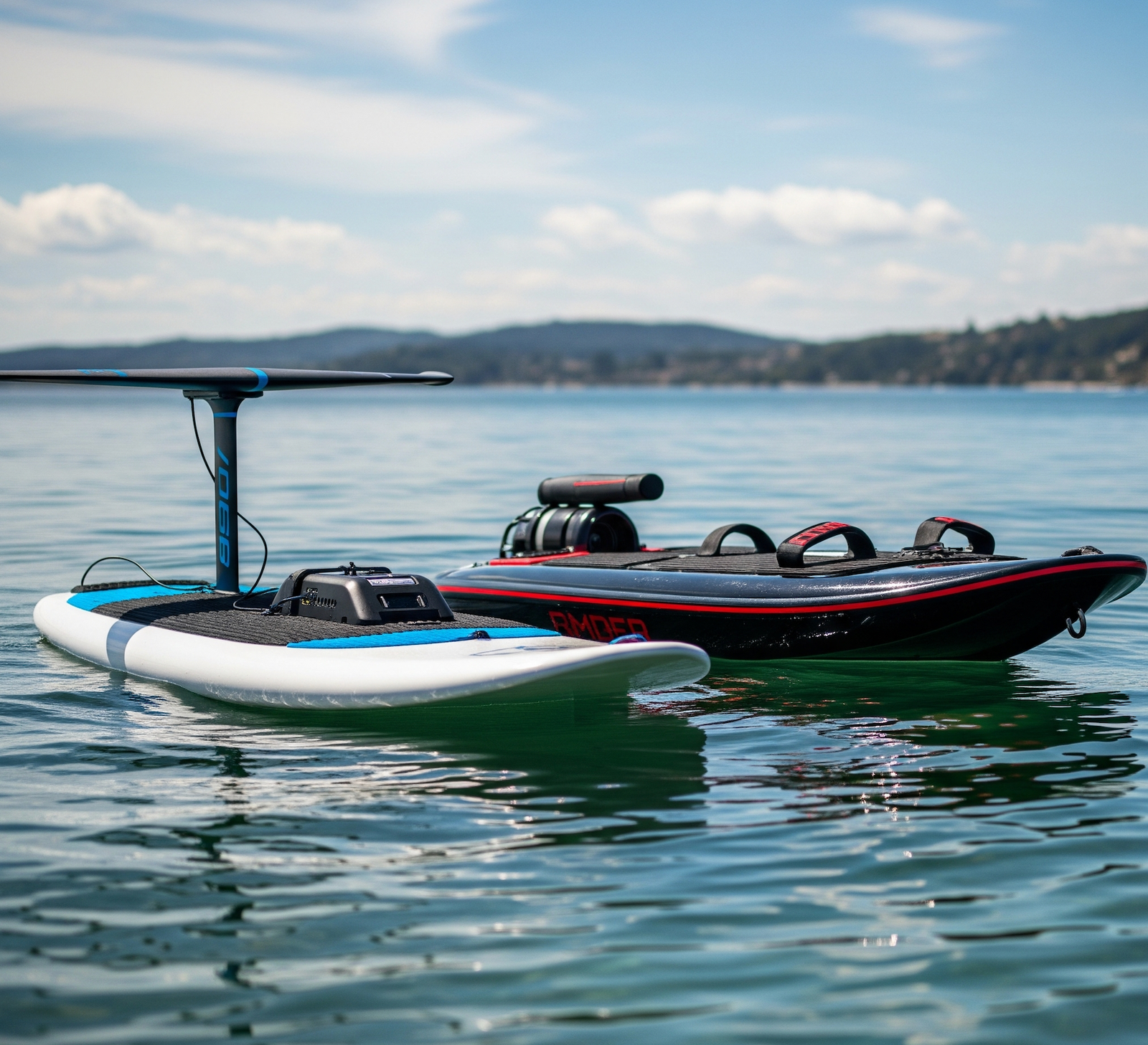
If you’ve been keeping an eye on the latest water sports technology, you’ve probably noticed two futuristic boards making waves: electric surfboards and jet boards. From the beach, they might look alike, but once you ride them, you’ll see they deliver very different experiences. I’ve had the chance to ride both, and trust me—whether you go for the eco-friendly smoothness of an electric surfboard or the raw speed of a jet board depends on what kind of rider you are. Let’s break it down. ⚡ Riding an Electric Surfboard The first time I tried an electric surfboard, it felt like gliding on water with almost zero resistance. These boards are powered by lithium-ion batteries that drive a motor beneath the deck. Because they’re whisper-quiet, you hear the water more than the engine—a big plus if you like a peaceful ride. Speed: Typically 20–35 mph Battery Life: 30–60 minutes depending on model and conditions Weight: Heavier than a traditional surfboard due to the battery Best For: Calm seas, lakes, bays, and beginners 👉 If you’re new to powered boards, an electric surfboard is easier to learn. Plus, they’re more eco-friendly since they produce zero emissions in the water. 🚤 Riding a Jet Board A jet board, on the other hand, is all about speed and adrenaline. Imagine a mix between a surfboard and a jet ski—that’s what it feels like. Most models are gas-powered, though newer electric jet boards are starting to hit the market. The acceleration is instant, and you can carve turns aggressively, even in rough water. But be prepared: they’re noisy and require more maintenance. Speed: 40–55 mph (sometimes even faster) Power Source: Gas engine or electric motor (rare) Ride Feel: Aggressive, high-adrenaline, motorsport-like Best For: Experienced riders, thrill-seekers, open water 👉 If you’re chasing maximum speed on water, a jet board is your best bet. 🔑 Electric Surfboards vs. Jet Boards: Side-by-Side Feature Electric Surfboards Jet Boards Power Source Rechargeable lithium-ion battery Mostly gas engines (some electric jet boards) Top Speed 20–35 mph 40–55 mph Noise Level Almost silent Loud, like a motorbike Eco Impact No emissions, eco-friendly Fuel emissions, less sustainable Maintenance Simple: charge and rinse Higher: fueling, servicing, engine care Cost $8,000–$15,000 $10,000–$20,000+ Best Suited For Beginners, eco-conscious riders Speed junkies, experienced riders 🌊 Which One Should You Choose? After riding both, here’s my recommendation: Choose an Electric Surfboard if…You want a quiet, eco-friendly ride that’s easy to learn and perfect for cruising flat water. They’re ideal for first-timers, families, and anyone who prefers a futuristic but relaxed style of riding. Choose a Jet Board if…You’re after raw speed, power, and adrenaline. Jet boards are for riders who already feel comfortable on the water and don’t mind engine noise or extra maintenance. Personally, I love taking my electric surfboard out early mornings when the sea is calm—it’s meditative and smooth. But when I want a heart-racing session, I bring out the jet board. It’s a whole different beast. ❓ Electric Surfboards vs. Jet Boards: FAQs 1. What is the main difference between an electric surfboard and a jet board?The key difference is the power source. Electric surfboards use battery power, while most jet boards run on gas engines. This impacts speed, noise, maintenance, and eco-friendliness. 2. Are electric surfboards easier to ride than jet boards?Yes. Electric surfboards are beginner-friendly, quieter, and easier to control. Jet boards are faster and better suited for experienced riders. 3. How long does an electric surfboard battery last?Between 30–60 minutes of riding, depending on the model, rider weight, and speed. Many riders invest in spare batteries for longer sessions. 4. Which is faster: an electric surfboard or a jet board?Jet boards are faster. They can reach 40–55 mph, while most electric surfboards top out around 20–35 mph. 5. Are electric surfboards better for the environment?Yes. Electric surfboards are zero-emission, making them a more sustainable alternative to fuel-powered boards. 6. Which is more expensive to own?Both are luxury water toys, but jet boards are generally pricier and require higher ongoing maintenance. 🚀 Final Thoughts Both electric surfboards and jet boards are incredible innovations that are redefining modern water sports. If you value sustainability, quiet rides, and ease of use, an electric surfboard is your best choice. If you want maximum speed, adrenaline, and raw power, go with a jet board. No matter which way you go, you’re stepping into the future of surfing—where technology meets the thrill of the ocean. 👉 Next up on Surfhungry: My list of the best electric surfboards of 2025 and where you can rent them before making the big purchase.LukeLuke is an avid athlete and the driving force behind Surfhungry, a vibrant online platform dedicated to sharing the joy and passion of surfing and water sports with enthusiasts around the world. With a deep-rooted love for the ocean and a lifelong commitment to riding waves, Luke’s journey as a surfer has inspired him to create a community where like-minded individuals can come together to celebrate their shared passion.

Interactive Map of Top Surfing Destinations Worldwide

Whether you’re chasing glassy point breaks, barreling reef waves, or mellow beginner swells, finding the right surf spot at the right time is key.Our Top Surfing Destinations Interactive Map lets you explore the world’s best surf beaches, filter by skill level, season, and wave type, and plan your next surf trip with ease. From iconic locations like Pipeline in Hawaii to hidden gems in Portugal, Morocco, and Indonesia, this tool is your ultimate surf travel companion. Interactive Map of Top Surfing Destinations Worldwide LukeLuke is an avid athlete and the driving force behind Surfhungry, a vibrant online platform dedicated to sharing the joy and passion of surfing and water sports with enthusiasts around the world. With a deep-rooted love for the ocean and a lifelong commitment to riding waves, Luke’s journey as a surfer has inspired him to create a community where like-minded individuals can come together to celebrate their shared passion.

Best Surf Schools in Costa del Sol

woman in pink bikini sitting on blue car

Why Costa del Sol is a Surfing Paradise Costa del Sol, translating to the “Sun Coast,” lives up to its name by offering over 300 days of sunshine each year, making it one of Europe’s most attractive destinations for outdoor sports. But while many flock here for the beaches, nightlife, and food, surfers have their own reason to love it: reliable waves, warm Mediterranean waters, and a friendly surf community. Nestled in the southernmost part of Spain, this region blends scenic beaches, affordable living, and rich Andalusian culture. The coast stretches from Nerja to Manilva, providing a diverse range of surf spots, from beginner-friendly beach breaks to more advanced reef and point breaks. What makes Costa del Sol even more special is its welcoming attitude towards surfers of all levels. Whether you’re taking your first lesson or looking to refine your cutback, there’s a beach and a surf school tailored for you. Best Time to Surf in Costa del Sol Timing is everything when it comes to surfing, and Costa del Sol delivers a unique seasonal rhythm. The most consistent waves arrive between October and April, when the Mediterranean gets its share of Atlantic swells. During these months, you’ll find waist-to-head-high waves perfect for all skill levels. Summer, on the other hand, brings smaller, more playful waves ideal for complete beginners and kids. It’s also when most surf schools ramp up their operations, offering camps, day lessons, and events. Morning surf sessions are usually glassier and less crowded, while afternoons can bring more wind, making conditions a bit choppier. No matter when you go, a good surf school will help you maximize your experience based on the daily forecast and tides. Surf Conditions and Ideal Spots Unlike the Atlantic side of Spain, the Mediterranean isn’t known for massive surf. But don’t let that fool you—Costa del Sol has reliable spots for fun-sized waves, perfect for learning and improving. Here are some local favorites: La Misericordia (Malaga): Sandy beach break, very beginner-friendly. Los Álamos (Torremolinos): Great for both surfing and kitesurfing. Playa de Artola (Marbella): Less crowded, suitable for intermediate riders. El Chaparral (Mijas): Offers stronger waves during swell season. Estepona: Excellent for both surfing and paddleboarding. Whether you’re heading out with a surfboard or just want to watch others ride the waves, these beaches promise good vibes and unforgettable sunsets. What to Look for in a Great Surf School Certified Instructors and Safety Standards When you’re putting your safety and learning experience in someone else’s hands, credentials matter—a lot. A reputable surf school should always have ISA (International Surfing Association) or similar certified instructors. These professionals don’t just know how to surf; they know how to teach, especially to nervous beginners or young kids. Certified instructors are trained in CPR, water safety, and first aid, which is crucial in open water environments. They also have a deep understanding of ocean conditions, tides, and currents. This ensures they can pick the safest and most suitable times and spots for each lesson. Safety standards also include the type of gear used—soft-top boards for beginners, helmets when needed, and properly fitting wetsuits. Always check if the school has insurance coverage, and make sure they do safety briefings before lessons. Equipment Quality and Variety Imagine renting a board only to find it’s cracked, waterlogged, or the wrong size for your skill level—that’s a quick way to ruin your day. Great surf schools in Costa del Sol maintain a wide inventory of boards for all sizes and skill levels, from soft-top foamies for beginners to epoxy boards for more advanced surfers. Wetsuits are another essential piece of gear. The water in Costa del Sol can feel chilly in the winter months, so a quality 3/2mm or 4/3mm wetsuit is usually provided. Reputable schools offer clean, well-maintained suits and sometimes even rash guards or booties for extra comfort. Top schools also let students switch boards as they improve, so you’re never stuck using something that holds you back. This kind of equipment flexibility can dramatically improve your progression. Group Sizes and Individual Attention Ever felt lost in a crowd? It’s the worst, especially when you’re trying something new like surfing. That’s why class size is a key factor when choosing a surf school. Ideally, the ratio should be no more than 1 instructor for every 4–6 students. Smaller groups allow instructors to give more focused feedback, spot your mistakes quickly, and even get in the water with you. This hands-on approach is especially important in the early stages when everything feels awkward and intimidating. Some schools also offer private or semi-private lessons. These are perfect if you want fast-track learning or have specific goals, like improving your pop-up, turns, or wave selection. Lesson Types: Beginners, Intermediate, Advanced Not all surf schools cater to every level, and that’s okay—as long as they’re transparent about it. The best schools in Costa del Sol offer tiered lesson structures: Beginner Lessons: Focus on safety, paddling, stance, and catching whitewater waves. Intermediate Lessons: Cover wave selection, turning, trimming, and using hard boards. Advanced Coaching: Often includes video analysis, competitive techniques, and surf fitness. The most versatile schools adjust lessons based on daily surf conditions and student progress. Some even offer surf skate training or yoga to complement surf performance. Top 10 Surf Schools in Costa del Sol 1. Escuela De Surf La Termica – Malaga Located right in the heart of Malaga city, La Térmica is a crowd favorite for tourists and locals alike. Its prime location at La Misericordia Beach offers consistent waves that are ideal for beginners and longboarders. It is the only officially licensed surf school, offering beginner-friendly courses, private lessons, and summer camps. They stand out with certified instructors, full accident insurance, and clean, well-maintained gear. Beyond surfing, they also offer paddleboarding, wingfoil, and surfskate classes—perfect for all seasons. Pricing is affordable, with options for single lessons or monthly subscriptions, plus member discounts. The school fosters a tight-knit surf community through membership perks like wave alerts … Read more

Cool Water Sport Jobs

Why Water Sport Jobs Are Gaining Popularity Imagine waking up every day to the sound of waves crashing, sunshine on your face, and your “office” being the ocean or a turquoise lagoon. That’s not just a vacation dream—it’s the reality for people working cool water sport jobs. Over the last decade, the popularity of these adventurous careers has skyrocketed. And why not? They offer a thrilling lifestyle, the chance to travel, and an opportunity to work outdoors doing what you love. In an era dominated by 9-to-5 desk jobs, many people are shifting their focus toward more experience-driven professions. Gen Z and millennials especially crave balance, freedom, and passion in their careers. Water sports roles deliver all that in spades. With the rise of digital nomad culture, people are no longer confined to office cubicles—they’re choosing paddleboards over paperwork and surfboards over spreadsheets. Additionally, the tourism industry heavily fuels this growth. Beach resorts, coastal towns, and tropical islands are booming with tourists eager for water-based activities. That demand naturally creates more job opportunities—from instructors to guides to safety professionals. Even social media plays a role. A single Instagram-worthy shot of someone parasailing or surfing can inspire thousands to pursue a lifestyle job over a corporate gig. In short, water sport careers aren’t just cool—they’re part of a broader movement toward passion-driven living. And for many, the water is where work becomes play. Who Should Consider a Career in Water Sports? Not everyone is cut out for a water sport job—but if you’re adventurous, fit, love the outdoors, and enjoy working with people, this path might be perfect for you. These careers attract free spirits who find joy in physical activity and connecting with nature. But it’s not just beach bums or adrenaline junkies—many instructors and guides are highly trained professionals with deep expertise in their sport. Are you someone who finds traditional jobs boring? Do you crave constant movement, interaction, and being part of a global community? Then the water sport industry offers you a chance to turn your passion into a paycheck. It’s also a great fit for seasonal workers, travel enthusiasts, and people looking to escape the rat race. Still worried about long-term prospects? Don’t be. Many people use these jobs as stepping stones into bigger opportunities—such as owning a water sport school, launching a YouTube travel channel, or even becoming a resort manager. The skills you gain (like leadership, safety training, and communication) are super transferable. If that sounds like your vibe, keep reading. You’re about to discover some of the coolest water sport jobs out there. Surf Instructor What You Do as a Surf Instructor Being a surf instructor isn’t just about shredding waves—it’s about sharing the stoke. Your main role is to teach people how to surf safely, effectively, and confidently. Most of your day is spent in the water, guiding students through paddling techniques, pop-ups, balance tips, and wave reading. From complete beginners to intermediate thrill-seekers, your job is to help them stand up on a board—and fall in love with surfing. You also serve as a mentor, cheerleader, and safety officer. Whether it’s teaching group classes or offering one-on-one coaching, every session is filled with energy, laughter, and the satisfaction of seeing someone ride their first wave. And don’t forget the behind-the-scenes work—setting up gear, checking tides and weather, and ensuring safety protocols are followed. Some surf instructors also work with surf camps, travel companies, or even cruise lines. This opens up chances to travel the world—from Bali to Costa Rica to Portugal. So yes, it’s a fun job—but it’s also physically demanding and deeply rewarding. Skills and Certifications Required You don’t just jump on a board and call yourself a surf instructor. Most employers require certifications from recognized surf training organizations like the International Surfing Association (ISA) or the Academy of Surfing Instructors (ASI). These programs cover teaching techniques, ocean safety, first aid, and more. Some courses even include business training if you plan to run your own surf school. In terms of skills, strong swimming ability and advanced surfing proficiency are obvious musts. But you’ll also need top-notch communication skills, patience, and the ability to adapt to various skill levels. A good surf instructor knows how to read the ocean and their students. First Aid/CPR certification is typically mandatory, as is insurance, especially if you’re working independently. Bilingual abilities are a huge plus if you’re working in tourist-heavy areas. With the right mix of passion and professionalism, you can make a great living teaching the art of surfing. Scuba Diving Instructor Diving into the Depths of This Career If you love the ocean and want to explore its hidden world while getting paid, becoming a scuba diving instructor might be your dream job. This role combines adventure with education, as you’ll guide students through diving theory, pool training, and open-water experiences. You’re not just helping people learn to dive—you’re introducing them to a completely different world teeming with marine life. Daily tasks can vary widely. One day, you might be teaching first-time divers in a calm bay; the next, you could be leading certified divers on a wreck dive or reef exploration. You’ll also be responsible for equipment checks, safety briefings, and recording dive logs. The best part? Many diving instructors live in paradise-like destinations such as Thailand, the Maldives, Belize, or Australia’s Great Barrier Reef. Besides the sheer thrill of diving, this career often attracts environmentalists and ocean lovers who want to protect and preserve the marine world. Some instructors also get involved in conservation projects, coral reef monitoring, and underwater photography. Training and Licensing Essentials You can’t dive into this job without proper credentials. Most instructors are certified through the Professional Association of Diving Instructors (PADI), which is globally recognized. You’ll start with basic Open Water certification, move up to Advanced and Rescue Diver, and eventually take the Divemaster and Instructor Development Course (IDC). The IDC is a serious commitment. It involves rigorous academic training, confined water instruction, … Read more

How Surfers Check Weather and Surf Conditions Today (And What’s Missing)

If you’re a surfer or water sports enthusiast, knowing when and where to catch the best waves is everything. But how do surfers check weather and surf conditions today — and what tools do they really trust? Whether you’re a weekend warrior or chasing the swell worldwide, this guide explores the most common platforms used by surfers and highlights what’s missing (and what the future could look like). 🌊 The Most Popular Tools Surfers Use Today 1. 🧭 Dedicated Surf Forecast Apps and Websites Serious surfers rely on specialized surf forecasting tools that provide real-time data, spot-level forecasts, and live visuals. Top Platforms: Platform Key Features Downsides Surfline Live surf cams, premium AI forecast tools Paywall for high-res cams, not all spots covered MagicSeaweed (now part of Surfline) Classic forecasts, swell and tide data Redirects to Surfline, upsetting loyal users Windy Advanced wind and weather map visualizations Too technical for casual users Windguru Super-detailed wind and swell forecast Outdated UI, not beginner-friendly Windfinder Clean visuals, wind direction and tide info Lacks wave-specific info like wave period or quality Surfers often combine multiple apps: Surfline for cams, Windy for wind analysis, and Windguru for accuracy. 2. 🌦 General Weather Apps (Casual Use) Apple Weather, AccuWeather, and MeteoBlue are commonly used by beginners or casual surfers. These apps provide basic conditions like temperature and wind, but they lack ocean-specific metrics such as: Wave height Swell period Water temperature Tidal charts 3. 📱 Social Media and Community Insights Local knowledge still reigns supreme. Surfers often turn to: WhatsApp or Telegram groups Facebook surf communities Instagram stories from surf shops Reddit’s r/surfing forum These are used to get: Crowd conditions Jellyfish or pollution alerts Real-time feedback from local surfers This community-driven information often fills the gap that apps can’t provide — human experience. 4. 👀 Live Beach Cams and On-Site Checks If you live near a surf spot, there’s no substitute for checking the conditions in person. Otherwise, surfers use: Surfline’s live cams (for premium users) Local surf shop webcams (some are free) Tourism websites offering real-time beach feeds 5. 🏄‍♂️ Surf Schools and Camps Traveling surfers or beginners often rely on surf instructors for updates. These surf schools usually combine: API forecasts (from Surfline or Windguru) Local wind knowledge Crowd patterns It’s a blend of tech + experience that helps people paddle out at the right time. 🧠 What’s Missing from These Tools? Despite all the tech available, most surfers still piece together information from multiple sources — and that’s where the opportunity lies. Key Frustrations: No single platform gives all the relevant data in a clean, easy-to-understand way. Most apps are either too advanced or too basic. Crowdsourced data like “is it crowded?” or “is it blown out?” is missing from major platforms. Premium features (like longer-range forecasts and live cams) are behind paywalls. 💡 What Surfers Actually Want in a Forecast Tool Based on common behaviors, here’s what surfers are really looking for: User Need Ideal Feature “Is it surfable right now?” Real-time alerts & easy-to-read charts “Will it be good this weekend?” Simple 7-day forecast with swell ratings “Where should I surf today?” Spot comparison tool “Is the lineup crowded?” Crowd indicators from users/cams “What’s the wind doing?” Visual wind and swell direction overlay 🚀 The Opportunity for a New Web App The fragmented nature of current surf forecast tools leaves a big opportunity for a web-based surf dashboard that: Consolidates swell, wind, tide, and weather in one place Offers personalized alerts for ideal surf conditions Shows real-time crowd info or local feedback Has free features upfront with optional premium tools By solving the user frustrations of today, such a platform could become the go-to surf app for both casual and advanced users. 🌍 Final Thoughts Surfers today rely on a mix of apps, communities, and live cams to predict the waves. But the process is clunky and often overcomplicated. Whether you’re building a surf forecast platform or looking to improve your wave-chasing skills, remember: surfers want accuracy, simplicity, and real-time local insights — and they’ll keep coming back to the tool that delivers all three.LukeLuke is an avid athlete and the driving force behind Surfhungry, a vibrant online platform dedicated to sharing the joy and passion of surfing and water sports with enthusiasts around the world. With a deep-rooted love for the ocean and a lifelong commitment to riding waves, Luke’s journey as a surfer has inspired him to create a community where like-minded individuals can come together to celebrate their shared passion.

Chasing Giants: The Best Surfer’s Guide to the World’s Tallest Waves

So, you’re a surfer, eh? You live for the thrill of carving through the ocean’s energy, feeling the power of each breaking wave beneath your board. But have you ever wondered just how big these watery mountains can get? This article will take you on a journey through the spectrum of surfable swells to the absolutely colossal, offering a surfer’s perspective on the most extreme waves our planet has to offer. From Beach Breaks to Barrelling Beasts For most of us, a typical day at the beach involves waves ranging from a few centimetres to a couple of metres. Even a two-metre wave arriving at the shore can be enough to make you think twice about going in if the conditions aren’t right. If you’ve ever tried surfing, you’ll know that anything less than a metre makes it tough to get going. But for the truly dedicated, the search for bigger thrills leads to spots known for their more substantial waves. Take Teahupo’o in Tahiti, for example. Here, waves generally reach around 8 metres. While that might sound huge to the uninitiated, seasoned surfers know this is where things start to get serious. The unique funnel-shaped reef at Teahupo’o concentrates the wave power, creating incredible barrelling waves (what some might call a “lip” or “tube”) that are both beautiful and incredibly dangerous. Despite their relatively smaller height compared to other behemoths, these waves are fast, steep, and have claimed the lives of at least five surfers since 2000. The annual Billabong Pro Tahiti (now possibly the Shiseido Pro) highlights the prestige and danger of this spot, where no casual swimmers are allowed in the water during competitions. Pushing the Limits: Banzai Pipeline and Beyond Moving beyond Tahiti, Pupukea on the north shore of Oahu, Hawaii, home to the legendary Banzai Pipeline, is often cited as hosting some of the most dangerous rideable waves in the world. This spot, with a name that itself suggests danger, became a frontier for brave Hawaiian surfers in the 1950s, pushing the boundaries beyond the previous perceived limit of around 3 metres. The danger at Banzai Pipeline stems from its unique reef structure. Three distinct reef layers, each deeper than the last as you move away from the shore, cause approaching ocean swells to hit the shallow seabed in stages. This sudden decrease in depth forces the wave’s energy upwards, resulting in thick, heavy, and barrelling waves that can reach over 6 metres in areas like Off The Wall and Backdoor. This illustrates a crucial concept: the shallower the water becomes, the more violently the wave will express its power on the surface. Monster Waves in the Open Ocean Even in the open ocean, far from coastlines, massive waves can form. While normal high seas can see waves of over 15 metres, exceptional conditions can lead to truly monstrous waves appearing seemingly out of nowhere. This can happen when multiple waves converge and amplify their height and power. A chilling example is the 26-metre rogue wave recorded by a monitoring platform off the coast of Norway on New Year’s Eve 1995. To put that in perspective, that’s as tall as the Brandenburg Gate in Berlin or the Arch of Constantine in Rome. These are not the kind of waves anyone would willingly paddle out into! Nazaré: The Current Frontier of Big Wave Surfing For surfers chasing the absolute limit of what’s rideable, the small town of Nazare in Portugal has become the epicentre. Over the last 50 years, this former fishing village has transformed into a big wave surfing mecca. The reason? A remarkable underwater feature: the Nazare Canyon, a 230-kilometre long trench that ends near the coast. Normally, waves approaching the Portuguese coast are generated over a seabed with an average depth of around 20 metres. However, directly in front of Praia do Norte beach in Nazaré, the seabed plummets from 200 metres within the canyon to 0 metres at the shoreline. This dramatic change in depth creates monstrous waves. It’s at Nazaré that legends are made. In 2011, Garrett McNamara successfully surfed a 24-metre wave, setting a world record. Not content with that, in 2013, he claimed to have ridden a 30-metre wave at the same location, although this wasn’t officially certified. In 2020, Portuguese surfer António Laureano reportedly rode an estimated 31-metre wave in Nazare. However, the currently certified tallest wave ever surfed belongs to German surfer Sebastian Steudtner, who rode a 26.21-metre wave in Nazare in 2020. The immense height of these waves at Nazaré is due to the way the wave “mounts” as it encounters the rapidly rising seabed of the canyon. This is a location where the most talented and fearless surfers in history continue to push the boundaries. The Unthinkable: Lituya Bay’s Mega-Tsunami Finally, we come to the undisputed record holder for the highest wave ever recorded: the mega-tsunami of Lituya Bay, Alaska, in 1958. This event produced a wave that reached an astonishing 524 metres in height. To put that into perspective, that’s taller than the Empire State Building! This colossal wave wasn’t caused by an earthquake directly, like typical tsunamis. Instead, it was triggered by a massive rockfall – around 40 million cubic metres of rock – plunging 600 metres into the bay, striking the Gilbert Glacier and creating an unbelievably powerful wave. While the 524-metre wave in Lituya Bay is a record of unimaginable scale, it’s crucial to understand that this was a catastrophic event, not a wave that could ever be surfed. Conclusion Exploring the world of the biggest waves, from the challenging barrels of Teahupo’o and the treacherous reef breaks of Banzai Pipeline to the record-breaking giants of Nazaré and the unbelievable mega-tsunami of Lituya Bay, offers valuable insights for surfers of all levels. Understanding wave dynamics, the impact of underwater topography, and the sheer power the ocean can unleash is crucial for safety and appreciation of our sport. While most of us will never face a 30-metre wave, understanding the forces … Read more

Best Surf Shorts for Comfort, Style, and Performance

Whether you’re a beginner or a seasoned surfer, the right surf shorts can make or break your session. The best surf shorts provide comfort, durability, flexibility, and quick-drying properties to keep you focused on the waves—not your gear. But with so many options available, how do you pick the perfect pair? We’ve researched the best surf shorts in 2025, breaking them down by performance, materials, fit, and price so you can make an informed decision. Why Surf Shorts Matter Surfing involves constant movement, saltwater exposure, and intense sun, so ordinary swim trunks won’t cut it. Here’s why choosing high-quality surf shorts matters: Unrestricted Movement – Stretchable fabric allows better paddling and maneuverability. No Chafing – Seamless or flatlock stitching prevents rashes. Quick Drying – Moisture-wicking material avoids discomfort after getting out of the water. Durability – Reinforced stitching ensures longevity, even in rough surf conditions. Sun Protection – Many surf shorts have UPF protection to guard against harmful UV rays. Key Features to Look for in Surf Shorts 1. Material and Fabric Technology Feature Why It Matters Quick-dry fabric Prevents discomfort and chafing 4-way stretch Allows full range of motion while paddling and turning Durable stitching Increases longevity, preventing fabric from wearing out quickly Water-repellent coating Helps shorts stay lightweight in the water UPF Protection Shields skin from harmful UV rays 2. Fit and Comfort Getting the right fit is crucial. A waistband that stays put and the correct length for mobility makes a big difference. Fixed vs. Elastic Waistbands: Fixed waistbands provide a more secure fit, while elastic waistbands offer more comfort. Best Length for Surfing: 16-18 inches – Above the knee, great for flexibility. 19-21 inches – Below the knee, offers more coverage. 22 inches and above – Extra length for those who prefer longer boardshorts. 3. Additional Performance Features Zippered or Velcro Pockets – Helps secure small essentials. Welded Seams – Reduces chafing by eliminating rough stitching. Drawstring Closures – Prevents shorts from slipping off during wipeouts. Top 10 Surf Shorts for 2025 (Reviewed & Rated) We’ve analyzed six of the best surf shorts, highlighting their features, benefits, and drawbacks. 1. Salt Life Men’s Stealth Bomerz Boardshorts Material: Polyester/spandex blend Length: 20 inches Key Features: Quick-dry fabric, 4-way stretch, zippered pocket Pros: Comfortable and lightweight Durable material for long-term use Water-repellent finish keeps fabric light Cons: Slightly expensive compared to budget options Limited color choices User Reviews: ★★★★☆ (4.5/5) Most surfers praise its secure fit and quick-drying properties, but some wish for more color options. Check price on Amazon  2. Hurley Men’s One and Only 22-Inch Boardshort Material: 100% polyester Length: 22 inches Key Features: EZ fly closure, durable water-repellent finish Pros: Affordable pricing Lightweight and dries fast Stylish, classic surf look Cons: No stretch fabric Lacks pockets User Reviews: ★★★★☆ (4.3/5) A great budget-friendly option, but some users prefer a stretchable design for more comfort. Check price on Amazon 3. Volcom Men’s Vmonty Stretch 22 Material: 59% cotton, 39% polyester, 2% elastane Length: 22 inches Key Features: Stretch fabric, multiple pockets, modern fit Pros: Stylish and functional design Stretch material improves movement Deep pockets for storing small essentials Cons: Cotton blend takes longer to dry Slightly heavier than synthetic boardshorts User Reviews: ★★★★☆ (4.2/5) Users love the style and comfort, but some find them slow to dry. Check price on Amazon 4. Quiksilver Men’s Everyday 21 Board Short Swim Trunk Material: 100% recycled polyester Length: 21 inches Key Features: Drawstring closure, DryFlight water-repellent coating Pros: Eco-friendly, made from recycled materials Good price-to-quality ratio Quick-drying and lightweight Cons: Fabric feels stiff initially No zippered pockets User Reviews: ★★★★☆ (4.4/5) Many appreciate the eco-friendly approach, though some mention stiffness when new. Check price on Amazon 5. Hurley Men’s One and Only 20″ Board Shorts Material: 100% polyester Length: 20 inches Key Features: EZ fly closure, water-resistant coating Pros: Sleek and classic design Durable stitching Comfortable for long surf sessions Cons: Slightly expensive for a basic design No stretch material User Reviews: ★★★★☆ (4.3/5) A good balance of style and function, though some wish for added flexibility. Check price on Amazon 6. Unitop Men’s Quick Dry Hawaiian Printed Swim Trunks Material: 100% polyester Length: Mid-thigh Key Features: Elastic waistband, mesh lining, tropical prints Pros: Budget-friendly Quick-drying fabric Stylish Hawaiian prints Cons: Mesh lining may not be ideal for serious surfing Less durable than premium options User Reviews: ★★★☆☆ (3.8/5) Great for casual beachwear, but not the best for professional surfing. Check price on Amazon 7. G Gradual Women’s 7″ Quick Dry High Waisted Swim Board Shorts with Zipper Pockets Material: 100% Polyester Length: 7 inches Key Features: Quick-dry fabric, high-waisted design, 2 zippered pockets, built-in brief liner, UPF 50+ protection​ Pros: Comfortable and lightweight Secure zippered pockets for valuableslin Quick-drying material​ Cons: Some users find the sizing runs small White color may be slightly see-through User Reviews: ★★★★☆ (4.4/5) Users appreciate the comfort and functionality, especially the secure pockets and quick-drying fabric. Check price on Amazon​ 8. G Gradual Women’s 5″ High Waisted Swim Board Shorts with Phone Pockets Material: 100% Polyester Length: 5 inches Key Features: Quick-dry fabric, high-waisted design, side pockets suitable for phones, built-in liner​ Pros: Lightweight and comfortable Pockets accommodate phones Versatile for various activities​ Cons: Pockets do not have closures May ride up during movement​ User Reviews: ★★★★☆ (4.3/5) Users find these shorts comfortable and appreciate the phone-sized pockets, though some note the lack of closures. ​Check price on Amazon 9. HODOSPORTS Women’s 5″/7″/9″ Swim Shorts UPF 50+ High Waisted Board Shorts with Pockets Material: Not specified Length: Available in 5″, 7″, and 9″ options Key Features: UPF 50+ protection, high-waisted design, quick-dry fabric, pockets​ Pros: Multiple length options High sun protection Quick-drying material​ Cons: Material details not specified Limited information on pocket security​ User Reviews: ★★★★☆ (4.6/5) Users appreciate the variety in lengths and the sun protection offered by these shorts. Check price on Amazon​ 10. BALEAF Women’s 3″/5″ High Waisted Swim Board Shorts Quick Dry Swimsuits Bottoms Trunks with Pockets Material: … Read more

Feed Your Stoke. Join the Surf Hungry Crew

Surf tips, gear reviews and travel guides straight to your inbox

"*" indicates required fields

Privacy*
This field is for validation purposes and should be left unchanged.