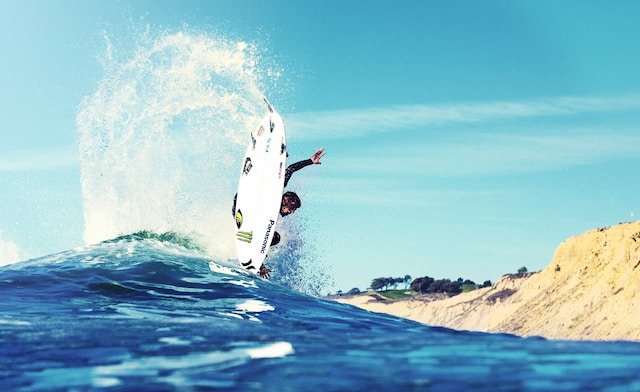
What Is A Duck Dive In Surfing?

You might be new to surfing and unfamiliar with terms like “duck dive” and “turtle roll,” or perhaps you’ve heard about them but never practiced them before. In truth, these two techniques will change how you surf forever and make it much easier to paddle to the lineup! So, what is a duck dive, and should you duck dive or turtle roll? A duck dive is a surfing technique that enables a surfer to dive underneath an oncoming wave and more easily paddle out to a lineup. Duck diving is better for big waves and surfboards with less volume, while turtle rolling works well for smaller waves and surfboards with lower volume. Let’s break down the differences between duck diving and turtle rolling, discuss the benefits and drawbacks of each technique, and go over a step-by-step guide on how to do them. We’ll also cover handy tips for improving these techniques and discuss why they are essential to your surfing toolkit! What Is A Duck Dive In Surfing? A duck dive is a technique that surfers use to safely navigate through oncoming waves when paddling out to the lineup, which is the area where the waves break, and surfers wait for the perfect waves to ride. What Are The Benefits And Drawbacks Of Duck Diving? There are significant advantages to mastering duck diving, but it also comes with its drawbacks. Here are the essential benefits and drawbacks you need to know! Benefits: Duck diving allows you to efficiently navigate through oncoming waves that would other push you back and allows you to keep paddling out to the lineup so you can get into position for the next ride. You’ll conserve a lot of energy by avoiding waves that may push you back toward the shore. Maintaining control of your board is easier, meaning there’s less risk of wipeouts and collisions with other surfers. You avoid long swims back to the beach in case your leash breaks. Drawbacks: Duck diving demands a lot of strength and stamina, especially when it comes to large waves. It takes some practice, especially for new surfers. You must time the oncoming wave perfectly, or you will lose momentum and get pushed back. If you do not duck dive properly, you’ll damage your surfboard. Incorrectly pressing on your board can create pressure dings, delamination, or snap your board. How Do You Duck Dive? While duck diving will take some practice before you master it, here are the steps you need to know: When you see an oncoming wave, increase your paddle speed before you duck dive to ensure you have enough momentum to dive underwater and back out of the wave. Using your hands, push the nose of your board nose-first under the water, with your hands in a push-up position and by your side holding on to the rails. With your hands in a push-up position and holding onto the board’s rails, push the board’s nose under the water. Make sure to push it nose-first to reduce resistance. Slide your foot up and underneath you so that it’s on the tail of your board, and use it to push down – while still pushing down on your board’s nose with your hands. Once you and your board are successfully under the wave, release your legs, slide your hands toward your board’s nose, and perform a frog kick to give you a boost of speed to the surface. Tips For Improving Your Duck Dive Paddle hard to gain enough speed so that you can get deep enough for the water’s cylindrical effect to pull you back up to the surface. If you’re going too slow, your board won’t submerge properly, and it will start to wobble and want to surface because of its natural buoyancy. Duck dive as close to the wave as possible so that you can dive underneath the whitewater rather than getting slammed by the force of the water. You must extend and push your board forward after duck diving; otherwise, it may pull you back. Most Common Mistakes Surfers Make When Duck Diving Don’t stop paddling in fear when you see a wave approaching you; you must keep paddling to gather momentum and push through. When you push down the nose of your board, remember to push down the tail, or your backside will remain stuck in the air, and the wave will push you back. Your average board and leash are both 6 feet, plus your body makes 18 feet. Don’t let go of your board because you have about an 18-foot strike range to hit other surfers, so watch your surroundings. What Is A Turtle Roll In Surfing? A turtle roll is a technique that surfers use to maneuver under an oncoming wave and prevent it from pushing them back. It allows them to reach the lineup – the place where waves form – to catch the perfect wave. What Are The Benefits And Drawbacks Of Turtle Rolling? Turtle rolling can be an effective way to hold onto your position in a lineup and save energy, but this technique has benefits and drawbacks. Benefits: You can more easily navigate through larger waves that are too difficult to duck dive. It helps you to conserve energy preventing you from having to paddle around the wave. You’ll avoid getting pushed back and maintain your position in the lineup. It’s an effective alternative to duck diving if you’re a beginner or find it hard to duck dive. Drawbacks: ou must have good timing and technique to avoid getting caught by the wave and tossed around underwater. It can be challenging especially when the water is turbulent, or the wind is howling. If you don’t do it properly, your board can hit and injure you, or the wave will drag you under. If you let your board go, it can injure other nearby or unaware surfers. It’s less efficient than a duck dive because you don’t go as … Read more