Best Women’s Surf Camps for 2026

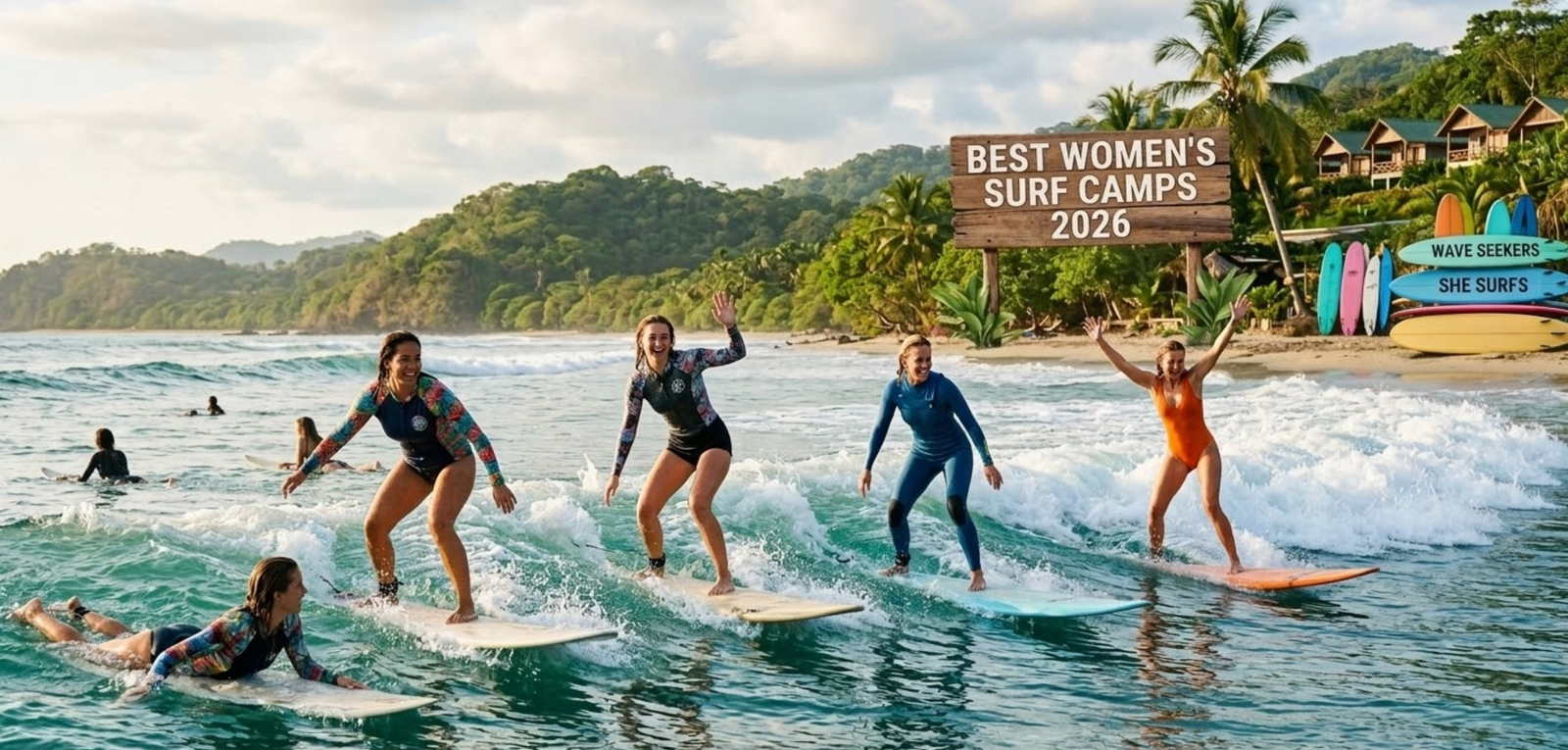
Looking for the best women’s surf camps in 2026? Nothing compares to the feeling of planning and looking forward to a surf travel adventure in a womens surf camp, one that brings women from all walks of life together to share their passion for surfing. These camps or women’s surf camps offer a supportive and safe environment to grow and learn their surfing skill and unwind. If you love surfing, whether you are a complete beginner or an expert, a womens surf camp provides you access to top-notch equipment and facilities to revamp your skill. Beyond surfing, these camps offer a range of mindfulness and wellness activities like yoga, spa, etc. Read on to learn more about the top women surf camp to visit in 2026. In this guide, we compare the top women’s surf camps worldwide — including pricing style, skill level suitability, accommodation type, sustainability focus, and wellness add-ons like yoga and spa experiences. You’ll also be able to request availability directly from selected surf camps through our partner form. Best Beginner Surf Camps for Women If you’re new to surfing, choosing the right camp can make or break your experience. The best women’s beginner surf camps focus on safe conditions, structured coaching, and confidence-building, rather than throwing you into challenging waves too quickly. Beginner-friendly camps typically offer: Soft, sandy beach breaks (ideal for learning) Small group coaching with high instructor attention Step-by-step progression (pop-up, paddling, wave timing) All-inclusive packages with equipment included Many women find that women-only surf camps are especially effective for beginners, as the environment tends to be more supportive, less intimidating, and focused on progression at your own pace. If you’re starting from scratch, prioritize coaching quality over destination. A good instructor in average waves will help you progress faster than perfect waves without guidance. Women’s Surf and Yoga Retreats For many travelers, the best women’s surf camps are no longer just about surfing—they’re about total mind-body reset. That’s where surf and yoga retreats come in. These camps combine daily surf sessions with yoga, mobility work, and wellness practices designed to: Improve balance and flexibility for surfing Speed up recovery between sessions Reduce stress and mental fatigue Create a more holistic travel experience In 2026, surf + yoga retreats are one of the fastest-growing segments in surf travel, especially among women looking for both adventure and wellness. Best Surf and Yoga Retreats from This List Soul & Surf (Portugal) – Strong focus on sustainability, mindfulness, and daily yoga integration Surf Goddess (Bali) – Luxury experience with spa treatments, yoga, and high-end accommodation Surf With Amigas (Costa Rica/Nicaragua) – Combines performance coaching with daily yoga and adventure activities Chica Brava (Nicaragua) – Offers a balanced mix of surfing, yoga, and relaxation If your goal is not just to improve your surfing—but to reset mentally and physically—these retreats offer significantly more value than standard surf camps. Top 8 Womens Surf Camps Catching a wave rejuvenates the mind and body. Whether it is a combination of physical activity or ocean therapy, surfing is an excellent way to unwind. Even if you need to learn how to surf, professional guides at these camps will educate you on how to catch your first wave. Below are some of the best women surf camps to consider visiting across the globe!   Surf Camps Location Best For Skill Level Yoga/Wellness Sustainability Focus Chica Brava Nicaragua Sisterhood & All-inclusive Beginner–Intermediate Yes Moderate Surf Diva California, USA Beginners Beginner Optional Low Surf With Amigas Nicaragua, Costa Rica, El Salvador Adventure + Coaching All Levels Yes Moderate Soul & Surf Portugal Eco-conscious surfers Beginner–Intermediate Strong focus High Las Olas Surfing Mexico Personalized coaching All Levels Yes Moderate Surf Goddess Bali Luxury camp Beginner–Advanced Strong Moderate Mahina Hawaii Oahu, Hawaii North Shore experience All Levels Yes Moderate Rapture Surfcamps Multi-country Social surf experience All Levels Optional Strong Chica Brava                                 Typical Price Range: $2,750 – $2,950+ per week The Villa: ~$2,750 per person Cloud Farm: ~$2,950 per person Room upgrades + private options cost more. Best Season: Dec – Apr (dry season)Notes: All-inclusive surf coaching, meals, yoga, massage, small groups. The Chica Brava is one of Nicaragua’s best women’s surf camps. Chica Brava camp, located on over 500 acres of tropical reserves, brings the sisterhood to the sea. It also comes with a large 1200 feet pool just above the bay. A trip to this women’s surf camp Nicaragua is an excellent way to deal with stress and relax. You can get an all-inclusive experience at this camp, including meals, accommodations, and surf lessons. The main focus of this csmp is to provide women with a supportive environment that is safe to learn and improve their surfing skills while connecting with other like-minded women. Furthermore, Chica Brava is a destination to get a peek at some wildlife, including Sloths, Monkeys, Bugs, and so much more. At Chica Brava, you will reconnect with nature. Other activities you can consider getting at Chica Brava include a yoga session or a massage wrapped in one package. Overall, Chica Brava is a destination many recommend, as it will truly get you feeling Zen at the end of the day. Request availability through our partner form below. Surf Diva                                 Typical Price Range: $230 – $350+ per clinic / weekend Women’s Surf Clinics: ~$230 per person for 2‑day clinic (intro) Best Season: Year-round, beach conditions vary seasonallyNotes: Not a traditional week‑long retreat; more focused on weekend clinics and lessons in La Jolla. Consider adding a related Hawaii/Maui Maui Surfer Girls one‑week retreat for fuller travel pricing. Next on our list of desirable destinations to add to your list is this Surf Diva. This women’s surf camp inCalifornia offers an immersive experience for any surfer looking to improve their skills. Based in La Jolla, California, this camp for women is … Read more

Best Surf Camps in Hawaii: Top Picks for Beginners to Advanced

Best Surf Camps in Hawaii, best beginner surf spots in hawaii

Looking for the best surf camps in Hawaii? You’re in the right place. As the birthplace of surfing, Hawaii offers world-class waves, expert instructors, and immersive surf camp experiences for every level—from complete beginners to advanced riders. In this guide, we break down the top surf camps in Hawaii, including Oahu, Maui, and Kauai, with pricing, skill levels, and what makes each one unique. There are tons of surfing schools that offer surf camps scattered all over these famous islands. In these places, you can have the opportunity to meet like-minded surfers, book private lessons with your friends and family, and immerse yourself in its surf towns’ culture. Who Should Book a Surf Camp in Hawaii? Beginners looking to learn in a structured environment Intermediate surfers wanting to progress faster Travelers who want an all-inclusive surf experience Solo travelers looking to meet like-minded surfers Joining a surf camp is also a great way to build a strong surfing foundation. As well as go for hassle-free adventures in one of the most beautiful destinations in the world.  Quick Comparison: Best Surf Camps in Hawaii Surf Camp Location Price Level Best For Kauai Surf School Kauai $$$ All levels Private coaching North Shore Surf Girls Oahu $ Beginner+ Fun/social Go Nuts Hawaii Oahu $$$$ All levels All-inclusive Pata Sudaka Oahu $$$ All levels Surf + Yoga Maui Sports Adventure Maui $$$$ All levels Premium experience   Here’s why you should book a surf camp in Hawaii… There are so many things to do in Hawaii. There’s snorkeling, sightseeing, yoga retreats, exploring the local cuisine —  the list just goes on! And the easiest way to explore all that while enjoying surfing is to go on multi-day immersions that only surf camps can provide.  With the volcanic islands influencing wind directions, Hawaii has consistent swells all year round. You’ll also find here some of the biggest wave spots in the world, such as the Banzai Pipeline in Waimea Bay.  The best surf camps in Hawaii are located across three main islands: Oahu, Maui, and Kauai. Each offers different wave conditions and surf experiences: Oahu: Best for variety and famous surf spots like Pipeline Maui: Ideal for beginners and consistent waves Kauai: Perfect for nature lovers and quieter surf Although surf competitions are held in these locations, the waves here aren’t just for professionals and advanced surfers. There are also beach spots in this area that are suitable for beginners and those who are looking to progress their skills to intermediate levels.  Surf camps in Hawaii specialize in creating tailored packages according to your skill level, needs, and preferences. They also offer packages with reasonable costs from affordable to luxury experiences. These include full-board meals consisting of local cuisine, transportation with transfers, and community immersion wherein you discover more about the Hawaiian culture.  In surf camps, learning surfing is also more structured. The activities and lessons are organized by the hour, leaving you with lots of downtime to explore Hawaii by yourself or relax and enjoy the island’s beaches. Last but not least, booking a reservation during surfing’s peak season will allow you to see pro surfers. Every winter, different surf events, and competitions are held in Hawaii; however, this may also mean crowdier beach areas.  Top 5 Best Surf Camps in Hawaii Experience all-inclusive surfing packages in the following surf camps listed below: Kauai Surf School North Shore Surf Girls Go Nuts Hawaii Pata Sudaka Surf Trips Maui Sports Adventure Kauai Booking surf lessons in Kauai is the best option if you’re into dramatic and lush landscapes. Known as the second oldest among the main islands of Hawaii, this island is a tropical destination filled with tropical rainforests and breathtaking mountain ranges. It’s perfect for people looking for surf camps that offer both adventure and relaxation. 1:  Kauai Surf School Prices: $400 a day for 1 person; $275 a day for 2 persons; $225 a day for 3 to 4 persons; $200 a day for 5 to 8 persons Location: Poipu Beach, Kauai (Outrigger Kahuna Plantation) Skill level required: Beginner to Advanced  Website: www.kauaisurfschool.com You only learn from the best with Kauai Surf School. For over 20 years, they’ve been teaching surfing to students from different parts of the world.  This surf camp believes that the key to growth in surfing is by building a strong foundation. For that reason, their instructors consist of Billabong team riders who spend days teaching their students about water safety and different surfing techniques.  Kauai Surf School’s programs and lessons give chance to explore the beauty of the ‘garden island’. Some days in the surf camp consist of learning surfing, while others are for snorkeling, hiking, and immersing in local communities.  There are five different surf camp programs available here. Each varies depending on how many you are in your group and whether you want private or shared surf lessons. First, there’s the No Ka Oi Private Surf Camp which offers more privacy than the others. With this one, no other surfers can join your group. This private camp contains customized built-in programs with unlimited coaching for a day (minimum booking of six days). Gourmet meals from breakfast to lunch are also offered, including transportation needs like tours and airport transfers.  Next is the Learn with a Pro, a shared surf camp that can accommodate 8 to 12 surfers in a group. Although it’s more fun, there’s only a little room for surf training and improvement with this because of the instructor-student ratio.  On the other hand, The Wahine Camp is an all-girls private surf group. With this one, the ladies can also enjoy Pilates, Zumba sessions, and massages.  The Ohana surf camp is for families looking for a more private option to spend time together. This surf camp is not joined by other groups. Lastly, we have the Surf Escort surf camp for intermediate to advanced riders. This one offers a whole day of training in any of the best surfing spots in Kauai.  Oahu … Read more

How to Surf: A Beginner’s Guide to Surfing

If there is one thing advanced-level surfers won’t admit to you, they wouldn’t want to teach you how they do it. Experienced surfers may be off, silent, and awkward when you begin to ask questions. They may come off as arrogant and self-absorbed.  But it is for a good reason.  Surfers started as beginners, too. They experienced not being able to control the waves they faced. Despite the vastness of the ocean, it gave them limited resources – or, to put it merely, waves to learn how to ride. These waves, however, came in different shapes and sizes.  This reality is what surfers want you to figure out for yourself. Every wave comes differently. A specific style confronts particular types of waves. One that will make you look and feel good while staying safe.  Learning how to surf, as with most sports, is not easy. Some who have tried have gone bored because of the slow learning curve. But, others stay because that’s the most exciting part – challenging oneself to improve in every ride.  What is Surfing?    Surfing is next to swimming and diving as the most popular water sport. It is the act of riding on the waves. People who surf are called surfers. Customarily, surfer surf by lying, kneeling, or standing up on the surfboard. Over time, it evolved to body surfing and windsurfing, too.  In surfing, the wave rider rests on the forward part of a surfboard, facing a moving wave that typically brings the surfer toward the shore. Although oceans have more suitable waves for surfing, riders made it possible to ride even in lakes or rivers. This sport started as an essential activity in Polynesian culture. It goes back to the 4th century AD when Polynesians made their way to the Hawaiian Islands from Tahiti and the Marquesas Islands. These folks brought with them their colorful customs. One of which is playing on waves using their Paipo boards.  Surf riding is also linked to riding waves on planks and single canoe hulls. Historians also believe in its connection to fishing. The ancient Peru culture surfed on reed watercraft fishing.  Surfing was introduced to the Western world when three teenage Hawaiian princes took a break from their boarding school in 1885. They brought to their trip to Santa Cruz, California, their custom-shaped redwood boards, and rode the mouth of the San Lorenzo River.  George Freeth, an American lifeguard and swimming instructor, was the credited “Father of Modern Surfing.” He and a colleague, Hawaiian surfer Duke Kahanamoku introduced surfing to the United States. Surfing is more than just a sport nowadays. It is now a culture that waves represent diversely. Some riders surf as a recreational activity, while others make it the center of their lives. It is most dominant in the US and Hawaii; however, its popularity is slowly getting known in other parts of the world.  Beginners Guide to Ride The Waves Surfing is not an easy watersport to learn. Learning to ride the waves could take weeks or sometimes even months, depending on your skill, fitness, the conditions of the waves you ride, and the frequency of your practice sessions.  Back when surfing was not as big as it is now, there weren’t any surfing schools that you can turn to ask to teach you how to surf. Surfers then relied on watching experienced riders do their thing and then trying it on their own.  Now, every surfing community has a surfing school. It is a happy sight to see kids, teenagers, and young adults trying to learn. It is impressive to see them ride waves. Surfing schools are a great help in boosting the popularity of this watersport and improving your surfing skills at the same time.   However, if you want to learn how to surf through the good old “learning by yourself,” here are a few tips you can take note of and memorize by heart.  Step 1. Condition and Prepare Your Body for Your Training Like most sports, you should prepare your body to endure the physical exhaustion of multiple training sessions. You will need more than just strong legs, but right arms’ strength, powerful shoulders, and a tough back.  Why? Simple. You will be spending 99% of your time paddling through the waters with your surfboard in a prone position. You will be drained after one to two hours of paddling, and you might wake up the next day with a very sore upper body.  Prepare yourself for training with physical activities like push-ups, pull-ups, and some dips. A little cardio such as running or jumping rope will help, too. Train yourself to balance with a surf skate or a balance board. Step 2. Try It Out First With Bodysurfing We mentioned in step one how that paddling would eat the majority of your learning time. Therefore, beginners usually have their surfboards under their arms. This practice is so that they master the art of paddling. Beginners typically give up at this point, as they feel frustrated that they aren’t doing anything but paddle.  In reality, paddling is the essential knowledge you need to arm yourself with. When you’ve mastered paddling, the natural sequence is bodysurfing. Riding the waves with your body allows you to feel and understand the waves as they crash into your board or vice versa.  All you need to do is to get into the water with your swimmers. Try to catch some tiny waves and let them push you back to the shore with your body in full extension. It adds fun to the learning part, and it leaves you with a deep feel for the wave, allowing you to learn when you should push into it.  Once inside the swell and grasped its energy and momentum, it will give you the sense of learning how to steer and maintain speed. Body surfing is like body dragging in kite surfing. It is a crucial step that is an absolute prerequisite for anyone … Read more

Best Surf Camps for Beginners

Best surf camps for beginners

If you have an affinity for the beach and want to immerse yourself in the whole beach experience, there is no better sport to get into than surfing. It’s exhilarating, relaxing, and a lot of fun. There are many surf camps worldwide and some genuinely awesome ones in the US. Surf camps are a fast-growing industry that caters to anyone who is keen to learn to surf. From travel surf camps, adult learn-to-surf, and beginner’s schools, surf camps provide anyone with a desire to surf with the best opportunity to learn quickly. Surf camps are one of the best ways to learn to surf. They are well organized and allow for continued practice under the guidance of trained and skilled instructors. The benefits are many, so let’s look at how and why surf camps are so helpful and go into everything you need to know about surf camps. Introduction: Discovering the World of Surf Camps for Beginners As impressive as surfing may look to a beginner, paddling out into the ocean and standing on a board is frightening. Enter the surf camp. Surf camps provide one of the best possible ways to learn to surf. Surf camps are also excellent options to keep the kids busy and valuable for helping them learn if they don’t know how to surf. Reputable surf camps provide everything you or your kids may need to learn to surf. Let’s peek at the benefits you can reap from attending a surf camp. Benefits Of Beginner Surf Camps To start, surf camps allow beginners to learn within a safe and secure environment with constant supervision and guidance. Many camps include lodging and meals, making it a lot easier for the learning process as all you are required to focus on is surfing. A considerable benefit of a beginner surf camp is that instructors can guide you on proper technique, which may take years to get right if you’re trying surfing on your own. As beginner surf camps are made for learning to surf, another top benefit is that all gear will be provided for, and any further requirements will be made clear before the camp commences. A beginner surf camp is a great way to relax, learn something new and make new friends. Being within a group of like-minded people with the same skill level as you will mean that you all start from scratch and progress at a similar pace. Learning to surf at a beginner camp will also help you push yourself further, and with two to three sessions a day, your chances of coming out of the surf camp and being able to command the basics of surfing are very high. Many beginner surf camps cater to youngsters aged 5 to 17. Surf camps can last half a day to over a week and are well worth the money. It’s an excellent way to keep kids busy during the vacation, where they will get outdoor exposure, a good workout, and have a ton of fun. Surf camps can also be a more budget and stress-friendly option. Surf camps are one-stop shops, with almost all costs included in the price. With everything included, you don’t have to do the math of adding everything up. What To Expect? The first thing you can expect from surf camp is to have a great time. You won’t be standing on the first day, and many camps may have you starting in a pool as you get used to your board and practice techniques. Whether you opt for a luxury camp or a budget one, you will have a ball. It’s an excellent way to build confidence without the hassle of breaking waves. Within a day or two, you will move to the beach and learn how to navigate waves and balance. There is enough free time to spend on relaxation, so it’s the perfect way to mesh learning and vacation. Top Surf Camps for Beginners As a beginner, everything will be new and unknown, so what do you need to look for when choosing a surf camp? This is what we are on the lookout for when selecting a surf camp. Good reviews, check reviews, and if you know of past attendees, talk to them. The equipment included is much easier and kinder on the budget if the camp provides all your gear. At most, there are five people per instructor. The more people there are, the less one-on-one time you will get, and you will need the instructor to spend some time with you to get things right. When looking for beginner surf camps, if you would prefer to learn in the US, many options are available. Hawaii, California, South Carolina, and New Jersey have several surf camp options. Pacific Coast Surf Camp caters to ages 7 to 17 years, based in Bolinas, California. Sunrise Surf Academy caters for ages 5 to 16 years, based in Venice Beach and Pacific Palisades. Sunset Suzy caters to ages a minimum of 6 years, based in Oahu Hawaii Swell Surf Camps cater to adults located in the Dominican Republic. Surfivor Surf Camp caters to adults in Emoriz, Portugal. LaPoint Surf Camp for adults in Ahangama, Sri Lanka. Best Surf Camps for Solo Travelers Surfing camps have many significant advantages for solo travelers. Not only is your surfing gear provided for you, but so is your entertainment. If you’re a solo traveler who wants to learn to surf, or even if you already surf but want to improve and be surrounded by similar people joining a surf camp is a great way to spend your vacation. As a solo traveler, as much as it’s great to see the world on your own, it’s always fun to be exposed to new people and forge new friendships. A surf camp provides immediate company; as it’s surfing, you can be sure there will be like minds. Surf camps also offer added security and safety for those traveling alone as you automatically become … Read more

Top 5 Best Surf Camps in Costa Rica (Guide)

Surf camps are for all kinds of surfers — whether you’re a beginner who’s still testing the waters or an expert that’s looking for a place to meet other like-minded surfing pros. This place allows you to learn the basics, as well as enhance the skills that you already have with the help of professional surf coaches.  The good thing about surf camps is that you don’t need to spend all your vacation leaves in one go. Typically, these packages only last for a week, and most resorts and hostels offer convenient and all-inclusive packages for your surfing retreat.  But where can you find the best surf camps in the world? The ones in California, Dominican Republic, and Bali are all good — but nothing compares to the ones located in the coastlines of Costa Rica. Why Costa Rica? Located in Central America, Costa Rica is one of the most popular surfing destinations for various reasons. This country faces both the Pacific Ocean on the west and the Caribbean on the east, so the waves here are consistent all year round. The beaches’ water temperature is quite warm too (it averages at 80 degrees), so surfing without a wetsuit will work just fine. Aside from the great surfing conditions, this country’s tourism industry is also thriving, making it the ultimate travel experience for surfers and non-surfers alike. From the breathtaking landscapes, buzzing nightlife, great food, and amazing surf camps — Costa Rica’s got it all! Top 5 Best Surf Camps Reviewed Hundreds of accommodations in Costa Rica are offering all-inclusive packages, so we’ve round up the best surf camps that fit every surfer’s budget and needs. Here’s the summary of our Top 5 Best Surf Camps:  Selina Surf Camp in Nosara — Our Top Pick House of Somos — Best Budget Kalon Surf Resort — Best High End Surf with Amigas — For Women Of All Types Surf Simply — Most Beginner-Friendly #1: Selina Surf Camp in Nosara — Our Top Pick Price: Starts at USD 690+ per person Selina Surf Camp is located in Nosara. It’s nestled in between the Playa Pelada and Playa Guiones, a beautiful coastline in the Nicoya Peninsula. Although Nosara is famous for surfers and travelers, this district is difficult to explore. Only 4×4 vehicles can drive through its terrain, but if you’re feeling confident, you can try to negotiate with a tuk tuk driver who’s got mad driving skills to tour you around the area. There’s no need to be disappointed, though, because Selina is well worth the trouble of all the bumps and turns of Nosara. This surf camp is perfect for surfers looking for an aesthetic nature retreat. Not to mention that they’re pet-friendly, too, so you can bring your furry friends with you.  When it comes to their surf lessons, Selina offers an all-inclusive surfing package for their guests. The basic one includes a 6-day accommodation, 4 surf lessons, free use of equipment, full-board meals, and a 5-day experience at their local cowork. Their surf lessons vary from beginner to expert level, and they have professional coaches to help you hone your skills. Aside from group surfing, this surf camp also offers yoga classes.  Selina is a social environment that comes most alive during the night. Cacao ceremonies and tribal drumming therapy are often held on their deck that overlooks the pool below, with hundreds of pretty lights hanging above. This surf camp is a good place to explore more of the local life, as well as meet other international travelers.  #2. House of Somos — Best Budget Price: Starts at USD 22+ per night If you’re looking for a surf camp that won’t break the bank, check out the House of Somos located in Santa Teresa. This region has favorable winds, so the waves and currents here are pretty intense (swimming here isn’t recommended). There are swells in every direction too, that’s why it’s ideal for learning the basics of surfing.  Want to improve your skills? Local surfers and coaches are available here to teach and share with you their expertise. You can also ask other surfers to share their tricks with you if you’re looking to save some money. Now, let’s talk about their accommodation. This contemporary hostel offers private rooms, as well as semi-private sleeping pods for surfers on a budget. Don’t worry about losing your important stuff though, as everyone gets to have their own lockers. Aside from that, the property also has its communal kitchen and other shared areas because the owners believe that, in Somos, everyone is part of the family.  Take note that this surf camp is meant for socialization and environmental interaction. It’s perfect for both adrenaline seekers and nature enthusiasts.  #3: Kalon Surf Resort — Best High End Price: USD 2,990+ per person for a group booking / USD 3,770 for a solo booking  Surf camps don’t always come in group lessons and beach dormitories. For some surfers, this experience can be a luxury retreat as well. That’s where the Kalon Surf resort comes in.  This high-end resort/surf camp is located in the quiet part of San Jose, which provides added privacy and seclusion for their guests. One of the perks of staying in Kalon include an empty beach where you can practice surfing without being bothered by other surfers.  To top it off, they also offer all-in packages that include almost everything — from airport pick-ups, accommodations, surf coaching, post-surf skincare, to sumptuous gourmet meals! They also offer midweek massages and 3-course dinners prepared by their in-house chef every night.  When it comes to surfing lessons, Kalon surf camp focuses mainly on building a strong foundation. That’s why beginner surfers must first train in their infinity pool before they start with ocean surfing. They put importance into a surfer’s awareness, so photos and videos of their sessions are provided for daily assessments.  #4: Surf with Amigas — For Women Of All Types Price: Starts at USD 2,000 per person Surf … Read more

Discovering the World’s Most Remote Surf Spots

discovering the world's most remote surf spots in a landrover evoque

If you’ve been surfing for a while, especially if you’ve made friends, you have likely gone to someone’s secret remote surfing spot or found your own. Though being remote is not a prerequisite for having a secret surf spot, it sure does help ensure you won’t compete too much. Though some of the places we list below may not be as secret anymore, they are still some of the most remote surf spots in the world. Some of the most remote surf spots you can visit include the Skeleton Bay area in Namibia, Unstad Beach in Norway, Cloudbreak in Fiji, and more. Some of these remote spots may require extra safety, special equipment, or transportation, which is best to consider before you go. When visiting a remote surf spot, it is best to know how to prepare yourself, when to go, and what you will need. Before you get too excited and jump onto the first plane leaving for Namibia, you should research the different beaches, when the best time is to go, and what you may need to visit them, all things we can help you with below. Why Do Surfers Seek Out Remote Spots? For many surfers having a surfing spot that is a challenge to get to is a great way to ensure you won’t have too much competition for waves. There is also something special about knowing that you, and maybe your few friends, are the only people for miles. While the seclusion and freedom you can feel from surfing in a remote spot are rewarding enough, it is also thrilling to experience different types of waves in other areas, discover new remote locations, and sometimes the water is just better. Many areas you may travel to while searching for your top remote breaks will also allow you to experience people, food, and culture you may not be familiar with. Though this may seem scary to some, having different experiences in places you barely know can also be exciting. This element is another reason many surfers find remote spots to experience the ocean and surrounding areas. Off The Coast of Africa: Skeleton Bay, Namibia Skeleton Bay, near Walvis Bay in Namibia, is one of the most fantastic surf spots known to man and one of the world’s most remote. Breaking over a sand bottom, the left-hand beach-breaking waves you will find here can give you a ride on one of the world’s longest waves that can last you multiple minutes if you’re experienced. Access To access the waves, you will need to walk back to where you started after each ride since four-wheel-drive vehicles are not allowed on the beach here, and getting to the beach itself can take some time, effort, and money since you will be navigating the ever-changing desert sands once you leave Walvis Bay. Best Time The best time in the year to go to Skeleton Bay is between June and September, though you should always plan your trips as far ahead as possible to ensure you get there when you need. Since this area has strange weather patterns, air travel to this location can be difficult and untrustworthy, with some flights not landing at Walvis Bay but in Windhoek instead. Accommodation With this in mind, there are accommodation options in Walvis Bay, which is the closest you will get to the skeleton bay area, and if you can, it may be best to organize transport to the beach ahead of time. Arctic Waters: Unstad Beach, Norway Unstad Beach is another brilliant area that qualifies as one of the most remote surf spots in the world. This beach has four main breaks, allowing anyone to surf, from a first-timer to an experienced surfer, though the two most significant things you need to be aware of are the strong rip currents and the rocks you can find here. Access You can get relatively close to the water by driving, and the parking is close to the beach. You won’t have to carry your gear too far, though getting here may take some time from the nearest airport, and you may have to use a ferry. Best Time However, something to remember is that Norway has long stretches of near-complete darkness, making the best time to surf here between September and November. Considerations With this in mind, though Unstad  is relatively small and secluded, there are a few places where you can stay in the village. Still, booking your accommodation in advance may be best to ensure you get a spot since even remote surf spots may get a bit more crowded during certain times. The South Pacific: Cloudbreak, Fiji Not far from the main island of Fiji, you will find a small island called Tavarua, which hosts a resort surrounded by some of the most remote surf spots in the world, though Cloudbreak is the one we are discussing for now. Waves Cloudbreak is not only one of the most remote surf spots in the world but repeatedly ranks in the top 10 for the world’s best and most challenging breaks. Though the waves here look amazing, they are wild and unpredictable, and since they flow over a shallow reef, there is a severe risk of injury if you are not careful. Access If you decide to stay at the resort that is on Tavarua Island, you should be able to get to Cloudbreak simply by swimming or paddling. However, if you are a bit further away, at any of the numerous accommodations, you may need to look into hiring a boat or water vehicle to get you there if you want to save your energy. Considerations Before heading towards Cloudbreak, one last consideration is that you genuinely are remote if you want to surf here. If, for any reason, you get badly injured and need proper medical attention, the closest hospital is a few hours away. The Middle East: The Empty Quarter, Oman More than just being a particular surf spot, … Read more

Flying With a Longboard Surfboard; No Stress!

Travelling with a longboard, flying with a longboard, how to fly with a longboard

Across the globe, there are some stunning spots for longboarding, places with perfectly peeling waves, warm waters, and sunshine amid thriving surf towns. You know, places where you spend all day gliding across waves, sipping coffee, and doing yoga between sessions. Top it off with a cold cerveza or three–paradise. Throw in a beautiful new hand-crafted log from a top shaper, and you have the makings of the perfect surf trip.   However, there is a roadblock to surfing and traveling with a longboard; airlines and baggage fees. It doesn’t matter what size board you’re traveling with; if you’re an avid surf traveler like me, sometimes you inevitably get stung with airline baggage fees. It’s just part of the game. But with a longboard, things are even tricker as boards of this size and length often exceed baggage allowances–another extra cost on top of your baggage fee. Super annoying!  Although these baggage fees are frustrating and traveling with a longboard can be a hassle, it doesn’t mean you shouldn’t do it. Don’t let fees and hassle put you off. In this post, we dive into everything you need to know about flying with a longboard, from the general consensus around traveling on a plane with a log to the best airlines to fly with and how to pack. We’ll also look at the best longboard bags to purchase and some tips and tricks. By the end, you’ll have all the know-how to fly stress and hassle-free on your next log venture. And with any luck, ding free!   Can You Bring Your Longboard on a Flight?  Yes. With most airlines, you can take a longboard on a flight, and it counts towards your overall baggage weight or as sports equipment. All surfboards are classed as oversized luggage and must be checked in at the desk, then taken to the oversized section. Cost and weight allowances depend on your airline, so always check these details before flying.  Airline Longboard Policies: The General Consensus  For me, the better the airlines (as in, the more you pay), the better experience you’ll have taking your board. Airlines like Emirates and Qatar are always the best when flying with a longboard and are usually more accommodating and lenient with weight limits. Your oversized is typically included as part of your weight allowance. In comparison, smaller budget airlines (as you know) are always out to squeeze every last penny out of you after selling you a cheap ticket.  The less you pay for your fare, the more you can expect to pay for your baggage and the more stringent the airline with weight limits. I can’t stress how crucial it is to check the airline’s website first. The last thing you want (I’m embarrassed to say how many times I’ve done this) is to rock up at the check-in desk and get stung for sports equipment, excess baggage, and overweight charges. Not fun!  Tip – If your luggage is overweight, bring a duty-free bag and stuff some clothes into it. Airlines allow this, and it’s a great way to take some heavy items out of your luggage. You can also wear or carry some items. Once you’ve checked in, and you’re back underweight limit, go around the corner and put everything back into your bag before taking it to oversized–No one will ever know or care! I’ve found the best airlines for flying with a longboard to be; Emirates, Qatar, Air Asia, and Qantas.  How To Pack a Longboard For a Fight  Choose The Right Bag  Getting the right bag to travel with that precious $2000 9ft freshie you’ve purchased is critical. If you skimp out on a second-hand bag or cheapo, you won’t have the same level of protection. A A 9ft log? That’s a lot of board, and therefore the risk for damage is high! Get as much padding and protection as possible. I always use Ocean & Earth surfboard bags (I’m a short-boarder), but I find the quality of their products always reliable and sturdy. I’ve had the same bag for four years and travel full-time. Pretty good going if you ask me!   Get The Packing Right  Whether traveling with only a longboard or using your board bag as a suitcase, be strategic with how you pack. With longboards (or any board, for that matter) protect key parts of the board, such as the nose, tail, and rails. For the nose and tail, tape bubble wrap or foam pipe coverings around the edges, or if you don’t have the room, stuff your largest (puffiest) clothing items around them. You can also do the same using towels and wetsuits to protect your rails. This and a top-quality surfboard bag should give you adequate protection.   What if My Board Gets Damaged? No matter how stringent you are with your packing and padding, there will always come a time when your board gets damaged on a flight. Other than having excellent travel insurance with the extra equipment coverage, there’s not a great deal you can do about this. Sometimes (as in most of the time), luggage handlers couldn’t care less about your brand-new $1800 beauty (and the joy it will give you for years to come), and dings can and will happen.  Always check your boards before leaving the airport and speak to an airline representative. I typically find airline reps and staff among the most unhelpful customer service people and incredibly frustrating to talk to–especially when they’ve put a hole through your brand-new board! So, you may have more luck with your insurance company.  Flying With Your Longboard: Do’s & Dont’s  Don’t disregard airline baggage policies and fees  Don’t forget to add extra padding  Never pay for excess weight (always repack and re-arrange) Get surf travel insurance with extra equipment coverage  Don’t be afraid to travel with a longboard  Final Tips  Flying with a longboard is and will be a hassle. If not for the fees but for having to lug a 9ft board bag through … Read more

How to Get into Competitive Surfing Guide

how to get into competitive surfing

Surfing is an exhilarating and rewarding sport that offers endless opportunities for progression and challenge! Are you sitting there wondering what the next step is for you? Thinking about how to get into competitive surfing? Wondering how to one day become a pro surfer? Competitive surfing is the ultimate form of surfing that combines technical skill with speed and power. Nothing is as exciting as watching it all unfold! Here are some tips and tricks for aspiring surfers eager to jump into the competitive surfing scene! Getting into competitive surfing involves developing your skills with risky speed maneuvers and great flow. Join a community of surfers for networking, finding competitions, investing in the right surfing gear, and training your body and mind to handle complex waves and maneuvers.  One of the most pivotal parts of getting into competitive surfing, and being successful at it, is understanding how the judges will score you. We’ll cover scoring, how to develop your surfing skills correctly, and the importance of joining a surfing community. We’ll also look at the essentials of gear and preparing your body to become the instrument of your success.  Develop Your Surfing Skills Developing your skills as a surfer is crucial to get the most out of the exciting world of competitive surfing! Landing a 360-air reverse, traveling through a barrel, or flawlessly executing a roundhouse cutback are all impressive maneuvers. But these maneuvers alone won’t be enough to capture the judges’ attention. In today’s competitive surfing scene, WSL judges have specific criteria in which they favor creativity and originality, paying careful attention to the difficulty of your maneuver when they score you. Remember that judges are also surfing fans who crave excitement and surprise just as much as they do technical proficiency! Critical, Flow, and Speed are the primary factors that will help you succeed in competitive surfing! Critical, Flow, And Speed Being critical means performing risky turns in the most dangerous parts of a wave. This is where the excitement comes in – watching a surfer navigate a critical section is thrilling because it’s high-risk and can be intense, alluring, and even nail-biting. Judges love it when a surfer takes risks and executes critical turns with precision, but it’s also risky because the surfer could wipe out and waste the wave. Critical surfing is essential to competitive surfing because it’s both exciting to watch and challenging to execute. Flow is all about transitioning smoothly from one maneuver to another without wasting movement. The better your flow, the more appealing it will look to the judges. It may involve pumping the board up and down between turns or executing a few minor speed pumps to maintain momentum. If you were to use up all your Speed in the initial turns and neglect the rest of the wave, you would likely not score as high as you could have if you maintained a smooth ride. Find The Right Surfing Competitions Entering your first competition can be a daunting experience because you’ll have a panel of judges scrutinizing all the time and effort you put into getting to that point. For this reason, local competitions are a great way to get started in competitive surfing and can help you build confidence and experience. You’ll likely have friends and family that come and support you, plus you’ll also have spent countless hours in the same waters, offering some familiarity. When you feel that you’re ready to test your skills against other competitive surfers, the World Surf League (WSL) website is one of the best places to go. They are the governing body for professional surfers and host multiple competitions throughout the year. The Pipe Masters is another thrilling competition that takes place annually in Hawaii at the Banzai Pipeline on the North Shore of Oahu. If you have aspirations to compete in the Olympics, visit the official Olympics website. It has all the essential details you need to know, like the number of athletes competing, the stars to watch, and what you need to qualify. Get Involved in Your Surfing Community If you’re an aspiring competitive surfer, joining a surfing community will be an immense boon for growth and development! You’ll receive support and encouragement to hone your skills despite your failures, and you’ll emerge on the other side feeling much more confident. One of the most valuable aspects of joining a surfing community is having like-minded individuals offer feedback on your techniques and where you can focus on improvement. They can also advise you on your equipment and refine your training exercises. A surfing community is a handy place to access essential resources, such as coaches, training facilities, and local knowledge of surf conditions. If you incorporate this knowledge on the day of your competition, you already have the advantage when preparing for specific conditions. Remember that any community is foremost a place to connect with people, and there are all kinds of essential figures within a surfing community! You’ll network with other surfers, coaches, sponsors, and industry professionals. Suffice it to say, it can open up doors to future opportunities if you’re serious about getting into competitive surfing. Invest In the Right Surfing Gear When you get into competitive surfing, you want your body and mind to be in top shape, and that’s where the right surfing gear can make a significant impact. Surfboard The right surfboard for you is the one that aligns comfortably with your height, weight, and skill level, but none of these factors are as important as considering its volume (buoyancy). Volume refers to the space inside a surfboard, measured in liters, and affects its stability, speed, and ease of paddling. Surfs with higher volumes are more stable, making them easier to paddle and more suited to less experienced surfers. Lower-volume boards are more maneuverable and responsive, making them ideal for advanced surfers who wish to perform advanced maneuvers. An everyday surfboard like the 5’6” Sloth has 30L of volume, has a hefty amount of … Read more

Best Kitesurfing Spots US | Maui, Key West

best kitesurfing spots usa, maui, key west, florida keys

The best kitesurfing spots for you depend on your skill level, craving for adventure, and interests away from the water. The US has four destinations with waves, weather, scenery, and land activities – whether you want to glide across the sea for the first time or take on one of the world’s biggest waves. Reliable winds, favorable water conditions, and warm weather make Maui, Kailua, Key West, and the Florida Keys four of the US’ best kitesurfing destinations. These top kitesurfing spots also have exquisite natural environments and tourist attractions to make them worth a visit. Get amped as you dive into why Maui, Kailua, Key West, and the Florida Keys deserve to be on your bucket list of kitesurfing destinations. Discover Four Epic Kitesurfing Destinations in The US Are you looking for your next kitesurfing adventure? Set your sights on the US, where you’ll find some of the world’s top kitesurfing destinations for beginners and experts. In this article, we’ll explore four of the best kitesurfing spots in the US: Maui, Kailua, Key West, and the Florida Keys. Maui, Hawaii This tropical island is the classic choice for a surfing holiday. Here’s why Maui is one of our best kitesurfing spots: Close Your Eyes And Imagine The sparkling turquoise waters surrounded by palm-tree-scattered hills that you see when you picture your ultimate island getaway. Best Beaches For Kitesurfing Kanaha Beach Park (for both flat water and waves) and Kite Beach (with winds and waves to challenge advanced riders). Waves, Winds, And Weather It’s ever warm and windy on this kite surfer’s paradise, with water temperatures averaging mid-70 throughout the year. This island’s conditions let your kitesurf year-round. The summer brings more predictable, stronger winds, but winter creates better waves. So, book your trip from March to October if you’re after more vigorous winds or from October to March for waves that make a splash. What Makes Maui An Epic Kitesurfing Spot As if looking like paradise wasn’t enough. Maui also stands out as one of the only places in the world where beginner and pro kite surfers can catch a satisfying surf almost any day of the year. Life On Land Maui has a lively nightlife and offers many opportunities to let your (seawater-tousled) hair down. There’s plenty to delight in on your days off from the waves, including whale watching, scuba diving, and coffee tasting at one of the several plantations. Fun Fact Maui is known as where kitesurfing began (earning it the first mention on our list). This stunning island offered its glittering waters for the first-ever kitesurfing competition in 1996, spiking the sport’s popularity. Before You Pack Your Bags Take note, thrill-seekers eager to tackle Jaws (the record-breaking ginormous surf break, not the shark): you must plan your Maui trip to coincide with the few times a year when the conditions are right for generating awe-inspiring waves. And only attempt this feat if you can navigate your kite and board like a pro. Kailua, Hawaii This gem is the go-to spot for beginner kite surfers and fitness enthusiasts who enjoy combining surfing with exhilarating hikes in strikingly beautiful natural environments. Here’s why Kailua makes it onto our list of must-visit kitesurfing spots: Close Your Eyes And Imagine Clear, blue-blue waters, shallow lagoons, and golden sand with dramatic volcanic headlands. Best Beach For Kitesurfing Kailua Beach Park (with lots of space to launch and land your kite). Waves, Winds, And Weather It’s always slip-slop-friendly weather in Kailua. And usually kite-friendly, too! Kite surfers can choose calm waters and consistent gentle winds in July and August or stronger winds and wilder waves from about October to January. You’re most likely to get a decent wind in the afternoon. What Makes Kailua An Epic Kitesurfing Spot Kailua is an ideal spot to dip your toe in the kitesurfing waters. The conditions let you a feeling for the sport without being intimidating. And the scenery makes even failed attempts to launch your kite enjoyable. Life On Land You’ll be rewarded with spectacular 360° island views, waterfalls, and swimming holes for lacing up your hiking boots and setting out on one of Kailua’s trails. Or with satisfied taste buds after visiting one of Kailua’s top-notch restaurants, boutiques, coffee shops, or farmer’s markets. Fun Fact Not only can you do rare birdwatching in Kailua (it’s home to endangered waterbirds), but celeb-spotting as well. Big names like Beyoncé and Jay-Z, Rihanna, and Jessica Simpson escape the spotlight to sun themselves on Kailua’s beaches. Before You Pack Your Bags If you’re an expert kite surfer looking for a daring adventure, Kailua might disappoint you. Key West, Florida This surfing hotspot, right at the tip of the US, promises excitement-filled days and nights in the water and on land. Keep reading for reasons Key West is one of our favorite places to kitesurf: Close Your Eyes And Imagine… Peaceful sandy white beaches, shallow waters, lapping waves, and thousands of coral reefs. Best Beach For Kitesurfing Smathers Beach (with a stretch of white sand long enough for you to easily launch and land your kite). Waves, Winds, And Weather The water is warmest and winds are most reliable in the summer months (June, July, and August). But these months tend to also be muggy and rainy. Key West also gets consistent winds in the fall but experiences a hurricane risk during this season. With temperatures seldom dropping below the 70s and 80s, Key West is a hit with US travelers who want to escape cold winters. What Makes Key West An Epic Kitesurfing Spot The gentle waves and flat terrain make Key West a wonderland for new kitesurfers. These waters boast the world’s third-largest living coral barrier reef: the Florida Keys Reef Tract. Life On Land Key West has no shortage of attractions, including the world’s longest street: the coast-to-coast-stretching Duval Street with its many eateries and bars, and daily sunset parties featuring magicians and street dancers at Mallory Square. You’ll also find kitesurfing schools and … Read more

The Best Longboard Surfing Waves in the World

best longboard surfing waves in the world

There is something magical about giant waves that seem as tall as mountains and the surfers who dare challenge them. Some surfers spend their lives seeking out the best longboard surfing waves in the world.   The best longboard surfing waves in the world are Waikiki Beach in Hawaii, Noosa Heads in Australia, Malibu in California, Jeffreys Bay in South Africa, Scorpion Bay in Baja California Mexico, San Onofre in California, Mahala Warf in Maui, Ditch Plains in Montauk, New York and Sunset Beach in Oahu.   Before setting out on an expedition, you should know as much as possible about each area and what to expect from the waves. Being well prepared is crucial as it could be dangerous going in blind. The Best Longboard Surfing Waves in the World When using a longboard, it offers perfect stability and balance of speed, causing them to be the ideal board for use on more giant waves. Longboards are a traditional style of surfboard and are used more commonly.   Longer boards are better for beginner surfers who prefer that surfing style. Longboards are much more stable, allowing beginners the stability needed to learn how to balance while being on a surfboard, and learning to paddle out through the break.   Longboards make paddling and catching waves easier because of their length and volume. The longer the board, the better it is for dropping into big waves and swells. Choosing The Right Wave as a Beginner Choosing the right wave when you’re a beginner longboarder is essential for your safety. Initially, it may be hard to distinguish. Still, only some waves are safe for beginner longboarders.   The best waves for when you’re just beginning will have a gentle slope. It will give you much time to paddle to and catch the wave before it breaks on the shore. Look for waves that break at least 100 meters from shore.   Waikiki Beach, Hawaii Surfing is an ancient sport. It is so old that its beginning cant be found. There was no written language in ancient Polynesia since history and legend were handed down by word from parents to their kids. This interchange was in the form of chants called Meles in Hawaii.   There is plenty of evidence from the references in these chants. The art of surf riding was the most common Polynesian sport. It was practiced in different forms, from New Zealand to Hawaii, the Pacific region, and Easter Island to New Guinea.   Why Are Hawaiian Waves Good for Longboards If you are at North Shore and the weather is reasonable, you may see some giant waves. These waves during winter can reach up to twenty feet tall or two stories high. Big waves are what you want to see since they are perfect for longboards. In Hawaii, they measure the height of the wave from the back, meaning the surfers of north shore surf waves that have forty-foot faces or higher. Noosa Heads, Australia Noosa Points in Australia are popular for waves that always break in the same line and speed. It has sandy bottoms, 100m breaks, and long rocky points, which makes these s few of the best point breaks. The points are Little Cove, First Point, Granite Bay, Boiling Pot, and Tea Tree Bay.   You should take advantage of these spots when the surf is up. Noosa is famous due to its clean waves and sheltered water.   Longboarding at Noosa Heads Noosa Heads is a beautiful beach that will have you surfing 200 meters on a wave, giving you sufficient time to enjoy your surroundings and longboard rides. The best time to take out your longboard and head there is from December to April since it’s summertime. Tips For Surfing Learning how to surf with a longboard is the primary step to being able to surf like a pro. You must learn longboard surfing basics before surfing big waves like at Noosa Heads. These are essential things to know before longboarding:   Fading – Using this move will add style to your techniques. Leash Selection – It is ideal to avoid a leash. Still, if you are not secure enough to longboard without a leash, it is better to get a leash attached to your upper calf. Trimming – Trimming will save you from slowing down and suddenly stopping. It will also keep the longboard’s nose above the waves rather than under them. Cross-Stepping – Before you can cross-step, you need to be able to perform trimming. Nose Riding – Cross-stepping will bring you closer to the nose of the board. When five or ten of your toes are hanging off the nose of the board, you are nose riding.   Why Is Noosa So Popular for Longboarding Noosa’s reputation as a world-class longboarding area is backed up by its status as a World Surfing Reserve. Regarding natural beauty, Noosa’s Natural Park also has four thousand hectares of bushland. The Waves are practically in a league on their own.   Since the waves at Noosa are high, it makes it perfect for longboarding. The bigger the wave, the better it is to longboard. The best place to surf in Noosa is by Double Island Point. Here you can surf some of the most manageable waves but still get a decently high wave.   Malibu, California The almost perfect longboard wave can be encountered at First Point in Malibu, California. The wave is formed perfectly, which offers a great ride. The right-point break has three various takeoff sectors that work with all tides.   Surfing in polluted water may lead to skin rashes, ear and eye infections, and breathing problems, damaging the surfing reputation in Malibu: Malibu and many other islands off the southern coast of California.   The culture of Malibu has always been based on longboards. In the 1940s, longboards were just called surfboards. In the 1950s, surfboards were easier to buy. Dale Velzy, Bob Simmons, and other surfers invented … Read more

Feed Your Stoke. Join the Surf Hungry Crew

Surf tips, gear reviews and travel guides straight to your inbox

"*" indicates required fields

Privacy*
This field is for validation purposes and should be left unchanged.