Top 9 Best Cheap Surfboard Fins

cheap surfboard fins

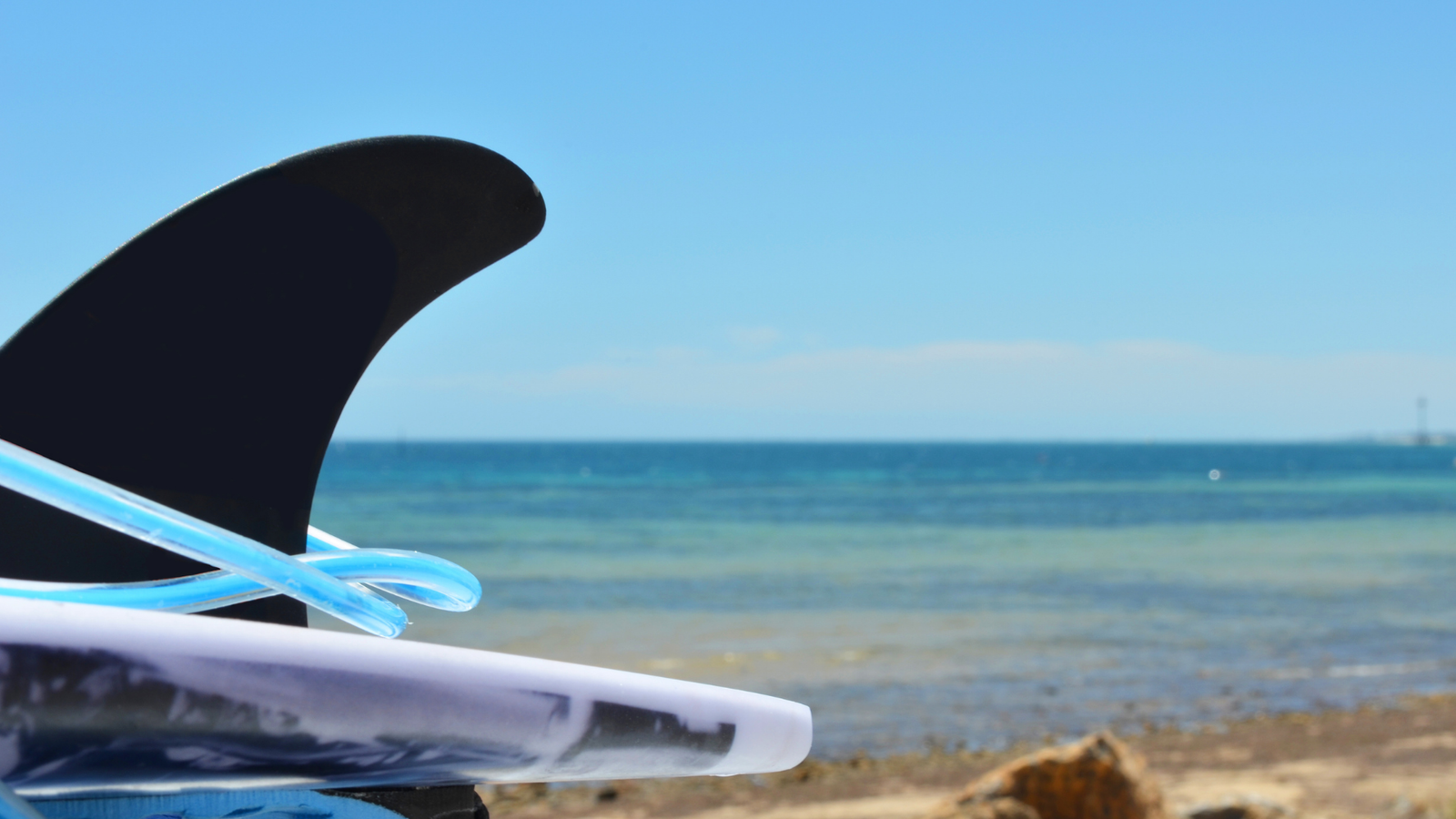
Without fins on your surfboard, you will slide around the surface of the water and find it extremely difficult to turn. Surprisingly to most new surfers, your fins play a huge role in the way your surfboard handles. Whether you use a thruster set up, single fin, quad fin set up, or any other combination, it is important to not only choose high-quality fins for your surfboard but choose a fin that suits your surf style while not breaking the bank. The following surfboard fins are all top quality and budget friendly fins for any surfboard or surf conditions. 9 Best Cheap Surfboard Fins Thruster Fins F2 Alpha Series X-Small (Our Top Pick) FCS M7 Natural Glass Flex (Best Budget) FCS 2 AM PC (Best High End) Quad Fins FCS 2 Carver Neo Glass (Our Top Pick) Project Blank Split Keel (Best Budget) Future F8 HC (Best High End) Longboard Fins Future Tiller (Our Top Pick) FCS 2 Connect SF (Best Budget) FCS 2 Harley PC (Best High End) Best Cheap Thruster Surfboard Fins Future 2 Alpha Series X-Small (Our Top Pick) Described by multiple websites as the “strongest, lightest fins on the market”, the Future 2 Alpha series are perfect fins for performance longboards with a tri-fin, twin fin, or 2+1 setup. This lighter than honeycomb constructed Future fins are carbon and air infused which makes them light yet strong and flexible. Coming in a set of three, the Future 2 Alpha series is perfect for a quick, budget-friendly way to get your extra small thruster setup ready to go. Specs   Side Fins Center Fin Height 4.15” 4.1” Base 3.97” 3.97” Area 12.56”2 12.56”2 Foil Flat   50/50 Size (XS) 75lbs – 115lbs 75lbs – 115lbs Pros: Includes all three fins for a thruster setup. Makes use of air infusion technology and carbon fiber. Lightweight. Extremely high value for money. Cons: You will need to buy a separate larger fin for a 2+1 setup. XS fins are only suited for weights under 55kg. (Best Budget)   Surfboard fins are often on the expensive side, even when looking at budget-friendly fins. In most cases, cheap fins mean poor quality, but that is not the case with the M7 Natural Glass from FCS. These fins are made to be cheap, durable, and fit a large range of surfboards and surf conditions. Coming in a set of three, these are the best fins to set up a thruster board suited for most conditions while not breaking the bank. Specs Base 4.52” Depth 4.67” Area 5.71”2 Sweep 33° Foil IFT (Inside Foil Technology) Size (L) 165lbs – 200lbs   Pros: Budget-friendly. Can be used for a wide variety of surf conditions. Designed for a variety of surfboard styles. Cons: Fins are too small to use as a single center fin. Not ideal for optimum performance in specific conditions. FCS 2 AM PC (Best High End) Built with AirCore technology, the FCS 2 AM PC template was first designed by the legendary board shaper, Al Merrick, and has become one of the most popular surfboard fin templates on the market. This three-fin thruster set stands out among other fins because of its ranked side fins which produce added speed and drive, while the smaller center fin allows a fast release when coming out of turns. These fins are ideal for performance boards with large rockers and suit steep punchy beach breaks well. Specs Base 4.57” Depth 4.53” Area 14.89”2 Sweep 36.6° Foil Flat Size (M) 143lbs – 176 Pros: AirCore technology makes fins extremely light. Top quality fin template by a world-famous shaper. Ideal for radical, progressive surfing. Produce a lot of speed on smaller waves. Perfect for thruster or a four-fin setup. Cons: On the upper end of the price spectrum. Fins do not work well for single fins set-ups. Only suitable for FCS 2 plugs. Best Cheap Quad Surfboard Fins FCS 2 Carver Neo Glass (Our Top Pick) Neo Glass fins are affordable yet are considered premium, top-class fins thanks to their long strand fiberglass and marine-grade polymer molding. These fins will accommodate a large range of styles, but surfers who enjoy pushing hard into their fins to create powerful, drawn-out turns will get the most out of them. Coming with five fins, the Neo Glass set is perfect to mix and match different fin combinations. Specs Base 4.58” Depth 4.66” Area 15.72”2 Sweep 37° Foil Flat Size (L) 165lbs – 200lbs   Pros: Includes five fins. Provide more hold when using a quad-fin setup. Ideal for heavier surfers who enjoy the loose quad fin feel. Cons: Not compatible with the original FCS and FCS Fusion fin plugs. Project Blank Split Keel (Best Budget) Keel fins are known for their speed, drive, and tight turning radius, and the Split Keel fins from Project Blank exceed all three of these categories. As Project Blank is relatively new to the surf merchandise industry their products are cheap, but bring the quality that you would expect from all the top surf companies. Specifically designed with small fast waves in mind, a quad-fin set up with these fins will give you a ride like never before. Specs Side Fins Rear Fins Base 5.70” 4.29” Depth 4.80” 3.11” Foil Flat Flat Pros: Extremely good value for money. Keel fins are extremely fast and responsive. Works with Future fin boxes. Cons: Extra slide from Keep quad fins can make remaining stable difficult for new surfers. Future F8 HC (Best High End) Although they might be costly, you can expect nothing but the best from Future fins. Made with Honeycomb construction, these fins are extra light but maintain their flex thanks to the hexagonal core. This large quad-fin set is perfect for larger surfers that want the slide and drive that a four-fin setup provides. The F8 HC fins use a neutral template which makes them perfect for most boards and conditions, providing the board and conditions suit your quad setup. Specs Front Fins Rear Fins Height 4.64” 4.15” Base … Read more

Differences Between Sailboarding and Windsurfing

Differences Between Sailboarding and Windsurfing

Windsurfing and sailboarding are two water activities that most people have heard of at some time in their lives. Those who are unfamiliar with these names, on the other hand, may wonder what the difference is between these two water sports. The truth is, the terms “windsurfing” and “sailboarding” refer to the same activity. These terms are used interchangeably to describe a water sport in which participants use a sail to control their boards on the water by harnessing the strength of the wind. To thoroughly see why these two terms are used interchangeably, it is necessary first to understand some of the basics of the sport. Delving into the origins of these two names and why many people mistakenly believe that windsurfing and sailboarding are two different activities will help us better grasp the differences between sailboarding and windsurfing. Differences Between Sailboarding and Windsurfing Sailboarding and windsurfing are generally the same water activity. However, there are a few reasons why casual observers believe windsurfing and sailboarding are not the same thing. The following sections go into these reasons in further depth. How Are the Terms Sailboarding and Windsurfing Get Interchanged It is undeniably perplexing to have two distinct names for the same sport. However, once you understand some of the foundations of the sport, these two titles make perfect sense. To avoid any misunderstanding, we’ll refer to this sport as windsurfing from now on. Just keep in mind that this sport is also referred to as sailboarding. How Did the Term “Windsurfing” Came to Be? The origins of the name windsurfing have a fascinating backstory. There was no definitive name for the sport when it first became popular. It was unclear if this activity was classified as a branch of sailing or surfing. As a result, in Baja, California, it was mostly considered an experimental trend. The combination of the sail and the board was dubbed “Baja boards” by the locals. They were named after the gathering place for all of these early windsurfers. This went on until Bert Salisbury, a publicist from Seattle, came up and saw the boards for the first time. He had a spark of creative genius after seeing these water warriors whiz around on their boards just using the strength of the wind. Salisbury went straight to the inventors – Jim and Hoyle Schweitzer, and offered “The Windsurfer” as a new moniker for this cutting-edge board (source). The creators wisely heeded his advice, and the new moniker stuck. As a result, many people began to refer to the entire sport as “windsurfing.” Within the water sports community, this moniker spread like wildfire. Why the Name “Windsurfing” Is Appropriate? Because this sport evolved from surfing, the term “windsurfing” makes perfect sense. The primary distinction is that this sport uses the wind’s strength to propel itself rather than the waves themselves. The vast sail attached to the board accomplishes this. This can collect wind energy and move the board forward, allowing the surfer to surf over the sea. As a result, this name combines the two components of wind and surfing into a single, simple name. How Did The Term “Sailboarding” Come To Be? People coined the term “sailboarding” to describe windsurfing in its early days when there was no official name for the sport. Jim Drake and Hoyle Schweitzer invented the modern windsurf board. However, it’s a little-known fact that theirs wasn’t the first windsurf board ever made. Although their windsurf board design was the one that eventually caught the globe by storm, it was preceded by another windsurf board design. Newman Darby designed the first windsurf board in the mid-1960s. The universal joint was included in this design, which was significantly more straightforward than the present windsurf board. This allowed windsurfers to freely maneuver the mast and sail on the water, which was a breakthrough at the time. Darby never received a patent for this concept. He did, however, try to mass-produce and market his board design. This unusual board was dubbed the “Darby Sailboard” to the general public. Although this business eventually failed, those who bought the Darby Sailboard continued to refer to this newfound activity as “sailboarding.” When the sport was revived in 1968 by Jim Drake and Hoyle Schweitzer’s new, creative design, these individuals continued to refer to the activity as sailboarding. People took notice, and this moniker began to be associated with windsurfing. Why Is “Sailboarding” An Appropriate Name? The word “sailboarding” is also a reasonable choice for the activity because it refers to the riders’ vessel to navigate the water. The phrases windsurf board and sailboard are interchangeable, just as windsurfing and sailboarding are. Furthermore, it is simple for those unfamiliar with the sport to imagine the riders’ board to get out on the water. This name is based on how other sports are labeled, including a detailed description of the equipment utilized. Basketball, for example, is the name given to the basket and the ball, which are the two most essential pieces of equipment in the game. The necessary equipment of the sail and the board is sometimes referred to as sailboarding. Why Is Windsurfing & Sailboarding Perceived As Two Different Things? Rarely Do Sports Have More Than One Name There aren’t many situations in which more than one term is used to describe the same sport in water sports, or sports in general. Water skiing, for example, is unique in that it represents only one type of water sport and has no other discernible term. This makes it far easier for people to recognize the sport. The exception to this rule is windsurfing. As a result, when these two names are used in the water sports world, it’s only natural for people to assume they’re talking about two different sports. Given how few other sports have this issue, it’s difficult to blame them for forming this assumption. Sailboarding and Windsurfing Sound Different From Each Other To put it simply, the terms windsurfing and sailboarding do not … Read more

Why Do You Wax A Surfboard?

Why do you wax a surfboard

If you’ve just bought a new surfboard, the last thing you want to do is smear some gunky wax all over it and “ruin” its gleaming, smooth surface. But, unless you bought the board solely for display purposes, you’ll have to do precisely that. So, why do you wax a surfboard? Is it really necessary to smear its smooth surface with wax? Yes, it is essential to wax your surfboard. A surfboard isn’t all you need in surfing but waves and wax, too. The wax on your board determines whether you have a good session or a bad one. Read along to understand the need to wax your surfboard. This article explains everything about the wax’s relation to your surfboard and what it does to your performance. Why Do You Wax A Surfboard? When wet, surfboards are slippery. The most significant way to ensure that you don’t slip off your board in varied water temperatures is to apply wax to your board. The texture of a soft top’s deck changes when exposed to cold and warm water. Applying a layer of wax to your board can help you maintain a higher level of traction in all conditions. In short, nothing holds you to the board save a small layer of wax for grip. How Is A Wax For Surfboard Made? Paraffin, beeswax, and other hard waxes are used to make surf wax. Every company has its own top-secret, sticky formula. Because the major component – paraffin – is produced from oil, which is not the most environmentally friendly product, natural substitutes such as beeswax, vegetable oils, pine resin, soy, and others are now being employed. Are There Different Types of Wax For Different Temperatures? Yes. Waxes naturally tend to become soft at higher temperatures and hard at lower temperatures. That is why different waxes are required for different temperatures. Each wax has the perfect hardness/tackiness point at a different temperature range. A higher-temperature surf wax is required for surfers who live in more tropical locations (such as Hawaii or Australia). In different environments, surf wax is necessary for individuals surfing in cooler climes. Let’s have a look at the various temperatures so you’ll be prepared when the time comes. Cold Water Wax If you plan on surfing in temps of 60 degrees or lower (don’t forget to wear a wetsuit), cold-water wax is recommended. This is meant to keep your board in the best possible condition, even when the weather drops below freezing. Keep this wax in a cool, dry place to prevent it from melting in hot weather. It’s also vital to avoid using it in hotter or tropical locations because it won’t be able to endure the heat. The majority of surf brands provide their popular selections in various temperatures. This implies you won’t have to swap brands to get a good product at a different temperature. If you live in a colder climate, your local store will most likely have the right product; similarly, if you live in a tropical environment, you’ll most likely discover tropical and warm wax. Cool Water Wax Cool surf wax is suitable for water temperatures ranging from 58 to 68 degrees. Cool Water Wax mixtures perform well in cooler conditions to retain grip and traction, but they won’t hold up as well when the weather warms up. Warm Water Wax Warm water wax is required for water temperatures ranging from 58 to 75 degrees. Because these are less resistant to high temperatures, following the manufacturer’s instructions is critical for maximum board traction. Tropical Water Wax If you plan on surfing in waters that are 75 degrees or above, you’ll need a tropical surf wax to preserve your board traction. These are made to resist higher temperatures, so they won’t melt when it becomes too hot outside or when exposed to direct sunshine. In addition, these temperatures are often more challenging to work with than other wax temperatures. Wax Application Knowing when and how to apply surf wax is critical to a successful surfing session. For starters, if you don’t apply enough wax, staying upright on your board will be tough, if not impossible. This is especially critical for newcomers who are still learning the ropes. On the other hand, putting too much wax on your board can make it overly slippery. This is essentially a waste of wax because you’ll be right back where you started—except with a dirty board to clean. When To Apply Surf Wax “One board, one wax job,” as the saying goes, which sounds fantastic but in practice probably means getting a new quiver of boards every few months, which we think you don’t. The majority of surfers like to wax their surfboards before each session. Obviously, this will build up to a thick, heavy, grey layer of ungrippy wax that will need to be replaced over time. Whether you have OCD or not, the frequency with which you wax your surfboard will vary, but in general, de-waxing with the change of the seasons (4 times per year) or every time you go on a surf trip should be enough. It’s also worth considering whether a fast combing with a wax comb is preferable to apply more wax. How Far Forward Should You Wax A Surfboard? To catch the front foot on those frontside fin chuck/tail blasts, surfers like John John Florence wax almost all the way to the nose. You won’t be doing many of those in a typical session, but you could want to get forward into small tubes. It’s better to have the wax all the way up to the nose and not need it than to be slipping and sliding away if you need it. Choosing The Best Surf Wax Aside from water temperature, there are a few things you should consider in picking the best surf wax. Here’s all you need to know about surf waxes if you’ve mixed up your base and top coats and don’t know where to start! Basecoat … Read more

Top 9 Best Skateboard Brands | Tried and Tested by the Pros

Best Skateboard Brands

Skateboarding is one of the top sports in the United States. With over 2,800 skateparks scattered all around here, the demand for skateboards and clothing is always at an all-time high.  Due to this, brands that pioneered in manufacturing skateboards continue to develop and build high-quality products for skaters — not just in the US, but also in other parts of the world.  But among these companies, which one stands out? In this article, we’ve listed the best skateboard brands that push the limits and boundaries of creativity. These are brands that were tested by professional skateboarders, with the aim to inspire the young generation of skaters to expand their talents and skills.  Top 9 Best Skateboard Brands The list below consists of the most popular brands in the market today. Some of them may already be familiar because of their collaboration with pro skaters in designing and marketing. Here they are in no particular order.  Santa Cruz Element  Anti-Hero Plan B Almost  Girl Zero Creature Powell Peralta Santa Cruz Santa Cruz from the NHS, Inc. distribution company holds the title of the oldest skateboard company in the world. Established in 1973, this brand was founded by surfers Richard Novak, Doug Haut, and Jay Shuirman. Their skateboard products consist of decks, wheels, and clothing.  Since the founders are surfers, the Santa Cruz brand initially started as a store for surfing equipment; however, it didn’t receive much success. Until one day, they received an order to make 500 skateboards from a Hawaiian company. The boards immediately sold out after that, and this ultimately helped established the name of this legendary brand.  Santa Cruz broke through the market and grew a fan base because of the logos and graphic designs created by Jim Phillips, a well-known surf artist from California. Some of his work includes the Road Rider Wheels, the Red Dot, the Screaming Hand, and the slanted Santa Cruz logo.  For many years, Santa Cruz has been consistent in constructing durable skateboards. They’re also the first ever to introduce concave decks that are made from birchwood. It isn’t as high-quality as Canadian maple wood, but it’s more affordable.  Santa Cruz skateboards are customizable and can be combined with different wheels and trucks from other brands. This makes them good options for beginners who are still learning how to ride and those who are still experimenting on their riding style.  This brand is also known for the ‘Everslick’ coating wherein their graphics are sealed under a plastic layer. They also utilize a method called ‘Powerply’ wherein the nose or tail of the skateboard is reinforced to make it more durable. One of Santa Cruz’s greatest achievements was when they were inducted into the Skateboarding Hall of Fame in 2013. Element In 1992, Johnny Schileneff founded one of the biggest and most influential skateboard companies in the world — Element.  This brand was formerly known as ‘Underworld Element’, but they had to go through rebranding, so they decided to remove the first word and settle with just ‘Element’. From their former base in Atlanta, their team also moved into a creative space known as The Branch in Costa Mesa, California.   Element was first known for its skateboard decks, but today, they also sell completes, wheels, trucks, and other merchandise like clothing, apparel, and accessories. They’re popular for their very affordable prices. For under USD 100, beginners (and even pros) can already have high-quality skateboarding products that’ll last many seasons of pops and slides.  Speaking of pros, another reason for Element’s success is the prominent team of skaters that helped grew their fan base. This includes famous names like Tom Schaar, Donny Barley, Evan Smith, Bam Margera, and Nyjah Huston, just to name a few.  Element skateboards feature graphics that are all about art and nature. One good example of this is their renowned logo inspired by the water, fire, wind, and earth. This brand was created with Schileneff’s ‘Elementality’ vision that focuses on authenticity, sustainability, and taking on social and ethical initiatives in manufacturing products.  One of their notable environmentally-friendly initiatives is the use of a technology called Thriftwood construction. This skateboard manufacturing process doesn’t include the use of wood dyes and other chemicals, therefore, they produce less carbon footprint.  Element skateboards are also made with thin layers of wood that are bound with very strong adhesives. By doing this, they use less wood and make lighter boards.  Anti-Hero The brand Anti-Hero was founded in 1995 by Julien Stranger in hopes to create a skateboard trend that sets it apart from the others.  For 15 years, Anti-Hero has only been making skateboard decks made from solid-pressed 7-ply maple wood. They have a distinct concave with a low flex design for comfort and easier maneuverability.  Their decks feature striking graphics created by Todd Francis. In 1996, he designed Anti-Hero’s logo, along with several deck designs that feature his artworks. Some of Anti-Hero’s famous deck designs include the skull, the trainwreck, the bald eagle, and other different animals.  To further promote their skateboard lifestyle theme, Anti-Hero collaborated with pro skaters such as Jeff Grosso, a prominent skater and documentarian. Their team is also joined by Grant Taylor, Tony “T-Mo” Maiorana, John Cardiel, and Ryan “Peabody” McWhirter. They’ve also partnered with other famous brands like Girl Skateboards to promote the video documentary ‘Beauty and the Beast’ that featured their Northwest tour in 2008.  Today, Anti-Hero is owned by Deluxe Distribution, and it is still considered one of the bests in the skateboarding industry. Plan B Next on the best skateboard brands lineup is a company that’s famous for selling premium skateboarding gear. For 30 years, Plan B brand remains one of the best professional deck companies. However, their journey, like other brands, consists of its own ups and downs.  Plan B was founded by Mike Ternasky who first worked for H-Street along with Tony Magnusson. After he realized that H-Street is a company owned by business owners that was only focused on profit, Ternasky decided … Read more

What Is a Riptide? | Is It the Same as a Rip Current?

What is a Riptide

Riptide and rip currents — are two terms that are often used interchangeably by media and beachgoers alike. Although both of them are powerful and dangerous phenomena that lurk beneath the water’s surface, these two are not quite the same thing. A riptide is a strong flow of water within enclosed tidal areas such as harbors and estuaries. It’s caused by a tide that pulls water through an inlet along a lagoon or barrier beach wherein the water flows out to the sea. Oftentimes, people don’t know how severe a riptide is until they get swept away by it hundreds of meters away from the shore.  In this post, you’ll learn about the dangers of riptide and rip currents, as well as their differences. We’ll also share with you some safety precautions you can do to avoid being carried away by these death traps.  What is a riptide? In June 2021, news broke about a father and child who died after being swept away by a riptide in Apollo Beach Nature Preserve. The man who rescued them was also reported to be missing. Sadly, the rescuers said that it’s unlikely he’ll be found alive.  The thing about riptides is that they can’t be seen with the naked eye. You won’t be able to feel anything while you’re being swept away. You’ll look back at the beach and see that you’re already miles away from the shore — and that’s when the panic starts to kick in.  Before we discuss more of the risks, you must first understand how riptides are formed.  Because of certain confusion with the terms, a riptide is often mistaken as the same as rip currents; however, the former is caused by tidal movements, as opposed to the latter which is caused by wave action. Unlike rip currents, riptide is also predictable as it is influenced by the rise and fall of the water level in the ocean.  Riptide is a powerful current that often takes place in coastal regions, but it can also happen in constricted areas such as bays, large lakes, and lagoons. Even if there are no waves, riptides can occur, especially if they’re next to man-made structures like piers and jetties.  Coastal engineers refer to riptide as flood jets and tidal jets because of the large amounts of sand it carries. Later on, this sand will form sandbars under the ocean and in the inlet’s channels.  Riptide is also characterized by strong offshore currents. If the water flow is stabilized, the water that flows to the ocean is more consistent. The more constricted the flow is, the stronger the riptide will be. This increases the risk of being pulled a thousand feet offshore by the falling tides. When there’s a riptide, no boats sail out because the waters could be life-threatening. Not even the best kinds of swimmers will be able to swim against these currents. That’s why local governments put up signs of warnings in danger zones, but sadly, some people disregard these signs.  The riptide in Shinnecock Inlet in New York that extends more than 980 ft (300 meters) offshore is an example of a current you don’t want to be swept away in. Another dangerous place where riptides occur is Australia. Every year, more than 20 people die here because of these dangerous currents. That’s more than the combined total of the victims of other natural calamities such as cyclones and floods in this country.  How to Survive a Riptide The natural reaction when you get pulled away by a riptide is to get overwhelmed by panic and fatigue. However, not knowing what to do in this kind of situation may end up in death. In the worst-case scenario that the waters take you offshore, you must remember these things to avoid drowning. To escape and survive the strong currents generated by rip currents, the best thing you can do is to stay afloat as much as you can and keep your head above the water. Let your body flow in the direction where the current is going.  It’s better to be swept away far from the shore and live than die trying to swim against it. Wave for help and hope that a lifeguard or a boat will see you. Raise one arm or yell if you can.  It’s paramount that you stay calm. Panicking and paddling against the current will only cause you to lose energy. Control your breathing.  Refrain from thinking negative thoughts and instead focus on facts. Remember, riptide is a natural hazard, but its currents won’t pull you underwater, unlike undertows.  What are rip currents? Warning signs are useless if you don’t know how to differentiate riptides from rip currents, but since news and some people use these terms in similar ways, things can really get confusing.  Rip currents are strong, narrow currents that are often found near beaches. They are formed when the waves that are breaking to the shore pile along the beach, then move directly away from the shore by cutting through the breaking waves.  They are formed when there’s a depression in the sand that creates a channel underneath where the water flows back out to the ocean. Take a look at the video below to see what rip currents look like when seen from an elevated place.  A rip current doesn’t look like what it seems. By observing it from above the water’s surface, a rip current is seen as a darker and calm spot. This is why a lot of swimmers mistake it as the safest area to swim in, when in fact it’s the most dangerous. According to NOAA (National Oceanic and Atmospheric Administration), rip currents kill 100 people every year. With a speed that can reach up to 8 meters per second, these currents can take you 100 meters away from the shore in just a manner of minutes.  The location of a rip current is unpredictable, which further adds to its long list of dangers. … Read more

Top 5 Best GoPro Surfboard Mounts | Tips & How-to’s

Best gopro surfboard mounts

Your success in surfing relies on your form and skills, and one way to improve on these things is by watching yourself from another perspective. But what if you ride alone and there’s no one else with you except your GoPro? GoPros can be handheld, but this method is inconvenient especially if you’re riding big waves. You can also try putting it in your mouth; however, that makes paddling and breathing quite difficult.  The easiest and most convenient way to surf with a GoPro is by mounting it on your surfboard. This enables you to capture videos of waves as it unfolds so that your viewers can see how riding a wave is like from a different angle. Meanwhile, the selfie action captures your form while you ride the waves.  Want to get your hands on one of these things? Keep reading to learn pro tips on how you can make the best quality videos with a mounted camera, including our top 5 best GoPro surfboard mounts you might want to check out.  What are GoPro surfboard mounts for? Surfers can be an egoistic bunch. We like to watch and relive our best performances. We also like to boast about the biggest waves we’ve ever ridden to other surfers — and what better evidence is there other than a video you’ve captured yourself? Because of our personal need to memorialize these kinds of stuff, GoPro became a popular piece of equipment in the surfing industry. This device can often be seen attached to a surfboard or to the different parts of the body where it can capture the best angles.  But the thing is, it’s difficult to focus on two things simultaneously. You may find it hard to hold on to your GoPro if you’re still having trouble balancing yourself in the water. For this reason, beginners choose to go hands-free. They use mounts instead to attach their cameras to the nose of their surfboards.  A GoPro surfboard mount is easy to use. Its usual kit includes an FCS-compatible male plug that can be paired with FCS center fin sockets. Using this will definitely spark your inner creativity. By simply changing the camera’s angle, you’ll be able to take photos and videos of the beach, switch the view to the other surfers at your back or film the action that’s happening right in front of your eyes. Oh, and might we add that this also makes great video footage of outrageous barrels!  However, you should take note that GoPros mounted on a surfboard doesn’t always take the most awesome videos. Sky-high waves tend to look flat when their shots are taken from a surfboard’s point of view; making your shots a bit pointless since no one will believe you’ve surfed those waves you’re bragging about.  Also, GoPro surfboard mounts are great for longboards, but not so much for shortboards. Since shortboards are, well, short, the camera will be placed too near to the rider, therefore the whole frame will only cover the rider’s face. Surfboard mounts are also not suitable for soft-top boards as the adhesive will not stick properly on foam. The worst-case scenario that could happen is you lose your GoPro in the water during a wipeout.  Surfboard mount vs. Mouth mount If a surfboard mount lets your viewers see how your board sees the waves, then a mouth mount shows them your point of view.  Mouth mount is the best way to capture the waves from a first-person perspective, and it also creates more stable footage compared to its alternative. This is the reason why you’ll spot a lot of pro surfers like Kelly Slater, Mason Ho, and Nat Young biting onto these things when they’re surfing. Quality-wise, mouth mounts create way better videos than surfboard mounts; however, they also come with a couple of disadvantages.  For one, biting down on a mouth mount all throughout your surfing session will sore out your jaw, which could last until the next day. You may also find it tricky to exhale in and out with it while you’re paddling through breaks.  If you encounter a nasty wipeout, pray that you don’t lose a tooth while you’re biting down the mouth mount. Although it makes a cool story and it builds some character, nobody really likes losing some of their pearly whites. Top 5 Best GoPro Surfboard Mounts If you choose to use a surfboard mount instead of a mouth mount, here are the best ones you can find online today.  GoPro Surfboard Mounts (Official GoPro Mount) – Our Top Pick HSU Surf Mounts and Accessories for Surfing – Best Budget Neewer 50-In-1 Action Camera Accessory Kit – Best High-End Hooshion Surfboard Mount Kit WOLEYI Surf Camera Mount #1: GoPro Surfboard Mounts (Official GoPro Mount) – Our Top Pick Specifications:  Price: $18.95 Material: Plastic Compatible with: GoPro Hero 3 to 10, Max  With GoPro prices ranging from USD 250 to a little over USD 400, there’s no way you would want to lose your camera in the sea. That’s why if you want to keep your GoPro safe and sound on the top of your surfboard, you might as well put your trust in the makers of GoPros itself.  This surfboard mount is the official accessory of the GoPro store. Not just for surfboards, this mount can also be used with skimboards, SUPs, kayaks, and boat decks. Its kit includes 2 surfboard mounts, an FCS male plug mount, a locking plug, as well as 2 adhesive mounts and anchors for security. Now, you might be wondering if adhesives can really hold your GoPro in water, and the answer is yes (given that you have installed it properly). There are several reviews you can find online about users who didn’t achieve their desired results, with the most common being that the adhesives don’t stick well on the surfboard.  The thing with this surfboard mount is, just like the other mounts, it doesn’t stick well in foam or soft-top boards. In regular boards, … Read more

Surfers Who Died While Surfing | 5 Deaths That Shook Surfing World

Surfers Who Died During Surfing

When the World Surf League announces the entries for the wipeout of the year awards each year, thousands of people exclaim, “How on earth didn’t they die?!?” While there have been a few high-profile surfer deaths in recent decades, surfing, especially in huge waves, is not nearly as dangerous as it appears. On Oahu’s North Shore, Pipeline is well-known as the world’s most deadly surf break, having claimed the lives of more than ten surfers since the 1960s and resulting in numerous significant injuries and near-misses. Thankfully, with all of the improved water safety, we are seeing a low body count, with inflatable life vests preventing surfers from being held underwater long enough to drown and on-land spotters working alongside jet-ski safety teams ensuring surfers are quickly whipped out of harm’s way after a wipeout. Surfers Who Died During Surfing We don’t intend this to be a memorial to their deaths but rather a celebration of their unwavering devotion. Every swell bears the imprint of their presence. All of our thoughts and prayers are with those who have been deeply affected by these surfers’ deaths. Mark Foo (February 5, 1958 – December 23, 1994) Mark Foo, a big wave surfer from California, on December 23, 1994 died while surfing at Mavericks. He was 36 years old at the time. Foo was born in Singapore to Chinese-American parents who worked for the US Information Agency as photojournalists. He didn’t learn to swim, let alone surf, until he was ten years old when his family relocated to Honolulu from Washington, DC. Foo’s larger-than-life personality was reflected in his surfing style — he was one of the first to slice up and down monster waves as though they were head-high — and it also made him a captivating photo subject. He relied on surf videos and periodicals to keep connected to the sport while living on the mainland, so he understands the reach and power of such material. He made friends with surf photographers and was featured on the covers of Surfer and Surfing, the two most popular publications in the expanding surf business, more than the world champions who beat him in competitions. Because of his widespread visibility, he secured commercial contracts that paid him to be a billboard surfer. Though he never made a lot of money surfing, he was practically paid to surf for free, a dream come true for any wave surfer. Foo paddled out into the Maverick’s lineup in 1994 with big wave surfers Ken Bradshaw and Brock Little. Photographers packed the beach, and the presence of North Shore icons bolstered Mavericks’ credibility. Foo has never been to this break before. Bradshaw and Foo had been on Oahu the day before, but on December 22, they hopped a red-eye to San Francisco after hearing about a once-in-a-lifetime swell. The next day, though, the surf had changed from glassy 50-footers to mushy 25-footers. Foo had surfed bigger, gnarlier waves previously, but he dipped in on an otherwise average wave, went over the falls, and disappeared. His lifeless body sank to the water’s surface. Foo re-imagined what it meant to be a professional surfer. He demonstrated that large wave surfers are athletes and artists and a realistic career option. Sion Milosky (August 10, 1976 – March 16, 2011) Sion Milosky was an undisputed hero among the working class. He was a welder who developed his business on Oahu and lived for two things beyond all else: his family and his work. Big surf was the second. He traveled around legendary North Shore lineups, including Pipeline, Himalayas, and Waimea Bay, near the end of his life. Nonetheless, his wife and two children were always his top focus. He was once asked what he would do if he only had six months to live in an interview. He said without hesitation, “Spend time with the family.” His devotion to his family, on the other hand, had no bearing on his surfing. The Kauai native was born into a family of surfers naturally adept in big waves. Milosky was an underground inventor in both the tow and paddle-in movements. He was a former professional longboarder who essentially started surfing large waves because he could stay close to home. And the surfing world began to notice him: in 2011, he was voted Surfing magazine’s Underground Charger of the Year, and he won $25,000. He reportedly spent the money on that fateful trip to Half Moon Bay. When asked what superpower he would choose in that same interview, he replied, “Eternal life.” Sion Milosky, then 35, of Kalaheo, Kauai, died while surfing Maverick’s in Northern California, causing tragedy in the surfing world. According to the Santa Cruz Sentinel, Sion had caught a number of waves before taking a two-wave hold-down and drowning. According to the article, Nathan Fletcher discovered Sion’s body floating about a mile from the lineup. Donnie Solomon (? – December 23, 1995) Donnie Solomon, who grew up surfing in Ventura, California, was an obvious talent to watch. Solomon was sitting in the lineup with Ross Clark-Jones during an extraordinary session at Waimea Bay when they paddled for a set’s opening wave. Clark-Jones caught and rode the wave, but Solomon got himself into a bad situation and ended up inside. The waves were just getting more prominent as they approached. When Solomon tried to paddle outside, he didn’t make it—he was two-thirds up the face when the wave decided to break, throwing him over the lip. He couldn’t be revived once he reappeared. Solomon, a Red Cross supporter, would stop by local chapters while tracking waves and racing on the WQS, inspiring other surfers to do the same. He believed that lifeguarding and safety training in first aid and CPR were essential for all water sports like surfing, particularly the youth. Todd Chesser (February 16, 1968 – February 13, 1997) Todd Chesser was born on February 16, 1968, in the state of Florida. After his father was killed in a car accident … Read more

What Is A Hawaiian Lei? | The Beckoning Aloha Tradition

What Is A Hawaiian Lei

There’s something about coming to Hawaii that makes us feel overly welcome as we arrive. A greeting so powerful, it starts a sense of place in arriving and even departing from this place. This distinct greeting symbolizes the islands and affection for loved ones. The Hawaiian Lei. Early Polynesian voyagers who traveled on the long and tiring journey from Tahiti to the Hawaiian Islands established the tradition of receiving and gifting a lei. But, what is this tradition, and why is it still widely practiced despite modern times. Find out what is a Hawaiian Lei as this article unfolds the beautiful Aloha tradition and culture that we all love. What Is A Hawaiian Lei? A Hawaiian Lei is a decorative garland worn around the neck or on the head. Lei comes in various materials and lengths (flowers, leaves, nuts, ribbons, candy, money, etc.). In Hawaiian culture, Lei was traditionally offered to symbolize love, friendship, honor, celebration, and greetings. The wearing of Lei in ancient Hawaii symbolized riches, monarchy, and status. It’s also linked to the hula hoop, religion, and geography. The History of Hawaiian Lei Early Polynesian voyagers brought the lei tradition to the Hawaiian Islands, sailing by the stars in sailing canoes from Tahiti. Hawaiian Lei custom began with these early settlers. Flowers, leaves, shells, seeds, nuts, feathers, and even animal bone and teeth were used to make the Hawaiian Lei. According to Hawaiian tradition, ancient Hawaiians used these garlands to beautify themselves and distinguish themselves from others. Perhaps the most important was the Maile lei. It was used to represent a peace accord between rival chiefs, among other holy applications. The leaders would symbolically tie the green Maile vine in a Heiau (temple), and its completion would officially create peace between the two groups. Hawaii is a state made up of eight major islands. Each island has its unique Lei, reflecting a harmonious combination of texture and color. Due to rigorous agricultural rules, most of these Lei cannot be shipped to the mainland. Hawaii (Big Island) – Red or the Ohia Lehua flower Oahu – Yellow with the gold ‘Ilima Maui – Pink and the Lokelani rose Kauiai – purple with the Mokihaa Molokai – Green with Kukui Lanai – Orange with Kauna’oa Niihau – White with Pupu o Ni’ihau (shells) Kaho’olawe – Hinahina Lei And the Custom of Aloha With the introduction of tourism to the islands, the Lei quickly became a symbol of Hawaii for millions of visitors worldwide. Tourists and visitors came to Hawaii by boat before the familiar hum of airline jets could be heard in the sky. Many elderly Hawaiians reminisce about their “boat days” with fondness. As the boat arrived at the port, it was a social party with lei greeters, hula dancers, music, and photographers. Tossing one’s leis into the ocean near Diamond Head Crater was a common custom for departing travelers. This gesture is practiced in beliefs that they’d be safe and sure to return to Hawaii if their Lei drifted to shore. Every May 1st has been designated as Hawaii’s official “Lei Day” since 1928. It’s known as “May Day” in Hawaii. The flower lei is celebrated on May Day with Hula, parades, and music. Most parents request a day off work on May Day so that they may watch their children engage in school-sponsored May Day activities and programs. On May Day, everyone in Hawaii is urged to wear a lei. Hawaiian Lei Flower Meaning and Lei Flowers Used There are several materials used to produce Lei, including raffia, yarn, fish line, or even dental wax for stringing, and the most common flowers used for lei garlands include: Carnations – The Missionaries introduced Ponimo’I to Hawaii, with women wearing white and men wearing red carnations. Plumeria – also known as Melia in Hawaiian or Frangipani, is a five-petal flower with a beautiful tropical aroma and a rainbow of hues ranging from white to yellow to orange to pink to deep red. Arabian Jasmine – This flower, known in Hawaii as Pikake, was brought to Hawaii by Chinese immigrants. It has a mellow and sweet aroma commonly used in weddings and special events. Roses – also known as the Lokelani rose, are a favorite accent flower on Lei and come in various hues to match any event. Orchids – are preferred to be utilized with the white and purple dendrobium kind used for producing an orchid type of Lei because of its sturdiness and beauty. Ginger – traditional Micronesian or Malaysian ginger blossoms have a powerful, enticing scent and are commonly used for anniversaries, birthdays, or other special occasions. Stephanotis – or Pua Male in Hawaiian is called the wedding flower with its sweet-smelling scent. The name Pua Male translates into “Marry Flower,” making it a fitting choice for weddings. Lei Etiquette There are very few rules when it comes to wearing a Hawaiian Lei. There is no need to wait for a special occasion to wear one. It is totally acceptable to buy or manufacture a lei for oneself. Locals keep a nut, seed, or shell lei on hand for special occasions. Flower, fern, and feather lei are frequently used on hats. When getting a Hawaiian Lei for the first time, there are a few “unspoken guidelines” to keep in mind. A Hawaiian Lei should be a joyful expression of one person’s love for another. As a result, always accept a lei and never refuse one. Accept the lei as described above, then discreetly and apologetically slide it off if you are unable to wear it due to allergies or sensitivities. If you are unable to wear the lei, it is appropriate to give it to your significant other. A Hawaiian Lei should be softly wrapped over the shoulders and hung down both in front and behind the wearer. Removing a lei from your neck in front of the person who presented it to you is considered impolite, so if you must, be discreet. Birthdays, anniversaries, marriages, … Read more

Teahupo’s History and Surf Break | Behind the Wave

man surfing Teahupo WAVE TAHITI

Teahupo (spelled as Teahupo’o and pronounced Chop-pu) is one of the world’s mightiest waves. Teahupo, a small and tranquil community, nestled on the southwest corner of Tahiti’s smaller dormant volcano, Tahiti Iti, has kept much of its traditional culture. The waves of Teahupo have a unique combination of size, force, and speed, which is made even more deadly because they break over a steep coral reef only meters beneath the surface. We can add sharks, capsizing boats, and the ability to pull your pants down to those scary possibilities. Still, year by year, the world’s best surfers head to this surfing destination for pro competitions. Let’s take a look at Teahupo’s History and Surf Break and find out why it’s terrifying and exciting at the same time. Teahupo’s History Freshwater ruined the reef hundreds, if not thousands, of years ago when it flowed down from the mountains behind Teahupo’o, producing what is today known as Passe Havea, the point where the paved road stops in town and dirt roads begin. Teahupo’o is now known as “The End of the Road” because of this. As the ocean swell bends and races along the reef, the monstrous wave takes on its dramatic shape and pitch as it leaves a gently sloping bottom and is hurled towards a dry reef. To avoid being launched, a surfer must take off under the lip to successfully surf a wave at Teahupo’o. That’s how close it comes to colliding with the live coral below. The Late 1900s When the surge of waves rolled in each year, Teahupo’o residents witnessed this monster build outside their homes – but no one thought of trying to surf it until the late 1900s. Then, in 1985, Thierry Vernaudon, a Tahitian, and a few other locals embarked on a 15-minute paddle out and surfed Teahupo’o’s Surf Break for the first time. The waves they surfed were nothing like what we now call Teahupo’o – the thick, heaving wave that terrifies everyone. Teahupo’o was still a closely guarded secret. Then, barely a year later, bodyboarders Mike Stewart and Ben Severson found themselves crossing the bridge at the End of the Road – and they were the first to show off Teahupo’o’s potential, if only to their friends. Teahupo’s Surf Break became a gathering site for the subterranean hellmen of the bodyboard scene, thanks to whispers and tall tales. The Emergence of Professional Surfing The rest of the world did not widely recognize Teahupoo until 1997. There had been some film up to that time, but not much, and what was accessible didn’t even scratch the surface of what was possible. The ASP World Tour then traveled to Tahiti to compete on this legendary slab. They were unable to locate what they were looking for. And the Teahupo contest was practically never held. “We came here in 1997 to run the first event,” recalls Steve Robertson, then-ASP Australasian Manager. Steve was given the task of organizing the event. “And it was a disaster.” “The surf was terrible. The weather was terrible. We were using a big ferry boat for the Beach Marshall, and when there was a drastic wind change in the middle of the day, the ferry was blown up onto the reef causing thousands of dollars in damage. Then mid-event, the organizers up and left us because they ran out of money.” This left Steve and the rest of the ASP team to foot the bill for the award money, nearly going bankrupt in the process. Steve remarked, “It was a terrible experience. And we decided that we weren’t going to come back.” Teahupo’s Second Chance The Tahitian government contacts Steve out of the blue and offers to pay everything back if the ASP can show them the invoices incurred during the accident. That is exactly what they did. “Then they plead for us to return and run the event in 1998,” Steve continues. So the ASP returned to Teahupo the following year, preparing to run the Gotcha Pro at Teahupoo  — only to be met with calamity once more. “It was the same old story – terrible weather, terrible surf – and the government was doing everything they could to welcome us, but at the end of the day, the ocean was still flat.” “Halfway into the competition, almost everyone was frightened, fearful that they wouldn’t be able to finish. Almost everyone that is – with the exception of Teahupoo legends Raimana Van Bastolaer and Vetea Poto David. The waves will come shortly, do not worry,” Raimana stated over and over. They did, as it turned out. The Teahupo Wave that Changed Surfing Forever “We got up the next morning, and it was like nothing I’d ever seen in my life,” Steve adds. “Richie Porta, the Head Judge at the time, was with me when we first saw it at daybreak. We couldn’t believe what we saw. It was one of the most surreal experiences I’ve ever felt.” “It was easily 12-foot, but it wasn’t the size that worried us. The sheer power was unbelievable and completely uncharted territory for an event. We thought, ‘Can we really run and make these guys go out in this surf?’ We had a really good field of surfers (it was a WQS 6-Star at the time), and it was just too perfect to call it off. We knew we could do it. So we did.” The Gotcha Pro lasted three days, and each day was spectacular. The imagery spread like wildfire, and the event became an overnight sensation. Had there been no persistence from the Tahitian government, particularly Pascall Luciani and the Tahitian Water Patrol, the team wouldn’t have returned. Teahupoo would have never made it to the history of surfing. Teahupo’s Surf Break Teahupo is one of the world’s most dangerous waves. It has the potential to give you a once-in-a-lifetime ride or to kill you. The liquid gem of Tahiti is often referred to as a mutant species that courageous, … Read more

Who Are The Hawaiian Gods? | Hawaiian Mythology

who are the hawaiian gods

One of Joseph Campbell’s quotes says that “Myth is the secret opening through which the inexhaustible energies of the cosmos pour into human cultural manifestation.” The connection between humans, myth, and nature is apparent in Hawaii, once called “The Big Island.” Hawaiian mythology isn’t just a piece of history from long ago. It’s a widespread spiritual belief among many of the island’s indigenous people. Hawaiian kahunas’ (or priests) ancient chant – the epic Kumulipo traces humanity’s origins to a cosmic night believed to be the concept of biological evolution. Let’s take a closer look at Hawaiian mythology. We’ll learn who are the Hawaiian Gods and goddesses, and we’ll see how many of the island’s best attractions are linked to old stories. Who Are The Hawaiian Gods? Hawaiians still follow the ancient Hawaiian religion and mythology. Kāne, Kanaloa, Kū, and Lono were the four main Hawaiian gods of the people and the chiefs in the past and present. Each of these Hawaiian gods is different, and each community worships a different version of them. The Four Main Hawaiian Gods Kāne: The God of Creation and the Sky The father of living creatures The highest of the four major gods Kāne was the creator and the god of light in Hawaiian mythology. He was also a significant person in the world. Each time Kane is used in a title, it means the creator god. A lot of places where he lives call him “Tane.” He lives in Tahiti and New Zealand, as well as southeast Polynesia. People prayed to him as the god, gave him Kapa cloth, and gave him small amounts of alcohol. There are a lot of myths about Kāne, who is said to live in a floating cloud between earth and heaven. Kāne is said to live off Kauai’s west coast. Kane-huna-moku, or “hidden land of Kāne,” is the place’s name. It was thought to be the place where the sacred water of life, which has magical properties like making people rise from the dead, was found. In Hawaii, the great white albatross was thought to be a god because it was so white. Some Hawaiian chants were written for Kāne in the 19th century. They seem to have been inspired by early Christians who came to the island. The Hawaiian gods Kāne and Kū, and Lono were thought to be part of a primordial trinity with Kane, where the two Hawaiian gods helped Kane make heaven and earth. In one myth, they made a man and a woman in a land called the marvelous land of Kane. Kū: The God of War The god of war, politics, farming, and fishing The husband of goddess Hina Kū, the Hawaiian god of war, is often called Tu in Polynesia. The words ku and tu mean being stable, standing tall, or rising up. The war god had a high place in the pantheon because there were a lot of fights between tribes and island groups. In fact, King Kamehameha I was very fond of Kū, and he had a wooden statue of him with Kū when he went on many wars. The war god Kū also played a lot of other roles. He was called Kūʻula-kai, which means “Ku of the sea,” and Kū-moku-hāliʻi, which means “Ku of the canoe.” Because of how he spread the forest, he also became known as Kū-moku-hāliʻi, or Ku the island spreader. In Hawaii, Kū was linked to male fertility and the husband of Hina, and he and Hina were called on in rituals to help people have children. Lono: The God of Peace, Rain, and Fertility The god of agriculture Associated with fertility, rainfall, music, and peace Lono was the Hawaiian god of agriculture, and he was linked to fertility and the sky’s clouds, storms, rain, and thunder. When people call him by his full name, they call him Great Lono Dwelling in the Water. His symbol was the akua loa, which is a long staff with a carved human figure on top. Its neck has a crosspiece and is decorated with feathers, ferns, and Kapa cloth. Lord Lono, also known as Rongo or Ro’o in southeastern Polynesia, was also a Hawaiian god who could help people get better. There, he goes by the name of Ono in the islands of the Marquesas. In Hawaii, there were a lot of temples built for him that were used for medical things. The priests also asked Lono for rain and many crops, especially during the rainy season. The makahiki, which is a celebration of the annual harvest, was named after him because of this. Many people on the Hawaiian island thought Captain James Cook was their god Lono when he came to their island in 1778. Even the priests held a ceremony in their temples to honor him. In the end, the people in Hawaii realized that he was just like them. A fight broke out between the British and the Hawaiians, and Cook was killed. Kanaloa: The God of the Ocean The god of the underworld Teacher of magic and ruler of the ocean Kanaloa, Kāne’s younger brother, was the god of the ocean and wind in Hawaii. His name is Tangaroa, and he is one of the most important Hawaiian gods in all of Polynesia and is considered the best. However, his authority and roles vary from one island group to the next one. Even though he didn’t live on the island, Polynesians even thought of him as their creator and main Hawaiian god. Kanaloa was not as important in Hawaii as Kane, Ku, and Lono as the three Hawaiian gods. This is likely because people later arranged their pantheon to look like the Christian triadic pattern. Hawaiians thought of him as the god of squid, or sometimes an octopus that lived deep in the ocean. His own temple was not very common, but he was mentioned in prayers and celebrated during a specific time of the lunar month. People in Polynesia believe … Read more

Feed Your Stoke. Join the Surf Hungry Crew

Surf tips, gear reviews and travel guides straight to your inbox

"*" indicates required fields

Privacy*
This field is for validation purposes and should be left unchanged.