Jet Ski vs Sea-Doo | Which Brand Makes Better PWC?

Jet Ski vs Sea-Doo

Choosing a personal watercraft can be difficult if you don’t know what to look for. With the wide range of brands and models offering different features, the search can really get overwhelming. Should you go for the reputable Kawasaki Jet Ski — or the fun and modern Sea-Doo PWC? Kawasaki paved the way when they launched their Jet Ski, while Sea-Doo started the trend of creating recreational personal watercraft suited for entry-level riders.  Between these two top brands, which one do you think will work best for you? In this article, you’ll find a comprehensive review of Kawasaki Jet Ski and Sea-Doo personal watercraft as we weigh factors like price, category, and overall performance in the water.   The History of Personal Watercraft For the longest time, motorcycle-looking vessels known as personal watercraft have been providing people with fun and excitement because of their speed. They’re most commonly known as ‘jet skis’ today, but did you know that they were not actually referred to as such before?  Back in the 1960s, a motorcycle racer named Clayton Jacobson II had an accident on the racing track, so he contemplated and confided with a friend the idea of having a motorcycle that wouldn’t crash on hard grounds even when driving at high speeds. Upon reaching home, he drafted a sketch of his vision which has a similar look to the PWC we have today, and to further improve and pursue this concept idea, he decided to quit his job. While he was building his prototypes, Jacobson partnered with Bombardier to create and patent the first watercraft model that was later produced in 1968 until 1970. But while the prototype was good, Bombardier didn’t receive much success when promoting it, and this subsequently pushed the company to take a hiatus that lasted for 20 years.  After Bombardier’s downfall, Jacobson partnered with Kawasaki in designing and registering a stand-up prototype that they first introduced in 1972. This watercraft was referred to as ‘Power Ski’ and ‘Water Jet’. Because Kawasaki had better marketing strategies than Bombardier, it became more successful than its predecessor, and later on, became the household brand name ‘Jet Ski’ that we all know today. Kawasaki Jet Ski When it comes to speed and performance, nothing beats the quality of Kawasaki — a Japanese company that manufactures automotive transportation vehicles in the United States. They’re a corporation initially known for creating motorcycles, and also the first one to introduce and commercially distribute personal watercraft.  Kawasaki produced the first stand-up water vessel, Jet Ski, which became the generic name of all PWC. During the mid-1970s to the 1980s, this model was the only PWC available in the market. For a long while, it dominated the industry until Yamaha released their Waverunner line — the strongest rival of the Kawasaki Jet Ski. Overview This personal watercraft gives its rider the simulation of riding a motorcycle in the water. Its slowest model can go about 55 mph, while the fastest can reach 67 mph in good water conditions. Safe to say, fans love and stay true to the Kawasaki Jet Ski brand because of its speed. Pros If you will compare the three top brands (Yamaha, Sea-Doo, Kawasaki), Kawasaki jet skis have the highest price tag when it comes to base prices and maintenance fees. Currently, their models’ prices range from USD 9,899 to USD 16,499, and it’s because of the powerful racing engines Kawasaki jet skis are equipped with.  See, Kawasaki doesn’t create PWC for relaxation purposes, as their products’ specs cater to more experienced riders and adrenaline junkies looking for high-octane water action. Even their starter model, which is the STX-160, has a 1,498cc inline four-cylinder engine that’s purely built for speed and performance. Aside from its powerful engine, the design of the Jet Ski’s hull also contributes to its speed and water displacement.  Kawasaki PWC is known to have the most durable hull that’s made from heavy old-school fiberglass. This hull design displaces more water as it slices through the surface, and this makes effortless glides and maneuvers during tight turns.  Cons Kawasaki Jet Ski is the pioneer of commercially produced personal watercraft. However, we find it a bit of a downer that until now, they only have a total of four series in their product lineup.  Unlike Sea-Doo, Kawasaki doesn’t have a wide range of choices — they don’t even have a single model for the recreational-light category! Perhaps Kawasaki thinks that there’s nothing to improve on something that’s already sufficient, which is somewhat true in their case.  Another issue we have with the Jet Ski models is that their maintenance fees are high, and the cost of their parts is 30% more expensive than other brands. Upon more research about other owners’ experiences, we’ve also found that the Kawasaki Jet Ski’s best condition only lasts for two years. After that, the unit will have to be repaired and maintained now and then. Don’t even get us started on the features. We know that Kawasaki started as a manufacturer of motorcycles and dust bikes, but really, it wouldn’t hurt them to put some modern features in their starter jet ski so people could have something to play with, like a small LCD screen for instance. Sea-Doo  If Jet Ski is for speed, then Sea-Doo’s for quality workmanship and innovative features.  Sea-Doo is a Canadian personal watercraft brand manufactured by Bombardier Recreational Products. Their PWC is preferred by a lot of people, especially beginners because of the wide variety of models from different categories that range from recreational light to performance.  Looking back, Sea-Doo didn’t always find success with their vessels. For 20 years, they disappeared from the global market, and in 1989, came back stronger than ever with their redeeming model — the Sea-Doo XP. This model helped them re-establish their brand in the industry, and from 1989 to 2003, it dominated the market and became widely known as the ‘Watercraft of the Century’.  Overview Combine Kawasaki Jet Ski’s performance and Yamaha Waverunner’s … Read more

Pavati Boats (AL-24) Review | Is It Worth It?

pavati boats al 24, pavati boats al 24 review

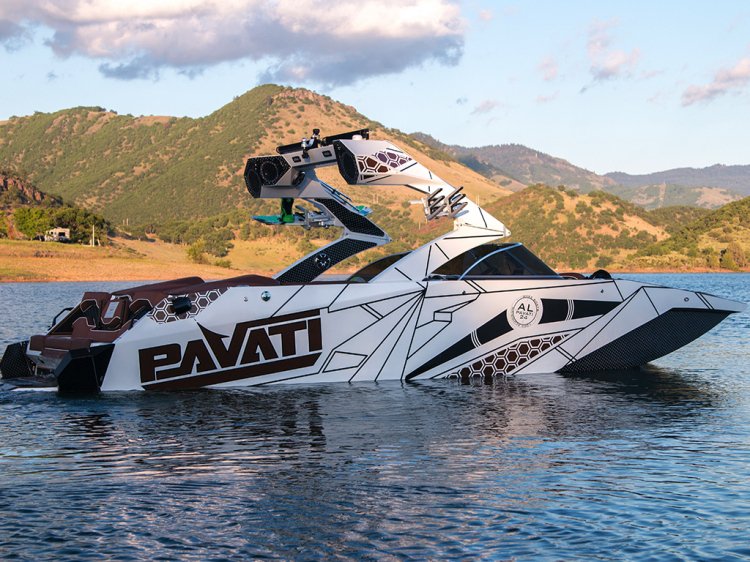
They’re often seen in ads with flashy promo videos and brought up in conversations with friends… but you don’t see them a lot in the water, and you hardly know a person who owns one.  Pavati Boats — the highly expensive and customizable surfing and wakeboarding boats priced at USD 285k-380k per unit. Their flagship product, the AL-24 model, paved the way as the industry’s first V-drive inboard boat made from 100% raw aluminum.  With 40 years of work experience, Pavati (which means ‘clear water’ in the Native American Hopi language), started as manufacturer that specialize in the construction of work truck bodies and flatbeds made from aluminum. In 2008, they launched and tested their first-ever V-drive wake boat, Al-24, in their main headquarters in White City, Oregon. But while the specifications of this Pavati wakeboard boat are pretty impressive, a lot of people question its quality and durability since there are only limited reviews about this boat that you can find online. In this article, we’ll give you a comprehensive analysis of the AL-24’s performance and features, useful comparisons against its main competitors, and our non-biased verdict about it.  Pavati Boats Review AL-24 Pavati Boats AL-24 Specs:  Boat Length: 24’8” Boat Height: 9’ 3” Beam: 8’6” Weight: 4894 lbs Fuel Capacity: 67 gal Ballast Capacity: ~4888 lbs Engine Horsepower: 575 How much is the Pavati 24? The starting price is USD $220,000, the most expensive is $422,414, and the average price of $321,207 (last updated September 2023). Overview What does a Pavati cost?!! Similar to the reaction of most people, we were also surprised when we heard about the astounding price of the Pavati AL-24. An inboard boat that’s worth nearly 300k!? That’s way, WAY much higher than the prices of some of the best boat brands in the market. Do these boats produce gold-coated wakes?  Pavati is a relatively new name in the business compared to the leading towboat brands such as Moomba and Nautique, which further adds to the mystery what’s the reason behind its tag price. To start this review, let’s look at this boat from another perspective.  The AL-24 is designed as an elite party wakeboard boat that can accommodate a large group of up to 17 persons. It’s extravagant and upscale, with themes and designs that are fully customizable to accommodate their client’s tastes.  With 21 cup holders for drinks, a stereo system with 12 speakers subwoofer to listen to your playlists, a plush seating lounge, and LED lighting, this wakeboard boat in steroid eludes luxury, fun, and excitement while you ride the wakes. The AL-24’s main features and technology are for good times with friends, while its engine power is for towing and creating wakes that can be paired with some of the top-of-the-line products in the market. Performance What engine does Pavati use? The AL-24 carries a 6.2L Rouscharged Raptor with a 580 lb-ft of torque and a 575 horsepower engine enclosed in a custom mirrored-finish hood. This model is the first-ever boat with a dual thruster system for full boat control.  Another innovative feature of the AL-24 includes the Rip Tide 5.0 Surf System which creates the tallest and longest waves among its rivals. With its high-speed trim and tilt systems, you can adjust your ride depending on your preference; V-drive to keep the wakes powerful, or stern drive for skinny water and fuel efficiency. For comparison to other wake boats, its wake performance is as good as Nautique towboats. Now, the adjustable wheel and trim tab controls make driving the AL-24 a breeze. Even though its size-to-weight ratio technically makes it lightweight, it’s stable in the water and maneuvers easily on tight turns. Lest we forget, the bow and stern thruster system also gives smooth parallel and slip parking steering, so you look like a real pro driver in the water.  This boat also features the Quick Wake technology that displaces water more efficiently when surfing, at the same time eliminates uncomfortable boat pitches. Without added ballasts, the AL-24 makes flat wakes ideal for slalom skiing. But if you want to create swells, it’ll only need a total of 90 seconds to fill this boat’s twin ballast tanks that hold 1,000 liters each, and just 30 seconds to empty them.  The tow speed of this boat averages 40 mph, which is a couple of mph slower than Moomba models that can reach up to 45 mph. But while this boat may not be the fastest, it can accelerate and reach its top speed in just seconds, thanks to its Zero-flex hull feature. Finally, the AL-24 utilizes a 1.76-geared Indmar transmission that allows it to save 20% more fuel than other boats with the same engines.  Controls This boat’s drive control can easily be accessed with the Garmin 22-inch LCD touchscreen — possibly the largest among all wakeboard boats in the market. From this command center, you can view the engine gauge, battery levels, fuel consumption, maintenance alerts, and the bilge monitoring system. You can also control the boat’s lighting, adjust the wake shaping, and access the GPS and rip tide surf control system. With AL-24’s wireless connectivity, you’ll also be able to control the tower, navigation, lighting, stereo, how warm you want the seats to be, and how cold you prefer the cup holders, simply by using the Garmin app on your phone. You can also connect your device to the HDMI port to watch movies or listen to your favorite playlists.  Design Pavati’s attention to detail for custom orders is comparable to none. Dressed to impress, the customizable Pavati AL-24 features a wide range of colors and graphics that makes designing it as fun as riding its wakes. When you buy any of these boats, you’ll work with their team of experts as you choose fabrics, floor designs — anything you’ll want and need to make the AL-24 your style. Its pattern and theme variations include Rasta, Urban Spike, Street Style, Milano, and Tribal Youth. The strong aesthetic … Read more

Surfing with Sharks | What You Can Do

Surfing with Sharks

What do you think are the odds of you encountering a shark while you’re surfing? According to Florida Museum, 61% of the total cases of shark bites in the world are related to surfing and other board sports. It’s because of the constant paddles, wipeouts, and splashes in the water that makes you look like an injured prey, therefore luring the men in the grey suits in. It can be scary, but you should know that the chance of a shark attack is actually quite low. You can even compare it to getting struck by a lightning or hitting the lottery jackpot; however, that doesn’t mean you should take unnecessary risks and go look for trouble. Sharks are apex predators that you share the ocean with — one wrong move can lead to attacks that may cause you injury or death.  For this article, we’ll help you understand why sharks attack surfers, what you can do to avoid these situations, and famous surfing spots where these predators are known to lurk underneath the water surface.  Why do sharks attack surfers? Sharks, similar to orcas, are ocean predators that play an integral part in the ecosystem. They provide the scraps for the organisms to eat and help regulate the ocean population by preying on the weak.  Sharks are designed to hunt, but you should know that humans are not part of their diet. They have a slow digestion process which makes them very selective of their food, a reason why they often eat seals and sea lions — marine mammals that are high in fat content. So why do you think some sharkies would chomp on surfers? It’s because they’re curious. Surprising as it seems, smart dogs and toothy sharks have one thing in common, and it is by how they investigate things with their mouths. Sharks may circle on a person because they’re curious and they want to find out if they’re edible. The shark’s goal: to have a test bite, not to eat. Once they have a bite, it’s seldom they would go for another. Humans consist of a lot of bones, see, and sharks don’t really like to consume that. This is the reason why sharks ‘hit and run’, and most victims survive the attacks. Sharks have good vision and sense of smell. Their impressive eyesight is ten times much better than humans, and this allows them to hunt in both daylight and low light conditions. However, when the water is murky, their vision becomes dull, which makes it challenging for them to see clearly and hunt for their prey during stormy days. This brings us to another possible theory why sharks attack humans —  mistaken identity. Based on research, sharks (specifically the great whites) also bite on humans because they often mistake us as seals, a.k.a their primary prey. In a test conducted by experts, they observed how a shark’s retina will be able to recognize the visual motions of a seal and a swimmer paddling with a surfboard from the perspective of viewing things below the water surface. Turned out, sharks cannot differentiate the two; therefore, proving the theory to be true. Lastly, the water temperature also affects a shark’s behavioral pattern. In Western Australia for instance, statistics show that when the water reads at 18 to 20 degrees, great white sharks are more prone to attack humans. Meanwhile, in other places of the world where there are dry spells or drought, attacks are also frequent because of the increased interaction and close proximity of the sharks and people at the beach.  Surfing with Sharks If you come face-to-face with a shark, or you see it swimming from under your board while you’re surfing, what would you do? In the worst- case scenario of shark encounters, here are some basic principles and gentle reminders you need to keep in mind to avoid being the shark’s next sample meal.  Stay calm Staying calm is a pearl of conventional wisdom and probably the simplest tip of all, but the most difficult to execute when you’re actually in the moment of being confronted by a six-foot shark. A typical reaction of most people when they see a shark is to shout “Shark!” or paddle like a mad man towards the shore. But if you do this, you will just put more attention on yourself and make you appear like injured or easy prey in the shark’s eyes.  In this situation, here’s what you can do. If you see a triangular dorsal fin and a tailfin slicing through the water surface coming towards you, do not panic and try your best to keep a level head. As casually as you can, paddle your way towards the shore. If that’s not an option, stay still. Keep your feet and your arms up your surfboard. If the shark detects no movements, it will most probably lose its interest and move on to another target.  Know the shark’s direction Always keep an eye on any uninvited toothy guests. Sharks look for lone targets, so they usually stay away from people in the lineup; however, in a situation where they do get close, it’s best to huddle up as a group. Track the shark’s movements, avoid the direction where it’s going, and head to the shore as safely and calmly as you can.  Avoid surfing in murky waters or low-light conditions Bull sharks are often spotted in murky water sources like brackish river mouths because that’s where they feed and reproduce. If you see lots of seals and seabirds, sharks are also probably there looking for prey. Avoid surfing if you can. A lot of surfers also like to ride the waves in early light and before evening; however, these periods are high-risk conditions. In low-light settings, shark attacks are most likely to occur. The poor visibility enables the shark to see its prey’s silhouette from below and move without their target knowing where it is, making it ideal for the shark to … Read more

MasterCraft X23 Review

There are countless wakeboard and wake surf boats on the market that will provide world-class waves, but there is no boat that creates waves as long as the MasterCraft X23. Although the boat has a relatively short overall length, this does not impact the height of the waves, while providing some of the biggest and cleanest wave pockets. With its Gen 2 Surf System, the MasterCraft X23 provides some of the most customizable waves around Let’s take a deeper look into what this boat has to offer, and why it might be the next wake boat on your shopping list. MasterCraft X23 Specs Length Overall 22’9”/ 6.9 m Beam 8’6”/ 2.6 m Draft 2’4”/ 0.71 m Approximate Dry Weight 5,501 lbs/ 2,495 kg Fuel Capacity 57 gal/ 216 l Maximum Capacity 15 people Maximum Factory Ballast 3,000 lbs/ 1,360.78 kg Engine Type V8 Horsepower 552 hp Power 320 hp @ 5,000 rpm Displacement 1.51 gal/ 5.7 l Induction Atmospheric MasterCraft X23 Highlights The X23 stands out among other wake boats for its outstanding wave length and customization, but this is not all that this boat has to offer. Gen2 Surf System The Gen2 Surf System is one of the best by MasterCraft and is designed purely to produce the perfect wake surfing waves. The Gen2 Surf System consists of four pillars which include an individual boat hull, a massive ballast system, a wake-shaping device beneath the transom, and software to control the system. The system will do all the math for you and is calibrated to the individual boat. This system, unlike standard wake surfing boats, includes four preset zones to suit different skill levels.  These zones include: Zone 1: A powerful stable wave that is ideal for learning to surf. Zone 2: A stronger push and a more defined lip. This zone is great for charging and small amounts of air. Zone 3: This zone provides the most vertical lip and steepest face. Zone 4: Only available for the MasterCraft X23, this zone creates extra room to roam which is great for bigger boards. 7” Touch Screen The 7”, highly-responsive touch screen makes customizing your waves effortless. By simply selecting the type of wave you want to create the system will do all the work for you. Not only will the system do all the work, but the large touch screen will make selecting new settings simple and quick so as to not take your concentration away from your driving. Front Docking Lights & LED Brake Lights High luminescent LED lights at the bow of the boat make docking at night worry-free.  The LEDs are neatly fixed into the front of the boat, providing perfect light while giving the boat a unique look during the day. Similar lights are situated at the back of the boat to indicate breaking. These LEDs will cut through the night and easily keep other boaters aware of your movements. Front Ladder A collapsible ladder that neatly folds into the deck is situated at the bow of the boat for easy access to the deck, regardless of what side of the boat you are on. When the ladder is not in use, the deck area provides a great place to catch some sun at the front of the boat. Transom Lounge Seating  Possibly the best seating on the bat, the pair of transom lounge seats create the perfect place to watch all the action behind the boat. The lounge seating includes armrests, and cup holders, and has an optional stereo controller fixed to the transom. Strapless Board Rack The strapless board racks are the perfect way to store your boards out of the way. This will keep them free from scratches while creating extra space on the deck for your guests. Engine Positioning With the engine placed as far back as possible, this relatively short boat makes the most out of the deck space. Even though the X23 is shorter than other boats, you will feel as though you have more space than ever before. How Does the Mastercraft X23 Compare to Other Boats? The X23 by MasterCraft is well known for its outstanding waves and is not rivaled by many boats. That being said, one of the only boats on the market that competes with the X23 is the Nautique G23 Super Air. Wakeboard Wake Stock vs stock, the X23 holds its own and is bigger than the X25. That being said, the G23 has a slight edge as you can add a lot more weight which produces a huge wake. Although the G23 can take on more weight, when comparing the stock models, it does not stand out against the X23. Wakesurf Wake When comparing the stock versions of the G23 and X23, the X23 takes the cake for wake surfing waves. Although the G23 can produce massive, powerful waves, the ease of the X23 shines through. The X23 provides large amounts of push and is extremely consistent. The X23 also produces a perfect goofy wave, which far outshines the G23. Exterior Look The shapes and curves of the X23 make it not only functional but appealing to the eyes. When compared to the block-like shape of the G23, the X23 catches the eye and stands out when sitting in the water. That being said, many boaters prefer the straight-line shape that the Super Air G23 uses. Interior Look Both boats have outstanding interior designs, and both come with their own pros and cons. Both boats have ample locker space and coolers, as well as multiple cup holders. Both make use of non-slip decking, the X23 uses Deckdence while the G23 uses SeaDek. Both work well and can be compared to each other. Dash and Displays Both boats make use of the Murphy system and are therefore similar in quality. One advantage that the MasterCraft X23 has over the G23 is that it includes manual controls and gauges next to the display. If anything fails while riding the G23 then you … Read more

G23 Nautique Wakesurf Review

Nautique is a name well known to wakesurfing enthusiasts, and for good reason. Nautique’s G23 Super Air is one of the best wakesurfing boats on the market and a six-time winner of WakeWorld Riders’ Choice Awards for the best wakesurfing and wakeboarding boat of the year. As the longest-standing first-place holder of this position, the G23 is often considered the best wakesurf and wakeboard boat on the market. If you are looking to avoid the high prices of recent models but don’t want to sacrifice quality, then the G23 Super Air may be what you are looking for. Nautique G23 Super Air Specs (2022 Model) Length Overall 23’/ 7.01 m Length With Platform 25’2”/ 7.65 m Lift Ring Spacing 21’6”/  6.55 m Beam 102”/ 2.59 m Draft 31”/ 0.79 m Approximate Dry Weight 6,000 lbs/ 2,722 kg Fuel Capacity 65.6 gal/ 248.2 L Maximum Capacity 16 people/ 2,500 lbs/ 1,134 kg Maximum Factory Ballast 3650 lbs/ 1656 kg Horsepower 8LV – 370 HP ZZ6 – 450 HP ZR7 – 475 HP ZZ8 – 600 HP Torque 595 Ft – Lb (8LV) 465 Ft – Lb (ZZ6) 500 Ft – Lb (ZR7) 608 Ft – Lb (ZZ8) Gear Reduction Ratio 2.0:1 1.48:1 (8LV & ZZ8) The Performance Designed from the footprint of the G23 Paragon hull (known for creating the best ever waves and wakes behind a wake boat), the Super Air is capable of creating waves for all levels with its completely customizable wakes, Waveplate technology, Garmin integration, integrated steering assist, and state of the art Running Surface. Nautique Configurable Running Surface The Nautique Configurable Running Surface (NCRS) takes most of the credit for this boat’s outstanding performance. Working as an extension of the hull, the NCRS automatically deploys and stows based on the provided conditions from the user. This automatic system allows the G23 Super Air to perform at optimum levels regardless of speed, full wave, and wake customization, and self-optimizes for the running attitude of the boat to aid in creating the perfect surfing situation. Nautique Surf System The Nautique Surf System (NSS), with its unique WAVEPLATE technology, is integrated into the hull of the Super Air G23 allowing for maximum configuration of waves. The WAVEPLATE extends from the transom in an out and downward direction which is used to redirect the water flow moving below the boat. The NSS allows surfers to move the wave to either side of the boat without changing the ballast or shifting people on the boat. Not only does the NSS allow you to change the side of the boat you are surfing on, but includes variable settings for fine-tuning the shape of the waves while surfing. GARMIN Watch Integration The Nautique app for Garmin watches can be used to control your boat’s speed, music, wave, and wake settings wave side and shift the ballast, all while riding the wake. The app works with a wide range of Garmin watches and will connect to any Select 3.0 equipped G23. This integration brings an entirely new level to wake surfing as you as the rider now have full control over the waves. Steering Assist The Super Air G23 has an optional Integrated Steering Assist that provides outstanding maneuverability and control. With a thruster mounted on the stern, this steering assist will make docking in tight spaces and reversing in a straight line a breeze. The assist also allows you to quickly move the transom from left or right which significantly improves the driving experience, both on the open water and while docking. G23 Super Air Engine Options The Super Air Nautique G23 comes standard with the PCM direct-injection 6.2L ZZ6 which provides 450 horsepower and 465 ft-lbs of torque. For added power the Super air comes in three additional models: the ZR7, 8LV, and the ZZ8 (refer above for specific specs0. G23 Super Air External Highlights Bimini: Regardless of which tower option you choose, the accompanying bimini will provide perfect coverage from sun and rain and includes a surfboard storage pocket on top. Strapless Board Racks (Optional): With an “over-molded” design that allows for maximum protection while remaining convenient, these strapless board racks are the best way to store your boards while you are not using them on the water. Although they are optional, the ability to store your board away from the deck will provide more space for those on the boat. Docking Lights: LED docking lights on the bow of the G23 make docking at night a breeze while creating a unique daytime look. Transom Stereo Remote (Optional): The G23 comes optionally with a stereo control on the transom of the boat. Located at the stern of the boat, the remote makes changing your music easier than ever. Transom Seats: Seats located on the transom facing the stern of the boat and adjacent to the swimming platform, the transom seats make spending time with friends and family in the water easy if you are the type that likes to stay dry. G23 Super Air Internal Highlights Adjustable Helm Seat (Optional): The Actuated helm seat provides optimum comfort and support with the ability to adjust forward and reverse at the touch of a single button. Helm Command Panel: Strategically placed on the armrest and directly above the throttle, the helm panel gives the driver the ability to scroll through menus and settings on the display screen by simply turning a dial. LINK Panoray Touch Screen: The LINK Parorays intuitive interface provides easy-to-read menus with a timely touchscreen response. With a 12.4” display neatly secured into the helm, the LINK Panoray will make your driving experience more relaxing than ever. JL Audio Stereo: The JL Audio stereo system comes standard with every Super Air Nautique G23. The system includes the JL Audio Head Unit, 6 M6 speakers placed throughout the boat, a 10” subwoofer, and an 8-channel amplifier.  Reversible Stern Seats: Acting as a lounge seat and SeaDek covered step to reach the back of the boat when stored away, the reversible … Read more

Top 5 Best Kitesurfing Schools in The World

best kitesurfing schools

Kitesurfing isn’t as simple as it seems. It can be perilous. So dangerous that the first rule of kitesurfing is never to try to learn how to fly a kite by yourself. More especially if there is no one with you in case anything goes wrong. What you can do by yourself in learning how to kitesurf is to become familiar with power kites. Traction kites, for one, can help you understand how wind and kites work in partnership to generate speed. Kitesurfing schools are still the best place to learn to kite and get better technically. So, while understanding how power kites work, research kitesurfing camps that can help you learn and hone your skills. This article listed down five of the best kitesurfing schools and what to expect in a kitesurfing school. What Is A Kitesurfing School? As the name suggests, kitesurfing schools are establishments that offer lessons for kitesurfing. Most of the time, these schools offer packages that cover your kitesurfing lessons as well as your accommodation and equipment use. Kitesurfing schools differ from one another. Some of them go further and offer additional inclusions like meals, non-kiting activities, and transport. Others do not have accommodation on-site, and you will find it on your own. But, even if they don’t offer somewhere to stay, they can assist you in finding one. These establishments are primarily about learning how to kitesurf. Your days will be spent on the waters under the guidance of a coach or an instructor. It is far different from kitesurfing holidays, usually leaning towards intermediate and advanced kiters looking for a new place to kitesurf. Best Kitesurfing Schools There are numerous kitesurfing schools worldwide, but not many may offer the accommodations and services you need. We narrowed down five of the exceptional and far-out kitesurfing schools that you may want to consider to learn how to kitesurf. SoCal Kitesurfing (Long Beach, California) School Specifications: Beach: Kite Beach Belmont Shore, CA Wind: 15-20 mph Season: 12 mos (Best months are March to October) Certification: IKO Kite Center Activities: Beginner and advanced lessons Rental gears and wetsuits 2-way radio instruction Downwinders Supervised rentals Hydrofoil lessons and rentals Amenities: Lifeguards boat rescue Free street parking and paid lot Public restrooms Outdoor showers Nearby restaurants The Kite Beach in Belmont Shore, California, is the best place for SoCal Kitesurfing to instruct kitesurfing students. It is the only safe and legal beach in LA and the Orange Counties due to the break wall that blocks the waves. This makes learning fast and safer. SoCal Kitesurfing doesn’t only teach you how to kitesurf. It also educates you about finding the right gear, providing ongoing support tips, and introductions to a community where you can get help, tips, and tricks until you become a confident rider on your own. They offer beginner to advanced lessons, and they consider your comfort level so you can move fast or slow. They take pride in being the only kitesurfing school in California where the instructor joins the student in the water, giving help when needed the most. Signing up to SoCal Kitesurfing includes lesson packages, an IKO Certification card (with worldwide validity), your choice of SoCal Kitesurfing cap or shirt, and a photo of your lesson. All of their lesson packages are facilitated by experienced and certified staff with consistent and proven teaching methods. VKC Kite School IKO Center (Viale Al Lago, Italy) School Specifications: Beach: Lake Santa Croce, North-East Italy Wind: 12-18 mph Season: All year round Certification: IKO Kite Center and UISP Activities: Beginner and advanced lessons (kitesurf, wingsurf, SUP) Rental gears and wetsuits Body-drag Supervised rentals Amenities: Bed and breakfast Restaurants Bars Tennis courts Playground Well-kept beach Tower and lifeguards The primary location of the VKC Kite School is the Lake of Santa Croce. This lake is what the team believes to be the ideal place to start kitesurfing. But, they also have other beaches where they offer courses, including Sottomarina, Boschettona, Levante Beach, and Jesolo. Their staff and highly qualified instructors evaluate you on the spot and determine which course you should be in according to your knowledge of the sport. All of their classes – Start Course, Basic Kitesurf, Advanced Kitesurf, and Independent Kitesurf come with complete equipment and kiter assistance. Bed and breakfast are part of the school’s amenities. If you decide to make these accommodations, you will also experience daily and nightly events held at the beach. These events attract many tourists from all over Italy and neighboring areas. The VKC Kite School is IKO Kite School and UISP certified. After the course, you will be issued an official IKO patent and VKC Shirt. One that can show off the course you took with top-quality equipment for safety and maximized kitesurfing education. Adventure Sports (Noosa, Australia) School Specifications: Beach: Lake Lake Weyba, Noosa Wind: 12-18 mph Season: 10 months from October to July Certification: IKO Certified Training Centre (Level 3) Activities: Beginner and advanced lessons (kitesurf, wingsurf, SUP) Short private kitesurfing lessons Group kitesurfing lessons Rental gears and wetsuits Body-drag Supervised rentals Amenities: Accommodation Restaurants Well-kept beach Headzone radio coaching Tower and lifeguards Adventure Sports believe that kitesurfing is one exciting activity that one should experience at least once in their life. Therefore, it became their mission to make new kitesurfers, and they do that by focusing on teaching each individual what they need to know to get out there in their own way. Their team allows learners to enjoy the sport of kitesurfing by providing only the very best instructors, equipment, and beautiful and accommodating locations to maximize progression, safety, and fun. What’s more, is that they are the only council-approved and permitted kitesurfing school in Noosa. This kitesurfing school’s most popular kitesurfing lesson offers hours of private 1-on-1 instruction using radio coaching helmets. The experienced instructors let you out on the water with the latest gears to guarantee you are confident and competent with all the skills you need. All Adventure Sports kitesurfing lesson … Read more

What Is Pearling and How To Avoid It

pearling

If there is anything that ruins a great wave, it is when you waited, you paddled, and you stood as you caught the wave but tumbled over your board not more than two seconds after. It is when instead of kissing the wind and the mist from the winds, you’re face to face with saltwater. Pearling happens to everyone. They are a pretty common phenomenon for anyone learning how to surf. Pearling also happens to professional surfers from time to time. What is pearling, you ask. Can you avoid it? Find out everything you need to know about pearling and how you can prevent this wipeout from ruining your ride. What Is Pearling? Pearling is one of the most common types of a wipeout in surfing. It happens quite often to people who are learning how to surf. It occurs when the riders make it to the lineup but are not yet ready for a standup wave. It can be a frustrating part of a learner’s journey. After all, it takes a significant amount of effort to paddle and make it to the lineup. Yet, it is there to remind you that you’ve still got a bit to go before you stand up and surf. Pearling or nosedive happens when the front of your surfboard – the nose, dips into the water when you are trying to catch a wave. It results in getting the nose of your surfboard digging into the water and its back launched up. Then, you get launched off your board, smacking the waters and having the wave crash right on top of you. Why Is It Called Pearling? The wipeout’s name takes after the near-ancient art of pearl diving called pearling. It is a dangerous technique that involves pear hunters jumping off a ship and diving about 100 feet in a single breath. The way surfers nosedive during a wipeout is the same way the hunters look when they dive into the ocean looking for pearls. That’s why it is called pearling. How To Avoid Pearling Nosedives don’t immediately mean you’re doing something wrong in surfing. While it can be particularly embarrassing when you think you’ve got a perfect wave and end up pearling, it happens not just to you but to a good population of surfers. Most pearling happens in the early stages of learning how to surf. It can also occur when you are adapting to a new surfboard or when steep and fast waves are miscalculated. Moreover, when a surfer’s weight is too far forward, it can cause the board’s nose to dive underwater. Here are some tips you can try to avoid pearling on your next ride. Remember that as every surfer and wave is different, some suggestions may be more beneficial for some surfers and unalike circumstances. Take what resonates. Leave what doesn’t. Tip #1. Correct your body position The primary point in avoiding a nosedive is paying attention to your body position when paddling on your surfboard. It is essential to be far up on the board to catch a wave. Not too far up to the nose, but just enough to weigh the board down in the right places. You do not want to put the weight in the wrong parts of the surfboard, or you’ll end up going under the water and propelling yourself into pearling. The thing about positioning your weight is true to an extent, but it is only an essential starting point guideline. On smaller wave days, you will need to be as far forward on the board as possible so you can catch anything. Once you catch it and you feel like you’re going to pearl, shift your weight backward. A lot of surfers do this trick and prove it works. Another method you can try instead of shifting backward is to keep your hands back in a cobra position. This posture distributes your weight on your hips. If done correctly, the place on the surfboard that needs more weight to anchor it down will help prevent the nosedive. Take note that these tips may not always work all the time. Since you are shifting your weight back, it puts on the breaks and keeps you from catching the wave at all. These approaches are best used if you really feel you are going to Pearl. Ideally, you have to keep calm and have faith in yourself. Keep paddling to keep the forward momentum. Paddling helps because as the wave peaks and gets steeper, the nose should pop back out of the wave. Tip #2. Paddle! Paddle! Paddle! Another factor that may be causing you to pearl is how you paddle. You may either be paddling too slowly or not enough. When catching a wave, you’re not technically catching it like how a baseball player tries to catch a ball. Baseball players typically run toward the ball then stop and position to let the ball come to them. In terms of the wave, you are more like hopping on the train than catching a ball. See, when you hop on a train, you need to be running as fast as the train so you can grab it and jump on it as it is moving along. With wave catching, you almost want to try to race the waves to the shore and not let them catch you. Therefore, it is crucial to paddle faster and match the speed of the wave. By paddling as fast and as efficiently as possible, you’ll go at a speed where the wave can catch you and lift you instead of stumbling on you and beating you down. Tip #3. Proper Wave Positioning Proper wave positioning is another critical factor you should not overlook. No matter how fast and efficiently you paddle, if you are too far inside, the wave might be too steep and may tumble over you and send you down. On the contrary, when you are far outside, you can catch it when it … Read more

What Is Bellyboarding? | The People’s Intriguing First Taste of Surfing

bellyboarding

They say that bellyboarding is perhaps most people’s first taste of surfing. It could just be true, considering this riding activity dates as far back as 2,000 B.C. Most historians regard it as the original form of board surfing. Bellyboarding is making a comeback as another exciting water activity to try. Pure nostalgia, you might think – from its early days in Polynesia and Hawaii where children used bellyboards as training tools to the 1937 Great Western Railway poster that showed two women in scarlet bathing suits riding a wave on wooden bellyboards. What is it about bellyboarding? And, why is it considered rescuing fun in an uptight world of aggressive surfing world? What Is Bellyboarding? Bellyboarding is a surface water sport that involves riding waves on small wooden boards. Riders take advantage of the white water to come into the beach – very dissimilar to surfers and boogie boarders that go out of their depth. This ancient recreational practice originated in Hawaii and arrived in England in the early 20th century. Since then, it has conquered the globe and never disappeared. The Bellyboard History A bellyboard is a small buoyant board, usually less than three or four feet long, used in bellyboarding. The oldest known bellyboards are sized between 4’ to 4’5” from the 18th century. They are wooden planks with a slightly elevated round nose and a flat-cut tail. There are no fins and traction pads. Also, there is no leash since the bellyboard is easier to manage and keep in hand. This pure and straightforward wave riding tool has evolved with the explosion of surfing. So much that when it spread across the world, it gained new designs and reconquered its spot in the hearts of collectors and retro surfing aficionados. In 1960, American surfers integrated stabilizing fins to their plywood bellyboards. They rode these sticks for fun at Newport Beach’s The Wedge and Oahu’s Makapu and Sandy Beach. Surf companies like Dextra and Newport Paipo attempted to launch a few foam and fiberglass models. However, the hype faded, and the good old bellyboard went belowground. Production of these boards decreased with the development of bodyboards on polystyrene boards and the art of actual surfing. In an attempt to revive this retro slide, the World Bellyboarding Championships held each year since 2002. The first session took place with 20 participants. More than 150 competitors from different countries like Australia, USA, and the British Virgin Islands participated a few years later. Quick How-To Guide for Bellyboarding The first thing you need to remember with this water activity is that – the bellyboards are not floatation devices. Proficient swimmers and surfers ride them, while beginners should be under adult supervision. Always bellyboard at lifeguarded spots, between the red and yellow flags. If you’ve ridden a boogieboard before, you’ll realize they are almost similar but not quite. Generally, bellyboards are designed to keep you afloat. The difference is, bellyboards are made from plywood which has no floatation. These boards act as a planing surface on top of the water. Step 1. Position in thigh-deep water Between the red and yellow flags at a lifeguarded beach, position yourself in thigh-deep water. This spot allows you to dig up a strong push off the bottom. To do that, push the tail of the bellyboard onto your hips while you hold it as close to the nose as possible. You may have to stick your behind out a little. You can practice at home before heading to the beach to get used to it. Step 2. Pick the right wave Experiencing a good ride relies greatly on wave selection and timing. It is critical to pick a sound and powerful-looking wave that will drive and thrust you forward with the right amount of speed. You can try to pick a wave that has only just broken but still has power left in it. Wave selection is not as simple as it seems. It has to be learned over time. This is the reason you have to practice because picking the right waves can be learned through experience. Step 3. Timing is everything Just before the wave hits you – probably about a second before it does, jump forward onto the water in front of the wave. If timed suitably, the tide will push you along, and you will be bellyboarding in no time. Timing is everything in this activity, so you must calculate and get the pacing right. Jumping on too early may leave you sinking with the wave passing over you. Too late, and you will – well, miss the wave you waited. Be patient. It can take a few attempts if you’ve never tried it before. Be sure to hold the nose of your board with your arms extended out-front of you. Your belly and chest should be positioned on the lower half of the board. Step 4. Enjoy the ride Wave riding is a lot of fun, so enjoy the ride and do the same thing repeatedly until you master it. Bellyboards Are Built To Last and Are Eco-Friendly There is a shared purpose from the wave of responsible manufacturers within the surf industry to protect the beaches from plastic pollution. One of the most famous names in the bellyboards industry – Dick Pearce, commits to promoting and continuing the culture of bellyboarding for generations to come and to keep the beaches clean. His team sources wood from sustainably-managed forests in Europe. His commitment includes making sure his boards are lovingly produced to last a lifetime, so much that you can pass your board on to the next generation. Best Bellyboards You Can Check Out The popularity of bodyboards and polystyrene surfboards somehow left bellyboards underground. You may not be able to find one on Amazon or at your local surf store. Instead, you may reach out to custom shapers and well-known bellyboard manufacturers. Surfing Green Surfing Green is a Queensland-based bellyboard-shaper that uses sustainable surfing products to protect … Read more

How to Surf a Crowded Lineup: Pro Tips and Tricks

people surfing AT THE BEACH WONDERING HOW TO SURF A CROWDED LINE UP

Gone are the days when we could rock up at our favorite surf break and be one of, if not the only person in the water. With over 20 million surfers worldwide, and a surf population growing at 12% per year, secret spots are slowly becoming less secret, and popular surf breaks are often too crowded to catch a wave. Although it is never ideal when the lineup is full of people, it is often something we need to deal with if we want to catch a ride. By remaining patient, visual, friendly, and willing to put in some extra work, a crowded day does not need to be a bust. Crowded breaks are undeniably annoying, but the following tips will help you better navigate overpopulated surf lineups and make the most out of your day. What Are the Downsides of Surfing in a Crowded Lineup? No one likes to surf in a crowded lineup, and for good reason. Once you have read the downsides of crowds in a surf lineup you will begin to understand why. High Competition Unlike snowboarding or skating where you can constantly ride your board, in the ocean, even when surf conditions are perfect, you still need to wait for a wave to break. Furthermore, in most cases, the rule goes that only one surfer should ride a wave at a time (although there are exceptions to this rule), which makes waves even rarer. Add a bunch of people to the lineup and it is easy to see how a relaxing surf can quickly turn into a fierce competition for the few available waves. Fewer Waves for Time If you are lucky enough to find yourself in a crowd that respects how a surf lineup works, you will be able to avoid the savage competition for the waves, but this comes with a disadvantage. If everyone is waiting their turn, there are five waves per set, and twenty people in the water, it is easy to see how you will be waiting a while for your ride. This can of course be an advantage of its own but is not ideal if you just paddled out for a few quick waves. People in Your Way When there are too many people in a lineup you will constantly find yourself dodging someone. Unless everyone in the water is a good surfer and follows surf etiquette to the tee, you will constantly find people paddling out through the middle of the break, throwing their boards away, or falling off waves at the peak. As you will need to maneuver around them, you will not be able to ride the wave as you wish. This can become frustrating, especially when you have waited so long for your turn. Crowds Are Dangerous Having a few people in the water makes surfing safer as there are people around if something goes wrong. When a few people become a big crowd, the opposite is true. The more surfers there are in a lineup the higher the chance you have of running into someone else. This can, in extreme cases lead to concussions<span style=”font-weight: 400;”>, lacerations, and loss of consciousness, or if you are lucky, a broken or dinged surfboard. In a large crowd, if someone was to lose consciousness it would be a lot harder to notice them missing. Tension in the Water When there are a lot of people in a lineup tensions always seem higher.  Everyone is on edge waiting to charge the next set, constantly on the lookout for other surfers, and slightly annoyed that they are not surfing as much as they wish. This, of course, is not always the case but will happen more times than not. Although some lessons can be learned from this, it does take away from the relaxing, nature-immersing experience that surfing can be. Are There Benefits to Surfing a Crowded Lineup? No one will choose to surf a crowded lineup over an empty one because the benefits do not come even close to the downsides, but this is not to say that there can’t be any upsides at all. Teaches You Patience One of the greatest lessons a crowded lineup can teach you is patience. Both for the waves and the people around you. While you wait for your wave, instead of becoming annoyed with the waiting, practice patience, and you will find yourself enjoying the waiting as much as you enjoy the surfing. Teaches You to Work for What You Want Surfing in a crowded lineup means that you cannot simply sit and wait for a wave to come to you, you need to work for it. This lesson, taught through a non-ideal surfing situation, remains true in all aspects of our life and should be contemplated while in and out of the water. Competition Makes You Better Fierce competition can be off-putting, but healthy competition provides an amazing platform for improvement. As you will be fighting for your waves, you will need to surf better than those around you. This will likely mean pushing yourself to the max and learning a thing or two in the process. Teaches You to Deal With Pressure A crowded lineup can become a stressful situation, especially when a set forms further out and breaks on top of the lineup. Although crowds can cause a lot of pressure, learning to deal with this in a somewhat safe environment will begin to prepare you for larger, faster swell and harsher conditions. 15 Tips for Surfing a Crowded Lineup To successfully surf a crowded lineup you need to be prepared for what is to come and pay close attention to details. Finding a balance between respect and fighting for your wave is important. 1. Study the Break You should never go for a surf before you have assessed the waves, currents, weather, and lineup. Doing so can put yourself and others at risk. This is even more important when you will be paddling out into … Read more

Fin Placement on Surfboards: Everything to Know

Fin Placement on Surfboards

Just as the size and shape of your surfboard determine its agility, buoyancy, and stability, so does your fin set up affect the way your surfboard performs. When choosing your fin placement, everything has an impact. The number of fins you use, how close to the nose or tail you place them, the angle that the fins face, the size of the fins, and how close they are together will all play a significant role in the way your surfboard handles. Below is a breakdown of how all these factors affect your ride, and which work best in different situations. Fin Location Fin location affects speed, turning, and stability. This is because the way your board handles comes down to the angles that the water can travel beneath your surfboard. A well-balanced fin placement will provide the most diversity with surf conditions but will underperform when compared to a customized setup. For example, a fin set up created for speed will outpace a balanced board, but will not perform as well when conditions become choppy or the waves become larger. Fin Position Relative to the Board Towards the nose: Fins closer to the nose will feel looser as your back foot does not dig them as deep into the water. Towards the tail: Fins closer to the tail of your board create more stability and hold, but are less agile. You should expect a larger turning radius when your fins are near the tail of your board. Loser to the rails: Fins placed closer to the rails provide less friction and sharper turning angles and reduced stability. Closer to the stringer: Fins in the center of a surfboard create extra drag but hold the board more stable in larger or faster surf. Fin Position Relative to Each Other Closer Together: The closer together your fins are clumped, the faster your board will react to your movements, but the board will feel looser. Fins placed closer together are best for trick surfing in medium-sized swell. Further apart: Fins placed further apart from each other will feel more stable in the water but have a larger turning angle. This fin setup is best for larger, fast, barreling waves. Fin Position Summary Fin position for speed: Fins spread further apart and near the back of the board will provide the least drag with the most stability. Fin position for quick turns: Fins clumped closely together, closer to the nose of your surfboard will slide more and make the board more agile, therefore providing a smaller turning ark. Angle of Fins Just as the position of your fins affects the way your board handles and performs, so does the angle that your fins face, relative to both the center of your board and the board’s belly. The amount of water that flows beneath your board and the angle at which it moves between the fins make a significant impact on how your board feels. The Fin Toe The fin toe, also known as the splay, refers to the angle that your outer fins face in relation to the center fin. Outer fins are usually “toed in”, meaning the front of each side fin is facing slightly towards the centerline of your board. Fins with greater inward angles (toe-in) will respond faster to movements and feel loose while producing more drag. Fins that are set straight (zero toe) will be faster as they allow more water to travel past them at faster speeds, will feel more stable, but will not be as responsive. In short, zero toe fins are faster, steady, and have a wider turning angle, while toed in fins are more responsive, loose, but slower. The Cant A fins cant is its angle in relation to the bottom of your surfboard. The greater the cant, the more the bottom of the fin is angled towards the outside rail. Fins with a zero cant are straight up and down (the base of the fin is at 90 degrees with the base of your surfboard). Fins set with a zero cant will feel faster as they do not create as much drag at the expense of responsiveness. The greater the cant, the more drive you will feel, especially when surfing on the board’s rail. Number of Fins Four major fin setups are commonly used on surfboards. Although most boards will have either a thruster setup or a single fin, there are many surfers worldwide that prefer a more alternative approach. Single Fin Single fins are the fin setup for surfboards and are most commonly seen on longboards . In this setup, only a single large fin is used near the tail of the board and along the stringer. Although single fins are outdated and not used widely in competitions, they are still held dear by many as they provide a different surfing experience. Single fins are often long and wide which provides control over a larger surfboard, but sacrifices maneuverability. If you have not surfed a single fin board before then you may feel unstable and find it difficult to make quick turns, but will experience more speed due to the reduced friction from fewer fins. Twin Fin Becoming popular in the 1970s when Mark Richards used fish boards to win the World Championships four times in a row, twin fins provide extra speed and maneuverability. Twin fins are fixed near the rails of the board and usually in line with the back foot. Twin fins are more stable than single fins but can feel loose in the water as the missing center fin makes deep, sharp angles such as bottom turns tough. Twin fins are ideal for small and medium surf but will likely slide too much in larger swell. Twin setups are primarily used on fish boards but it is not uncommon for a surfer to remove the center fin from their shortboard in search of a different experience for the day. Thruster/ Tri Fin A thruster setup is the most common … Read more

Feed Your Stoke. Join the Surf Hungry Crew

Surf tips, gear reviews and travel guides straight to your inbox

"*" indicates required fields

Privacy*
This field is for validation purposes and should be left unchanged.