Caldera vs. Hot Spring Spas: Our Guide

Caldera vs Hot Spring Spas (2026): Which Hot Tub Is Better? If you’re deciding between Caldera Spas and Hot Spring Spas in 2026, you’re comparing two of the most established premium hot tub brands in the industry. Both are manufactured by Watkins Wellness and known for durability, hydrotherapy innovation, and strong dealer networks. But which one is actually better for your needs? In this guide, we compare: Build quality Jet performance Energy efficiency Water care systems Long-term operating costs By the end, you’ll know exactly which brand fits your lifestyle and budget. Quick Answer: Caldera vs Hot Spring Best for energy efficiency → Hot Spring Best hydrotherapy innovation → Hot Spring Best luxury design & lighting → Caldera Best saltwater water care → Caldera Overall durability → Tie (same parent company) The right choice depends on whether you prioritize innovative jet therapy or premium design and ambiance. How We Compared Caldera and Hot Spring To create a fair comparison, we evaluated both brands based on: Shell construction and frame durability Insulation systems and energy consumption Jet design and massage technology Water sanitation systems Warranty structure Dealer support network Price-to-feature ratio Let’s break it down. Caldera Spas vs Hot Spring: Detailed Comparison Knowing the history of these two brands, you’ll understand why they are the biggest names in the hot tub industry. Both are competitive, both are passionate about their craft. But, let’s see how they differ in their lines of products. Caldera Utopia Series (Premium Line) The Utopia Series is Caldera’s flagship luxury collection. It focuses heavily on design, lighting, and a premium hydrotherapy experience.                         Key Specs (Utopia Series) Seating: 6–8 adults (model dependent) Water Care: FreshWater® Salt System Insulation: FiberCor® insulation Lighting: SpaGlo® multi-zone LED system Control: Touchscreen panel Standout Features Redesigned ergonomic seating for deeper comfort FreshWater Salt System (low maintenance water care) SpaGlo® interior lighting for premium ambiance Integrated speaker system options Deep footwell ridges for foot massage coverage Pros Luxury aesthetics Excellent lighting system Saltwater reduces chemical handling Strong shell durability Cons Higher upfront cost Premium features may not matter to minimalists Hot Spring Highlife Collection (Premium Line) The Highlife Collection is Hot Spring’s top-tier line and focuses on hydrotherapy innovation and energy efficiency.                                       Key Specs (Highlife Collection) Seating: 5–7 adults (model dependent) Jet System: Moto-Massage® DX moving jets Insulation: Full-foam with Energy Smart® system Water Care: FreshWater Salt System (select models) Control: Advanced touchscreen + optional remote Standout Features Exclusive Moto-Massage® DX moving jet technology 100% no-bypass filtration Full-foam insulation for energy efficiency Wood-free polymer support structure Pros Unique moving back massage jet Excellent energy efficiency Lower long-term operating costs Industry-leading filtration Cons Premium pricing Some models emphasize jet quality over quantity   When it comes to hot tubs, it is important to note that the number of jets should not be your basis in picking the one for you. Rather, you would want to focus on quality over quantity. In reality, the more jets a tub has, the weaker the power is likely to be compared to relatively similar tubs with lesser jets. Another vital factor to keep in mind is the size. Make sure that it fits with your situation. A large tub is always best for big families or for anyone who loves throwing pool parties. If you want a bit more intimate therapy, then you may want to go with a smaller one. What Actually Matters When Buying a Hot Tub Forget marketing language. These are the real buying factors: 1️⃣ Jet Type > Jet Quantity More jets does not mean better massage.The engineering and placement matter more than the number. Hot Spring’s Moto-Massage® is unique because it moves vertically along the spine — something static jets cannot replicate. 2️⃣ Insulation System Energy costs matter more than ever. Full-foam insulation (Hot Spring) typically offers: Lower monthly energy bills Better heat retention Caldera’s FiberCor® insulation is strong, but energy efficiency slightly favors Hot Spring in most comparisons. 3️⃣ Water Care System Both brands offer saltwater options in 2026. Saltwater systems: Reduce chemical handling Maintain consistent sanitation Lower maintenance time Caldera’s system is often praised for simplicity. Price Comparison (2026) While pricing varies by dealer and region, here’s the general breakdown: Tier Caldera Hot Spring Entry Models $8,000–$10,000 $8,000–$10,500 Mid-Range $10,000–$14,000 $10,000–$15,000 Premium Lines $14,000–$20,000+ $14,000–$20,000+ Both brands sit firmly in the premium segment. Expect higher pricing than big-box store tubs — but also significantly better longevity and warranty coverage. Energy Efficiency & Monthly Running Costs On average in 2026: Monthly electricity cost: $20–$50 Depends on climate, insulation, and usage frequency Hot Spring’s full-foam insulation system typically edges out Caldera slightly in colder climates. In warm coastal areas (like Southern Europe), differences are minimal. Caldera Spas Founded in 1976, in Vista, California, Caldera Spas is a company that specializes in hot tubs. In fact, they do more than sell hot tubs. They design and carefully construct consumer goods like spa, home improvement, wellness, and a healthy lifestyle with extraordinary benefits that brings positive change and transformation in people’s lives. Caldera Spas innovation gives people access to effective warm water massage therapy right at home’s comfort. It helps consumers feel renewed and refreshed, even when it is just a few moments in the tub. Releasing stress is part of the company’s vision. Whether they are the accumulated stress of your daily life or the tension in your workplace, Caldera Spas aims for rejuvenating, soothing, and releasing of tension through hot tub hydrotherapy. Caldera Spas believes that releasing stress is the most important aspect of your physical health as well as your attitude. Stress and tension affect practically every part of our lives, potentially taking in how well our immune system functions up to our ability to relate to the people around us. Hot Spring Spas Hot Spring’s history of global recognition dates … Read more

Best Bing Surfboards Review 2026

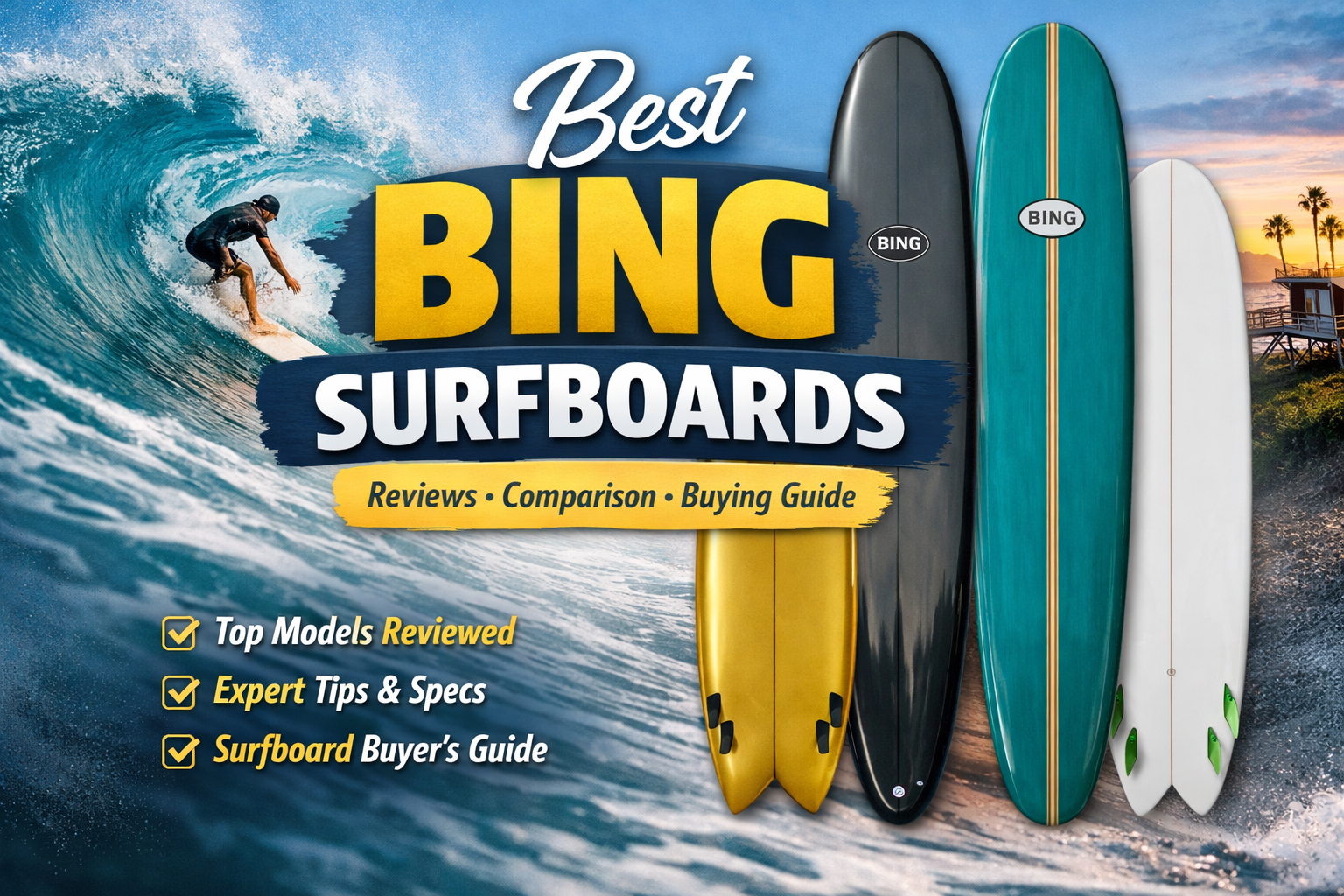
Bing Surfboards are widely recognized as one of the most respected California surfboard brands, blending classic longboard heritage with modern surfboard performance. Known for their craftsmanship, durability, and timeless designs, Bing Surfboards appeal to beginners, intermediate surfers, and professional longboarders alike. Whether you are searching for the best Bing longboard, a high-performance mid-length, or a versatile fish surfboard, Bing continues to set industry standards for quality and ride feel. If it is your first time to hear about Bing surfboards, you may want to know some essential tidbits about them. Herbert “Bing” Copeland was a young man from California whose hobby was surfing and watching surfers hit Hermosa Beach waves. He and his friends traveled around the world after they graduated and obtained their high school diplomas. They looked for the best beach waves and enjoyed surfing in foreign waters. Back in their native California, Copeland and his friends later began shaping surfboards. Then, they opened Bing Surfboards, the first-ever surf shop in 1959. Bing Surfboards expanded rapidly with a group of stylish and prominent surfers aboard. They include Chris Schlichenmeyer, David Nvvhiwa, and Dru Harrison. Copeland’s surfboard shaping team produced more than 40 surfboards per day. Bing Surfboards became one of the largest surfboard makers in the 1960s and 70s. Today, Bing surfboards continue to impress surfers from around the world. Their shops in Encinitas and Leucadia in California carry on with receiving bulk orders. This online discussion will introduce you to some of the best-selling Bing surfboards. You will discover the one that will suit you best from the following four surfing equipment pieces by Bing Surfboards: Surfers searching online for “best Bing surfboards,” “Bing surfboards review,” “Bing longboard vs noserider,” or “which Bing surfboard should I buy” are typically looking for three things: Wave suitability (beach breaks, points, reefs) Skill-level compatibility (beginner to advanced) Board performance (glide, stability, maneuverability) In this guide, we break down the most popular Bing Surfboards models, explaining who each board is best for, what wave conditions they excel in, and why they continue to be top sellers worldwide. Our Top 4 Best Bing Surfboards Reviewed 6’2″ Bing Bulb Surfboard  9’4″ Bing Beacon – Smoke Surfboard 9’4” Bing Silver Spoon Surfboard 5’6″ Bing Dharma Surfboard #1. 6’2″ Bing Bulb Surfboard Specifications: Length: 6’2″ Width: 21.75 inches Tail: Slightly rounded, double-wing diamond tail Thickness: 2.625 inches Volume: 36 cubic liters Nose: Pulled-in nose Fins: Quad or tri-fin setup Color: Gold Finish: Sanded When dealing with critical and massive beach waves with ease, nothing compares to the power of the 6’2″ Bing Bulb Surfboard. This little board is versatile and ideal for top-to-bottom beach waves as it lets considerable amounts of glide possible. Plus, the 6’2″ Bing Bulb Surfboard will wow you with its capacity to engage with head-high and lined up beaks, onshore and waist-high beach waves, and hollow and heaving overhead beach waves. Bing Surfboards’ chief surfboard shaper Matt Calvani designed the 6’2″ Bing Bulb Surfboard by referring to the appearance and outline of its predecessors, which are the Swee’ Pea, Mini Simmons, Dharma, and Puck. The 6’2″ Bing Bulb Surfboard features a small rocker in the front, double-wing diamond tail resembling a light bulb, and a pulled-in nose. The 6’2″ Bing Bulb Surfboard’s double-wing diamond tail perfectly complements its outline. Furthermore, this magnificent piece of water sports equipment is the perfect blend of sensitivity and glide. The 6’2″ Bing Bulb Surfboard connects the gap between the alternative, short surfboard, retro-style, and conventional surfboards. This product offers you a balanced and smooth ride, gravitating towards a vertical approach. This Bing surfboard provides surfing aficionados with rapid and more detailed control as they surf as well. You can ride the 6’2″ Bing Bulb Surfboard with a tri-fin or quad setup. It is ideal for quick roundhouse cut-backs and open-faced conditions. You can direct the 6’2″ Bing Bulb Surfboard where you want it to proceed, and it will head there!   #2. 9’4″ Bing Beacon – Smoke Surfboard Specifications:  Length: 9’4″ Width: 23 inches Tail: 15.75 inches (Average) / Square Thickness: 2.938 inches Volume: Unspecified Nose: 19.5 inches (Average) Fins: Single Box Color: Smoke Finish: Sanded Gloss If you are a surfing enthusiast interested in continuously getting to the surfboard’s nose with confidence, then, the 9’4″ Bing Beacon – Smoke Surfboard is for you. This amazing surfboard appeals to surfing aficionados of all ability levels. Also, the 9’4″ Bing Beacon – Smoke Surfboard concentrates on the surfer’s stability and early wave entry. It helps surfers develop their longboarding talents. Moreover, the 9’4″ Bing Beacon – Smoke Surfboard features a mellow entry rocker, heightening the overall stability to assist you in getting that extended nose time. This continuous and easy-entry feature is steady and forgiving for late take-offs and cross-stepping. While you maneuver up and down the 9’4″ Bing Beacon – Smoke Surfboard, you will benefit from stable movements. Thanks to this surfboard’s midsection that facilitates this benefit. The 9’4″ Bing Beacon – Smoke Surfboard’s midsection measures a quarter-inch wider than most Bing surfboards. This portion offers considerable space for moseying your way to the tip. The 9’4″ Bing Beacon – Smoke Surfboard also features a fantastically blended concave and 50/50 rails throughout. This wide-nosed Bing surfboard has a slightly more pulled-in tail as well. These advantages make the surface boat maneuverable from rail to rail, facilitating quicker rail-to-rail twists. Besides the decently pulled-in squash tail, the 9’4″ Bing Beacon – Smoke Surfboard features an effortless setup for noserides. You can undoubtedly get yourself set up faster for a walk from the surfboard’s back towards the nose. Indeed, the 9’4″ Bing Beacon – Smoke Surfboard, which has a design inspiring fluid surfing and early take-offs, will help you get the most of your surfing moments as it takes you from the surfboard’s center towards the ending line effectively.   #3. 9’4” Bing Silver Spoon Surfboard Specifications: Length: 9’4” Width: 22.75 inches Tail: 16.25 inches (Average) / 3-stringer basswood cluster square tail Thickness: 2.875 inches Volume: … Read more

Best Kitesurfing Gifts for 2026: Expert-Tested Gear for Every Rider

So, a special occasion is just around the corner — and you’re looking for the perfect gift for someone who’s genuinely into kitesurfing. At first, it feels easy. After all, it’s a niche sport. But the deeper you go, the more you realise the challenge: most kitesurfers already own the obvious gear. So, what is the best gift for a kitesurfer who has everything? The best gifts focus on high-utility tech and gear longevity. Rather than generic accessories, look for items that solve specific “on-water” problems like lens fogging, gear maintenance, or wind accuracy. That’s exactly what this guide focuses on: high-utility, experience-enhancing gifts  Whether they’re a beginner learning water starts or a seasoned rider chasing stronger wind windows, these are kitesurfing gifts that actually get used.   Quick Comparison: Top 2026 Kitesurf Gifts Best for Tech Lovers: Digital Anemometer (Bluetooth-enabled) Best for Eco-Conscious Riders: Mineral-based Reef-Safe Sunscreen Best for Gear Longevity: Wetsuit Changing Mat/Bag Best Overall Utility: Floating Polarized Sunglasses    Best Gifts for Kitesurfers While it’s highly likely that your kitesurfing pal (or special someone) already has most of the things on this list, there’s still a chance that they’re missing a thing or two. But, even if that’s not the case, there will be at least one item here that will make kitesurfing more efficient for them — or better yet, more enjoyable! Listed below are the best gifts for kitesurfers, in no particular order! #1: Kitesurfing Sunglasses (Floating & Hydrophobic) When it comes to kitesurfing, having the right eyewear can significantly enhance your performance and safety on the water. Kitesurfing sunglasses are specifically designed to provide protection against harmful UV rays, reduce glare, and improve visibility in bright, sunny conditions. By shielding your eyes from the sun’s rays and minimizing glare, these sunglasses allow you to focus on the waves ahead with clarity and confidence. One of the key features of kitesurfing sunglasses is polarized lenses. Unlike regular sunglasses, which only darken your vision, polarized lenses contain a special filter that blocks out horizontally polarized light, such as glare reflecting off the water’s surface. This helps to reduce glare and improve contrast, allowing you to see more clearly and comfortably, even in bright sunlight. Why it’s a great gift: It prevents “Surfer’s Eye” (Pterygium) and allows the rider to see gusts on the water more clearly. #2: Eco-Friendly Sunscreen Lotion Protecting your skin from harmful UV rays is crucial, but why not do it in an environmentally friendly way? Eco-friendly sunscreen lotions offer effective sun protection without harming the planet. These lotions are formulated with natural and organic ingredients, free from harmful chemicals like oxybenzone and octinoxate that can damage coral reefs and marine life. By opting for eco-friendly sunscreen lotion, you not only safeguard your skin but also contribute to the preservation of our oceans and ecosystems. Look for brands that prioritize sustainability and use biodegradable packaging, ensuring your sun protection routine aligns with your commitment to the environment. Enjoy the sun responsibly with eco-friendly sunscreen lotion and bask in the beauty of nature without leaving a harmful footprint behind. #3: Waterproof  Dry Bag A waterproof dry bag is a must-have accessory for anyone who loves outdoor adventures, especially for kitesurfers who spend a lot of time on the water. These bags are designed to keep your belongings safe and dry, even in the harshest conditions. Whether you’re hitting the waves or exploring the beach, a waterproof bag provides peace of mind knowing that your essentials, such as your phone, wallet, and keys, are protected from water damage. Look for bags with durable materials, welded seams, and secure closures to ensure maximum waterproofing. With a waterproof bag by your side, you can fully immerse yourself in your kitesurfing experience without worrying about your gear getting soaked. #4: Digital Anemometer A digital anemometer is a handy tool for kitesurfers looking to optimize their riding conditions. This device measures wind speed, allowing riders to gauge the ideal conditions for their sport. With its compact and portable design, a digital anemometer can easily fit into your pocket or gear bag, making it convenient to carry wherever you go. By accurately measuring wind speed, kitesurfers can make informed decisions about when to hit the water, ensuring they maximize their time on the waves. Whether you’re a beginner learning the ropes or a seasoned pro chasing the wind, a digital anemometer is an essential gadget to have in your kitesurfing arsenal. #5: Wetsuit Changing Mat A wetsuit changing mat is a practical accessory for any kitesurfer or water sports enthusiast. This specialized mat provides a clean and comfortable surface for changing in and out of your wetsuit, whether you’re at the beach, by the lake, or at a kitesurfing spot. Made from durable and water-resistant materials, such as neoprene or PVC, a wetsuit changing mat ensures that sand, dirt, and water stay contained, keeping your wetsuit and other gear clean and free from debris. Additionally, some changing mats feature convenient pockets or compartments for storing small items like sunscreen, wax, or keys, keeping everything organized and easily accessible. With a wetsuit changing mat, you can streamline your changing process and focus on enjoying your kitesurfing adventures without worrying about messy cleanup afterward. #6: Surf Poncho A surf poncho is a versatile and practical accessory that’s perfect for kitesurfers and surfers alike. This cozy garment serves multiple purposes, making it a must-have item for anyone who loves spending time in the water. The surf poncho is designed to be worn over your wetsuit or swimwear, providing instant warmth and protection from the elements after a session in the water. Its loose and roomy fit allows for easy changing underneath, offering privacy and comfort on the beach or in the parking lot. Additionally, many surf ponchos feature built-in hoods and pockets, providing extra coverage and storage for essentials like keys, sunscreen, or snacks. Made from absorbent and quick-drying materials like cotton or microfiber, a surf poncho helps you stay dry and … Read more

The 10 Greatest Female Surfers of All Time

A woman in a bikini holding a purple surfboard

Female surfers have contributed significantly to the progression of surfing. They have gone a long way since “Gidget,” the fictional character who rode the waves long before it was acceptable for girls to surf. Since then, some of the most accomplished surfers in history have been women. Women have been little by little evolving their style and skills since they first stepped on surfboards. Even more so, for these famous female surfers, it is more than a matter of grace, but also their way to display women’s ability and commitment. Top 10 Famous Female Surfers Of All Time 1. Stephanie Gilmore Born: 29 January 1988 Hometown: Kingscliff, New South Wales, Australia First season: 2005 Women’s CT Best year: World Champion – 2007, 2008, 2009, 2010, 2012, 2014, 2018 Stance: Natural (regular) foot Stephanie Louise Gilmore, an Australian-born professional surfer, has dominated the surfing scene ever since she made her emphatic debut back in 2007. Nicknamed Happy Gilmore because of her joyful and cheerful personality, she has been well-loved by surf fans worldwide. Gilmore has been surfing since she was ten on Australia’s infamous Gold Coast. Her surfing career began when she stood on a bodyboard at the age of 19. But, as young as 17, she was already entering world tour events as a wild card competitor. Her attempts paid off, starting with her victory at the 2005 Roxy Pro Gold Coast. Since then, her winning streak was unstoppable. After achieving the second successive wild card event, she qualified for the 2007 ASP World Tour – and the rest is history. Her last world title was in 2018, and she appeared in the recent Tokyo Olympics 2020 to represent Australia alongside Sally Fitzgibbons. Stephanie’s thoughts about surfing: “Waves are fascinating, the way they are created by the wind far out at sea and groomed by different winds as they come closer to shore. We surfers ride the very last part of the wave’s life before it crashes and disappears, never to be seen again.” 2. Carissa Moore Born: August 27, 1992 Hometown: Honolulu, Hawaii, USA First season: 2008 Men’s QS Best year: World Champion 2011, 2013, 2015, 2019 ASP Women’s World Tour Stance: Regular Carissa Moore is one of the very few people who get a day named after her. January 4 is Carissa Moore day in Hawaii. One of the most successful surfers in history, her first season on the world tour had her win two contests and finished third overall. She was 17 when she was named rookie of the year. When Kelly Slater won his 11th world title, Moore earned her first. She was 18. That makes her the youngest world champion ever recorded. After bagging four surfing world titles, she now belongs to an elite group of surfing superstars, including Layne Beachley, Mark Richards, and Stephanie Gilmore. Moore and Gilmore have passed the trophy back and forth at least three times as they battled for World Titles. Theirs is by far the best rivalry ever on the women’s side, which all fans loved as there has never been a whiff of animosity between the two. Moore is one of the two American women who qualified for the Tokyo 2020 Olympics, where she won gold.     Carissa’s thoughts about surfing: “Riding the wave makes you feel free, it makes you feel present, it makes you feel more in love with yourself and the ocean and the environment.” 3. Lisa Andersen Born: March 8, 1969 Hometown: Ormond Beach, Florida, USA First Season: 1990 Women’s CT Best year: 1997 Stance: Regular Named “1998 Female Athlete of the Year” by Conde Nast Sports for Women magazine, Andersen has been surfing since she was 15 when women’s surfing was underground and the sport was generally seen as men’s sport. Despite her parents’ disapproval of her surfing, she decided to leave home and run away to Huntington Beach, CA, where she trained with the best surfers in America. Subsequently, she made it through amateur competitions and won 35 National Scholastic Surfing Association trophies. She became a professional surfer in 1987 after she made it to the US Championships at Sebastian Inlet. Ranking 12th in her first year, she was elected Rookie of the Year. In 1990, she won her first pro event in Australia. Andersen battled back injuries and gave birth to her second child in 2001. She was semi-retired that year and moved to become a global brand ambassador to Roxy. In 2004, Andersen was inducted into the Surfing Walk of Fame in Huntington Beach. Lisa’s thoughts about surfing: “If you look at the media coverage and surfing magazines, the one thing that stands out is how hard it is to find a photo of a girl in a magazine unless it’s an ad. It’s kind of strange, still to this day. You see these great-looking girls surfing so well that they are amazingly talented. They are finally the total package.” 4. Marge Calhoun Born: 20 March 1926 Hometown: Hollywood, California First Season: n/a Best year: n/a Stance: n/a One of the precursors to today’s professional female surfers, Calhoun was the first woman world champion surfer to win the Makaha International Competition In Oahu. Born in Hollywood in 1924, she spent most of her childhood weekends swimming and diving on Venice Beach and Santa Monica. In the 1940s, Calhoun trained for the 1940 Olympics. Unfortunately, the games got canceled because of the outbreak of World War II. Still, she went to continue surfing Topanga Canyon in the 1950s. She rode boards her husband gave to her as a Christmas gift. Calhoun was one of the co-founders of the US Surfing Association, an influential surfing organization in the 1960s. She and her group became an inspiration to a generation of young women aspiring to surf despite the stigma of the heavily chauvinistic 1960s surf culture. Calhoun passed away in 2017 at the age of 93. Marge’s thoughts about surfing: “If you look out there and think, “Gee, I wish I … Read more

Banzai Pipeline: Hawaii’s Iconic North Shore Wave

Banzai Pipeline

If there is a wave most filmed and photographed in the world, it is the Banzai Pipeline. Considered one of the most competitive waves on the planet, it is the birthplace of tube riding and the spot that gave name to an esteemed surfing contest – the Pipeline Masters. For over 50 years, Pipeline has been the beating heart of winter surfing in Hawaii. Every season, thousands of surfers travel to the North Shore for a chance to experience its world-class power, its perfect-but-deadly tubes, and its undeniable place in surf lore. What’s behind the most iconic waves in surfing history? Let’s unravel the mystery that wraps the barrelling waves and difficult conditions daredevils sought after. Below follows a complete breakdown of the history, geology, surf conditions, dangers, competitions, and FAQs surrounding Pipeline. Origin Of The Name – Banzai Pipeline Inspired by the ancient Samurai’s commitment to suicide over capture, the Japanese government during the Pacific Wars in 1941 taught its soldiers it was far more honorable to die than to surrender. The battle cry for this act – “Tennōheika Banzai,” which translates to “long live his majesty, the emperor,” knew far too well this cry and the attack that accompanied it. This battle cry was usually shortened to just “Banzai!” during those instances due to time constraints. What does it have to do with the world’s famous surf site, you ask? After the war, several surviving American soldiers settled in Hawaii. The GIs first named the long stretch of Oahu’s north shore as “Banzai Beach.” Apparently, it was because of the deadly-looking huge waves that regularly pound on its shore. Fast forward to 1961, two visiting Californian surfers – Phil Edwards and Mike Diffenderfer paddled out and caught what are widely acknowledged as the first-ever waves ever ridden at Banzai Beach. The following day, the two came back to the surf spot with Endless Summer director Bruce Brown. Brown captured the ensuing session. Most of what he got that day was included in his 1962 film Surfing Hollow Days. As they were leaving the beach, Diffenderfer spotted a series of gigantic concrete pipes used on a nearby building site. He noted their similarity to the waves he had just been surfing and suggested to Brown that the spot be named Pipeline. Geological Formation of Pipeline’s Reef  The power and shape of the Banzai Pipeline come from its unique volcanic reef structure, formed thousands of years ago during Oahu’s volcanic activity. The reef’s jagged edges and uneven coral shelves sit extremely close to the surface, forcing swells to rise quickly and pitch into perfect, hollow cylinders. Pipeline’s reef includes: A shallow plateau that causes the sudden, vertical takeoff Deep caverns that trap and release air, creating explosive boils A sharp drop-off immediately past the impact zone This geological setup makes Pipeline both unbelievably photogenic and notoriously dangerous. No machine-made wave pool can replicate the combination of power, precision, and raw chaos created by this reef. Banzai Pipeline – The Queen of All Waves Banzai Pipeline on the North Shore is the “happenin’” place to be. It has one of the most impressive and notorious waves in the world. This picture-perfect surfer’s dream is a reef break located in Hawaii, on Oahu’s North Shore. The break is situated off Ehukai Beach Park in Pupukea. The massive hollow tubes that break over a sharp and shallow reed is one of the most dangerous waves in the world – but is also one of the most sought after. The deadly waves of blue cylinders sent hundreds of athletes to hospital beds and even claimed the lives of several other riders. Some of those who braved the Pipeline but didn’t come out alive were Andy Chuda in 1989, Travis Mussleman in 2000, Moto Watanabe in 2004, Jon Mozo and Malik Joyeux in 2005, Joaquin Velila in 2007, and Joshua Nakata in 2008. Aside from being notoriously deadly, Banzai Pipeline also became a famous symbol of surfing thanks to its world-renowned competitions, surf film appearances, and all the surfers who earned their chops riding its waves. Under the Pipeline reefs are large caverns. Massive air bubbles rise from the caverns as the wave breaks over these reefs. These create the perfect wave crests that Banzai is famous for. Moreover, the steep takeoffs and the really heavy waves are tremendous rewards for the surfers who get it right. Banzai Pipeline has many faces that include a series of different reefs spaced out in gradually deeper parts of the ocean. The size of the incoming swell usually tells the reef that breaks. The breaks include for different waves: Pipeline or the First Reef – The left break of the Pipeline and the most popular and famous wave. This is usually the closest break to the shore. Backdoor Pipeline – This Pipeline is a right break that occurs when a north swell hits the first reef. The north swell triggers an A-frame at the peak. Then the left break starts to close out. Backdoor is the right break of this. Second Reef – This is further out in the ocean after the First Reef. It is a more profound wave that breaks when the swell gets more extensive. These waves reach somewhere around 12 feet and above. The Second Reef is famous for its more giant waves and longer walls. Third Reef – The most intimidating Pipeline break is the Third Reef. This wave only breaks in massive conditions, resulting in some colossal waves. The Third Reef is the most profound break. Best Conditions for Surfing Pipeline Pipeline is a left-hander that performs best under specific conditions: Best swell direction: west-northwest (WNW) northwest (NW) Best winds: light trade winds or offshore winds Best season: October to March (peak: November–February) Ideal wave size: Pipeline’s classic vision is the white lip throwing over into a perfectly cylindrical barrel—followed by a violent closeout over shallow reef if things go wrong. The best size of waves to surf the Pipeline is … Read more

Blonde Surfer Hair: Secrets Behind the Iconic Sun-Kissed Look and How to Get It Naturally

Blonde surfer hair with natural beach waves and sun-kissed golden highlights. Smiling woman on a beach at sunset, with surfboards in the background.

Surfer hair is more than just a beachy hairstyle — it’s a symbol of sun, sea, and laid-back coastal living. Whether you’re riding waves daily or just chasing the effortless “I live by the ocean” vibe, blonde surfer hair is a look many people want to achieve naturally. But what actually causes it — and how can you get that iconic sun-kissed look yourself? Surfers are often portrayed with sun-bleached blonde hair in movies and TV shows. For example, in Point Break, Patrick Swayze’s character sports the classic surfer look with naturally lightened hair — a style that’s become symbolic of surf culture. Blonde hair is so common among surfers that many people see it as the “standard” look. But what actually causes surfer hair to become blonde? Blonde surfer hair is a result of the sun’s rays bleaching it. Not only that, but when paired with the sun, the saltwater lightens the hair. The more time surfers – or anyone who enjoys the beach – spend in the sun, the lighter their hair becomes. Read more to fully comprehend why blonde surfer hair happens as we dig into the transformation process in detail. How Surfers Naturally Get Blonde Hair Surfers are exposed to the sun for long periods. The longer a person spends at the beach and in the water, the lighter their hair becomes naturally. The sun, saltwater, melanin, and keratin are essential components in the hair lightening process. Blonde surfer hair results from the sun and saltwater combined, affecting a human’s natural hair color. Your skin darkens after a day spent lounging on the beach, taking up the sun’s UV rays. Melanin production in the skin is stimulated by exposure to the sun. Melanin is the pigment in your skin, and the more melanin it generates, the darker you get. When it comes to your hair, though, the opposite is true. The sun’s rays tear down your hair’s melanin, causing it to generate less and less. The sun fades the natural color of your hair. Surfing men and women are the ones who spend the most time at the beach. Surfing is one activity that draws people to the beach and keeps them there for hours on end, day after day. The hair color changes from a darker to a lighter tone after these many hours of sun exposure. It’s unlikely that your dark brown or black hair, or even red hair, will turn blonde. Light brown hair may transition to blonde considerably more quickly. But, even after a lot of sun exposure, a dark-haired woman will keep her dark locks. How Saltwater Changes Hair Color Bleached Hair We’ve seen how the sun’s rays break down melanin in the hair, thereby bleaching out the color. There’s one more stage to going blonde, and that’s where surfing comes in. Surfers spend hours on the water, either floating, paddling, or being challenged by larger and larger waves. Wet hair is the natural state of hair in the water. On the other hand, damp ocean hair isn’t the same as wet tap water hair. Because it’s saltwater, the difference will affect hair color. Keratin is an elastin-like “protective protein.” Its function is to protect bodily parts where it is found, such as nails, skin, and hair. The salt in ocean water depletes your hair’s keratin supply, separating microscopic elastic keratin connections and exposing your hair to the salt directly. The salt opens up the cuticles in your hair, which depletes the keratin and moisture in your hair. The salt in the water gradually fades hair color. Consistent, regular surfing will eventually result in blonde surfer hair. The sun’s rays also clobber hair. The combination of saltwater and the sun’s rays will result in naturally lightened hair. Dry and Brittle Hair Salt is hygroscopic, which means it can absorb water from the air due to its positive ion charge. Salt, in a nutshell, draws water. When you spend time in the ocean, the salt takes moisture from your hair and scalp, leaving them dry. This causes dry, damaged, and frizzy hair over time. Surfers’ hair is stiff and straw-like rather than smooth and flowy, partly due to a lack of moisture. Saltwater Adds Minerals to Hair and the Scalp Magnesium, potassium, and selenium are among the salts and minerals found in the water. These minerals and vitamins are absorbed into the scalp over time, which can help to soothe itchy dry scalps and add body to the hair. DSW (deep seawater) and its possible health advantages were the subjects of one investigation. The study discovered that the DSW has beneficial impacts on skin disorders, among other things, due to its freezing temperatures, absence of photosynthesis, and high mineral count. Even though DSW is not the same as surface water, the data suggest that ocean water has beneficial benefits on the skin and, as a result, may help hair health. Do Surfing Season Matter in Hair? Surfers’ hair will be lighter in color in the summer than in the winter. One of the causes is the number of hours of sunlight each day is longer in the summer than in the winter. When the weather gets warmer, so does the temperature of the ocean. Surfers will spend more time in the summer than in the winter since the water is warmer. Surfers prefer oceans with many swells, and greater waves can be found at different times of the year. However, if the weather is beautiful, many surfers will go out anyhow, paddle around on their boards, and catch whatever waves come their way. When you’re out on the water, the sun and the salt combine to lighten your hair. Tips to Achieve the Blonde Surfer Look Since the late 1950s, surfer hair has been a fashion statement, and it’s still going strong. With songs like “Surfin’ USA,” “Catch a Wave,” and “Little Surfer Girl,” bands like The Beach Boys popularized the Southern California surfing lifestyle. Even though surfing had already become … Read more

Electric Surfboards vs. Jet Boards: What’s the Difference?

If you’ve been keeping an eye on the latest water sports technology, you’ve probably noticed two futuristic boards making waves: electric surfboards and jet boards. From the beach, they might look alike, but once you ride them, you’ll see they deliver very different experiences. I’ve had the chance to ride both, and trust me—whether you go for the eco-friendly smoothness of an electric surfboard or the raw speed of a jet board depends on what kind of rider you are. Let’s break it down. ⚡ Riding an Electric Surfboard The first time I tried an electric surfboard, it felt like gliding on water with almost zero resistance. These boards are powered by lithium-ion batteries that drive a motor beneath the deck. Because they’re whisper-quiet, you hear the water more than the engine—a big plus if you like a peaceful ride. Speed: Typically 20–35 mph Battery Life: 30–60 minutes depending on model and conditions Weight: Heavier than a traditional surfboard due to the battery Best For: Calm seas, lakes, bays, and beginners 👉 If you’re new to powered boards, an electric surfboard is easier to learn. Plus, they’re more eco-friendly since they produce zero emissions in the water. 🚤 Riding a Jet Board A jet board, on the other hand, is all about speed and adrenaline. Imagine a mix between a surfboard and a jet ski—that’s what it feels like. Most models are gas-powered, though newer electric jet boards are starting to hit the market. The acceleration is instant, and you can carve turns aggressively, even in rough water. But be prepared: they’re noisy and require more maintenance. Speed: 40–55 mph (sometimes even faster) Power Source: Gas engine or electric motor (rare) Ride Feel: Aggressive, high-adrenaline, motorsport-like Best For: Experienced riders, thrill-seekers, open water 👉 If you’re chasing maximum speed on water, a jet board is your best bet. 🔑 Electric Surfboards vs. Jet Boards: Side-by-Side Feature Electric Surfboards Jet Boards Power Source Rechargeable lithium-ion battery Mostly gas engines (some electric jet boards) Top Speed 20–35 mph 40–55 mph Noise Level Almost silent Loud, like a motorbike Eco Impact No emissions, eco-friendly Fuel emissions, less sustainable Maintenance Simple: charge and rinse Higher: fueling, servicing, engine care Cost $8,000–$15,000 $10,000–$20,000+ Best Suited For Beginners, eco-conscious riders Speed junkies, experienced riders 🌊 Which One Should You Choose? After riding both, here’s my recommendation: Choose an Electric Surfboard if…You want a quiet, eco-friendly ride that’s easy to learn and perfect for cruising flat water. They’re ideal for first-timers, families, and anyone who prefers a futuristic but relaxed style of riding. Choose a Jet Board if…You’re after raw speed, power, and adrenaline. Jet boards are for riders who already feel comfortable on the water and don’t mind engine noise or extra maintenance. Personally, I love taking my electric surfboard out early mornings when the sea is calm—it’s meditative and smooth. But when I want a heart-racing session, I bring out the jet board. It’s a whole different beast. ❓ Electric Surfboards vs. Jet Boards: FAQs 1. What is the main difference between an electric surfboard and a jet board?The key difference is the power source. Electric surfboards use battery power, while most jet boards run on gas engines. This impacts speed, noise, maintenance, and eco-friendliness. 2. Are electric surfboards easier to ride than jet boards?Yes. Electric surfboards are beginner-friendly, quieter, and easier to control. Jet boards are faster and better suited for experienced riders. 3. How long does an electric surfboard battery last?Between 30–60 minutes of riding, depending on the model, rider weight, and speed. Many riders invest in spare batteries for longer sessions. 4. Which is faster: an electric surfboard or a jet board?Jet boards are faster. They can reach 40–55 mph, while most electric surfboards top out around 20–35 mph. 5. Are electric surfboards better for the environment?Yes. Electric surfboards are zero-emission, making them a more sustainable alternative to fuel-powered boards. 6. Which is more expensive to own?Both are luxury water toys, but jet boards are generally pricier and require higher ongoing maintenance. 🚀 Final Thoughts Both electric surfboards and jet boards are incredible innovations that are redefining modern water sports. If you value sustainability, quiet rides, and ease of use, an electric surfboard is your best choice. If you want maximum speed, adrenaline, and raw power, go with a jet board. No matter which way you go, you’re stepping into the future of surfing—where technology meets the thrill of the ocean. 👉 Next up on Surfhungry: My list of the best electric surfboards of 2025 and where you can rent them before making the big purchase.Luke MorrisLuke Morris is an avid athlete and the driving force behind Surfhungry, a vibrant online platform dedicated to sharing the joy and passion of surfing and water sports with enthusiasts around the world. With a deep-rooted love for the ocean and a lifelong commitment to riding waves, Luke’s journey as a surfer has inspired him to create a community where like-minded individuals can come together to celebrate their shared passion.

Top 6 Best Surfing Wetsuits | Reviews (O’Neill, XCEL)

best surfing wetsuits

Surfing wetsuits have come a long way since Hugh Bradner invented the first neoprene version in 1952. What started as a simple layer of foamed rubber has evolved into high-performance gear built from advanced materials like limestone neoprene, recycled fabrics, and water-repellent coatings. Today’s wetsuits don’t just keep you warm — they boost buoyancy, improve paddling efficiency, and protect you from UV rays, abrasions, and even stings from marine life. Whether you’re chasing summer swells or braving icy winter waves, the right wetsuit can dramatically improve your comfort, safety, and performance in the water.   Choosing the Right Wetsuit Thickness Wetsuit thickness is usually measured in millimeters (mm), with two or three numbers indicating the neoprene thickness across different parts of the suit. The first number refers to the torso (for warmth), and the second or third to the limbs (for flexibility). 1–2mm: Best for tropical climates and water above 70°F (21°C). Great for summer surf sessions. 3/2mm: The most versatile choice for spring and autumn waters ranging from 56–68°F (13–20°C). 4/3mm – 5/4mm: Designed for colder waters below 55°F (12°C) with added insulation. 6/5mm+: Extreme cold-water suits often with integrated hoods, gloves, and boots. Always balance warmth and flexibility — thicker suits are warmer but slightly restrict movement, while thinner suits offer more freedom but less insulation.   Best Surfing Wetsuits With the wide range of surfing wetsuits in the market, it helps to know the factors to consider before picking one. But, the most helpful is when someone narrows down your choices for you. And, that’s what we are here for. The following surfing wetsuits were carefully selected based on the factors listed above, combined with our thoughts regarding the brand, user reviews, and price tag. O’Neill Men’s 3/2mm Full Surfing Wetsuit Seavenger Navigator 3mm Neoprene Wetsuit XCEL Drylock X 5/4mm Hooded Wetsuit Quiksilver Men’s 3/2mm Full Flatlock Wetsuit O’Neill Hyperfreak 4/3mm Comp Zipless Full Wetsuit Rip Curl Dawn Patrol Back Zip 3/2 Wetsuit   #1. O’Neill Men’s 3/2mm Full Surfing Wetsuit – Best Entry Level Wetsuit O’Neill has become not just a brand but a reputable institution when it comes to wetsuits. With their history founded in innovation, functionality, and value, it is no surprise that their brand achieved success. Their achievement was not an easy recipe. It stemmed from their pure and real surfing heritage combined with their team of top-rank riders who are in a constant look-out for product innovation. Their line of wetsuits ranges from UV-resistant suits for toddlers to the most advanced full-body suit designed for the harshest water temperatures. The O’Neill Men’s Reactor 3/2mm Full Surfing Wetsuit is the market’s leading entry-level surfing wetsuit that traverses through all water sports. It was last updated on 2018 and has been one of the best-selling surfing wetsuits. With comfort and style considered in the construction of O’Neill Men’s Reactor 3/2mm Full Surfing Wetsuit, one of the features include the neck closure being fully adjustable. The seal you get is what you need, and you won’t have to settle for what has been decided by the manufacturer. This surfing wetsuit also boasts knee pads to heighten the toughness of the suit in a critical area where wear and tear usually start after so much use. This surfing wetsuit is constructed with polyester, spandex, and nylon. Merged with neoprene lining, it provides a comfortable experience to keep you warm on cold days and chill on warm ones. Its 3/2mm thickness is particularly best for colder waters. One of the selling points of this surfing wetsuit is its price tag. It is relatively cheaper than most brands whose quality of materials and construction are just the same. Key Specifications 3/2mm FluidFlex™ Neoprene Full Suit Rear YKK® Zipper Entry with Pull Tab Leash Non-Chafing, Flat-Locked Stitched, Overlapping Seams #2. Seavenger 3mm Neoprene Shorty Wetsuit – Best Short Wetsuit Seavenger has established its name as a reputable brand since it started in the early 2000s. They are popular for putting a lot of consideration into the safety and dependability of their items. Recently, they launched their Project AWARE in hopes of reducing pollution through regular cleanups. You can donate at least a dollar at their website to help their cause. This company believes that high-quality wetsuits do not have to be expensive. This trusted company specializes in manufacturing underwater essentials. Their line of products includes wetsuits, snorkels, and surf booties. Seavenger Navigator 3mm Neoprene Shorty Wetsuit is easy to get on and off. Its extra-long leash and zipper help whether you are on dry land or just got out of the water. This short surfing wetsuit is perfect not just for surfing but for scuba diving, full-face snorkeling, and other water sports. One thing that you need to check when getting a surfing wetsuit is if it chafes or not. Seavenger Navigator 3mm Neoprene Shorty Wetsuit does not. It is a life-saver when you are in the water for long periods. As funny as it may sound, the armpit area is a critical part of a surfing wetsuit. Your arms move a lot therefore that part of your armpit stretches a lot, too. The fabric this surfing wetsuit is made of is flexible enough to be the perfect suit for mobility, particularly surfing. Key Specifications High-flex 3mm neoprene Anti-abrasion shoulders Tough sharkskin chest for surfing #3. XCEL Drylock X 5/4mm Hooded Wetsuit – Best Cold-Water Wetsuit Growing accustomed to the chilly Atlantic coasts of New Jersey, Ed D’Ascoli, the founder of Xcel, didn’t take long to develop wetsuits that will provide maximum performance for both cold and warm bodies of waters. His enthusiasm and experience were the driving forces of his company to become an international brand. His examples instantly laid the foundations of how surfing wetsuits are revolutionized. XCEL Drylock is just one of XCEL’s wetsuits that are great for colder climates. Whether it is the water that is cold or the wind blowing, this surfing wetsuit will keep you comfortable and warm. Aside from being warm … Read more

Top 5 Best Wetsuit Hangers (Guide)

Best Wetsuit Hangers

You need wetsuit hangers to take care of your wetsuits — regardless of how cheap or expensive they are. Because when you’ve invested hundreds of dollars for your wetsuit, you want its good condition to last as long as possible. But wait… Did you know that simply by using the wrong kind of hanger, you can easily ruin your wetsuit? We know. Shocking! Low-quality hangers can stretch your wetsuit’s neoprene fabric. It can also cause rips and tears in your precious wetsuit and give it that annoying shoulder bumps and stubborn folds in the abdomen area. Yes, they’re pretty mundane, but we can’t deny this simple fact:  Wetsuit hangers are as essential as the wetsuit itself. Why do you need a wetsuit hanger? You need a wetsuit hanger to dry your wetsuits thoroughly — both inside and out. As a result, your wetsuit won’t become a breeding ground for bacteria and mold, and post-swim smells are also more unlikely to occur. A good-quality hanger also helps maintain your wetsuit’s fit and shape because it doesn’t stretch the fabric as it dries. When you have wetsuit hangers, your wetsuit will always feel like it is the first time you’ve worn it.  Top 5 Best Wetsuit Hangers Waiting for your wetsuit to dry isn’t fun at all. That’s why in this article, we’ve summed up the best ones we can find in the market based on user reviews. Check out our list of the Top 5 Best Wetsuit Hangers:  Ho Stevie! Wetsuit Hanger — Our Top Pick Storm Scuba Diving and Surfing Wetsuit Hanger — Best Budget Underwater Kinetics HangAir Hanger– Best High End Hang Pro Slide Wetsuit Hanger OMGear Wetsuit Hanger #1: Ho Stevie! Wetsuit Hanger — Our Top Pick Specifications:  Material: Polycarbonate Dimensions: 20 x 5 inches  Type: Vented Compatible with: Wetsuit or Drysuit; Fullsuit, Spring, Shorty, Long John, Winter, Chest Zip Other features: Foldable, Comes with a refund and replacement warranty No more excuses for missing out on paddle sessions because your wetsuit is still wet!  The Ho! Stevie Wetsuit Hanger is specially made by a surfer for surfers. This wetsuit hanger’s main feature is its broad and vented shoulders that allow increased airflow inside the wetsuit. Because with good air circulation, it can dry faster and more evenly. Now, it’s possible to catch the waves in the mornings and have a dry wetsuit again ready for an afternoon surfing session. This wetsuit hanger is made from heavy-duty polymer that can support the heavy weight of drenched wetsuits. It’s also big enough to accommodate large sizes. Surprisingly, this hanger is very compact. With just a push of a button, it folds in half, making it easy to pack and take with you on your travels. To use it, simply put the folded hanger inside the wetsuit, then pop it open. This feature comes in handy when you’re hanging a chest zip wetsuit, but not with a hooded wetsuit because of its short hook. Lastly, every purchase of this hanger comes with wetsuit-care tips and how you can maximize it. The bonus part is if you break your hanger, they will happily replace it or give you a refund.  #2: Storm Scuba Diving and Surfing Wetsuit Hanger — Best Budget Specifications:  Material: Plastic  Dimensions: 16.75 x 1 x 9.5 inches Type: Regular Compatible with: Wetsuit or Drysuit; Fullsuit, Spring, Shorty, Long John, Winter, Hooded, Chest Zip, Diving Other features: Supports suits up to 20 pounds With a cost of $10 per piece, you may be asking yourself what’s the difference between the Storm Wetsuit Hanger to the regular ones in your home? The answer to this is simple. The Storm Wetsuit Hanger is versatile. With this, you can hang your wetsuit any way you want to — by the shoulder or folded in the abdomen area. You can also use it for your old wetsuits and other clothes, too.  This wetsuit hanger is made from solid and sturdy plastic resin. It doesn’t have sharp edges and metal hooks, therefore preventing tears and damages to your wetsuit. It also has rounded tips, so your wetsuit won’t have those bothersome shoulder horns and bumps. The Storm Wetsuit Hanger is heavy-duty and can support any type of wetsuit. From shorty wetsuits to full suits, with thicknesses that range from 2mm to 7mm, and weights that are up to 20 pounds. Its wide shoulders evenly distribute the weight of the wetsuit when it’s folded in half. Hence preventing the fabric from being stretched.  Sure, it’s expensive compared to ordinary hangers, but it’s much cheaper than the other products on this list. In the end, it does its job really well, which makes it a real value for your money.  #3: Underwater Kinetics HangAir Hanger – Best High End Specifications:  Material: 100% Recycled Plastic Dimensions: 22 x 7 x 7.5 inches Type: Vented with built-in fan Compatible with: Wetsuit or Drysuit; Fullsuit, Spring, Shorty, Long John, Winter, Hooded, Chest Zip, Diving, Protective wear Other features: High-power waterproof fan, Can support up to 100 pounds, 100/240 VAC Does your wetsuit take forever to dry because of the cold weather? If budget isn’t a concern, you might want to take your wetsuit maintenance to the next level with the Underwater Kinetics ‘HangAir’ Wetsuit Hanger.  The HangAir comes with its own waterproof and high-power built-in fan that blows 120 cubic feet of air per minute — therefore speeding up your wetsuit’s drying process in just a few hours. (This hanger can dry out a 4/3 overnight, even with low temperature indoors!) Aside from that, the moving air also helps slow down the formation of any post-swim odors in your wetsuit. This hanger can support weight up to 100 pounds, and it can be used on different types of wetsuits. It’s environmentally friendly, too. Its fan motor doesn’t generate ozone, it’s low-voltage, and lastly — it’s made from 100% recyclable plastic.  #4: Hang Pro Slide Wetsuit Hanger Specifications:  Material: Nylon plastic Dimensions: 20 inches Type: Open-end Compatible with: … Read more

Interactive Map of Top Surfing Destinations Worldwide

Whether you’re chasing glassy point breaks, barreling reef waves, or mellow beginner swells, finding the right surf spot at the right time is key.Our Top Surfing Destinations Interactive Map lets you explore the world’s best surf beaches, filter by skill level, season, and wave type, and plan your next surf trip with ease. From iconic locations like Pipeline in Hawaii to hidden gems in Portugal, Morocco, and Indonesia, this tool is your ultimate surf travel companion. Interactive Map of Top Surfing Destinations Worldwide Luke MorrisLuke Morris is an avid athlete and the driving force behind Surfhungry, a vibrant online platform dedicated to sharing the joy and passion of surfing and water sports with enthusiasts around the world. With a deep-rooted love for the ocean and a lifelong commitment to riding waves, Luke’s journey as a surfer has inspired him to create a community where like-minded individuals can come together to celebrate their shared passion.

Feed Your Stoke. Join the Surf Hungry Crew

Surf tips, gear reviews and travel guides straight to your inbox

"*" indicates required fields

Privacy*
This field is for validation purposes and should be left unchanged.