

You might be new to surfing and unfamiliar with terms like “duck dive” and “turtle roll,” or perhaps you’ve heard about them but never practiced them before. In truth, these two techniques will change how you surf forever and make it much easier to paddle to the lineup! So, what is a duck dive, and should you duck dive or turtle roll?
A duck dive is a surfing technique that enables a surfer to dive underneath an oncoming wave and more easily paddle out to a lineup. Duck diving is better for big waves and surfboards with less volume, while turtle rolling works well for smaller waves and surfboards with lower volume.
Let’s break down the differences between duck diving and turtle rolling, discuss the benefits and drawbacks of each technique, and go over a step-by-step guide on how to do them. We’ll also cover handy tips for improving these techniques and discuss why they are essential to your surfing toolkit!
Table of Contents
What Is A Duck Dive In Surfing?
A duck dive is a technique that surfers use to safely navigate through oncoming waves when paddling out to the lineup, which is the area where the waves break, and surfers wait for the perfect waves to ride.

What Are The Benefits And Drawbacks Of Duck Diving?
There are significant advantages to mastering duck diving, but it also comes with its drawbacks. Here are the essential benefits and drawbacks you need to know!
Benefits:
- Duck diving allows you to efficiently navigate through oncoming waves that would other push you back and allows you to keep paddling out to the lineup so you can get into position for the next ride.
- You’ll conserve a lot of energy by avoiding waves that may push you back toward the shore.
- Maintaining control of your board is easier, meaning there’s less risk of wipeouts and collisions with other surfers.
- You avoid long swims back to the beach in case your leash breaks.
Drawbacks:
- Duck diving demands a lot of strength and stamina, especially when it comes to large waves.
- It takes some practice, especially for new surfers. You must time the oncoming wave perfectly, or you will lose momentum and get pushed back.
- If you do not duck dive properly, you’ll damage your surfboard. Incorrectly pressing on your board can create pressure dings, delamination, or snap your board.

How Do You Duck Dive?
While duck diving will take some practice before you master it, here are the steps you need to know:
- When you see an oncoming wave, increase your paddle speed before you duck dive to ensure you have enough momentum to dive underwater and back out of the wave.
- Using your hands, push the nose of your board nose-first under the water, with your hands in a push-up position and by your side holding on to the rails.
- With your hands in a push-up position and holding onto the board’s rails, push the board’s nose under the water. Make sure to push it nose-first to reduce resistance.
- Slide your foot up and underneath you so that it’s on the tail of your board, and use it to push down – while still pushing down on your board’s nose with your hands.
- Once you and your board are successfully under the wave, release your legs, slide your hands toward your board’s nose, and perform a frog kick to give you a boost of speed to the surface.
Tips For Improving Your Duck Dive
- Paddle hard to gain enough speed so that you can get deep enough for the water’s cylindrical effect to pull you back up to the surface. If you’re going too slow, your board won’t submerge properly, and it will start to wobble and want to surface because of its natural buoyancy.
- Duck dive as close to the wave as possible so that you can dive underneath the whitewater rather than getting slammed by the force of the water.
- You must extend and push your board forward after duck diving; otherwise, it may pull you back.
Most Common Mistakes Surfers Make When Duck Diving
- Don’t stop paddling in fear when you see a wave approaching you; you must keep paddling to gather momentum and push through.
- When you push down the nose of your board, remember to push down the tail, or your backside will remain stuck in the air, and the wave will push you back.
- Your average board and leash are both 6 feet, plus your body makes 18 feet. Don’t let go of your board because you have about an 18-foot strike range to hit other surfers, so watch your surroundings.
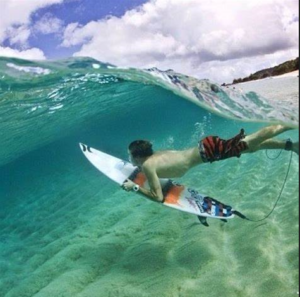
What Is A Turtle Roll In Surfing?
A turtle roll is a technique that surfers use to maneuver under an oncoming wave and prevent it from pushing them back. It allows them to reach the lineup – the place where waves form – to catch the perfect wave.
What Are The Benefits And Drawbacks Of Turtle Rolling?
Turtle rolling can be an effective way to hold onto your position in a lineup and save energy, but this technique has benefits and drawbacks.
Benefits:
- You can more easily navigate through larger waves that are too difficult to duck dive.
- It helps you to conserve energy preventing you from having to paddle around the wave.
- You’ll avoid getting pushed back and maintain your position in the lineup.
- It’s an effective alternative to duck diving if you’re a beginner or find it hard to duck dive.
Drawbacks:
- ou must have good timing and technique to avoid getting caught by the wave and tossed around underwater.
- It can be challenging especially when the water is turbulent, or the wind is howling.
- If you don’t do it properly, your board can hit and injure you, or the wave will drag you under.
- If you let your board go, it can injure other nearby or unaware surfers.
- It’s less efficient than a duck dive because you don’t go as far underwater, meaning you can still get dragged back slightly.
How Do You Turtle Roll?
Performing a turtle roll takes some practice, but the steps are straightforward. Here’s what you need to know:
- When the oncoming wave is several feet away, start your turtle roll by paddling hard and accelerating into the wave. Ensure you’re perpendicular to the wave, or the water will rip your board out of your hands.
- Grab the rails of your surfboard and take a deep breath. Perform a mini push-up to lift your torso off your board, then push your feet down and shift your entire body into the water.
- When you’re in the water and still holding the rails of your board, flip your board over. You want to start your roll before the wave is a few feet away so that you can be in position before the wave hits.
- Keep your elbows bent underwater and in line with your shoulders for more power in your arms.
- As soon as you feel the wave make contact with your board, jab the wave with your board. This will chisel the bottom of the wave and create a seal, at which point you push away to reinforce the seal and make it easier for you to pass through.
- After jabbing your board backward, slide one of your hands down the rail of your board toward the tail. Whichever one you slide is the side of the board you will surface.
Tips For Improving Your Turtle Roll
- Ensure your board is precisely perpendicular to the oncoming whitewash. If it hits your board on the side, there’s a high chance it will also knock it out of your hands.
- If you extend your arms underwater, you create more space between your body and the board, reducing the impact of the wave on your board. It’s also helpful if you want to go deeper under the wave and offer even more pushback resistance.
This technique requires more strength and timing, so it can be more challenging and tiring than keeping your arms bent, and thus better suited for advanced surfers.
- Consider walking your board from the shore until the water is up to your chest to avoid unnecessary turtle rolls and conserve energy.
- Hold your board by its nose and keep it perpendicular to the waves so you can get past the smaller waves without flipping your board. You’ll start paddling only when the ocean looks calmer, and the bigger sets have passed you.
Most Common Mistakes People Make When Turtle Rolling
- Like duck diving, your board must be perpendicular to the wave, or the wave will easily knock your board out of your hands.
- If you have any gaps between your board and the water surface, the wave will push your board back and make you lose control of it. When you flip, you should ensure your board is fully submerged and flush with the water.
- Be careful not to flip your board too early or too late. If you flip too early, you may lose your perpendicular position and drift to the side. If you flip too late, you may not have enough time to sink your board and yourself under the wave. You should flip about 6.5 ft. (2 m) before the wave reaches you.
When Is It A Good Time To Duck Dive Or Turtle Roll?
Duck diving is an advanced technique that is more difficult to perform but also more efficient than a turtle roll at preventing you from getting pushed back so that you can reach the lineup.
Turtle rolls take less time to perfect and are ideal for beginner and intermediate surfers who want an easier way to do a duck dive. It’s also easier to do if your surfboard has a high volume (buoyancy) because you don’t need to go as deep into the water.
Both techniques are viable, although turtle rolls are preferred for most surfers with boards that are too bulky for duck diving. It requires a lot of strength and stamina to duck dive with a large board, and when you don’t submerge properly, the wave will push you back.
How Should You Handle Big, Rolling Waves?
Duck diving will be the better option when you encounter a giant, rolling wave that towers at 15 feet or more. It will save you from wiping and potentially breaking your leash, reducing the likelihood of being thrown off your board or injured.
If you’re dealing with a massive wave pushing you underwater, place your hands on the rails of your board and turn your board sideways. Thanks to your board’s natural buoyancy, it will help your board navigate between the mighty whitewater torrent to make its way to the surface. A flat board will continue to go down as the momentum of the water piles on top of its surface.
Some waves that break create a second wave that requires impeccable timing to avoid. By timing the oncoming wave, you can duck dive about five feet away from where the lip lands, submerging under the second wave and entering a pocket of space where the turbulence is much less severe. This way, duck diving is an excellent tool for gaining control in the water!
How Do You Stay Safe When Duck Diving & Turtle Rolling?
Few things can top surfing when the sun is out, the breeze is just right, and you’re surrounded by good company. Accidents can quickly darken the mood, so always prioritize safety for yourself and others around you. Here’s how you can stay safe when duck diving and turtle rolling:
Duck Diving:
- Only duck dive if you have a shortboard or a board that is easy to sink underwater. If you have a longboard or a foamboard, you should turtle roll instead.
- Don’t duck dive in shallow water or near rocks or reefs because you might hit the bottom or get cut by sharp objects. To prevent collisions, you should also avoid duck diving near other surfers or swimmers.
- Don’t hold your breath too long or too often when duck diving. You may get dizzy or lose consciousness underwater. Avoid duck diving if you have ear problems or sinus infections.
Turtle Rolling:
- Only turtle roll if you have a longboard or a foamboard that is too buoyant to duck dive. If you have a shortboard or a board that is easy to sink underwater, you should duck dive instead.
- Don’t turtle roll in very deep water or when the wave is too big. You may be unable to flip back up quickly enough or get dragged by the current. Avoid turtle rolling near other surfers or swimmers so you don’t injure them.
Conclusion
Duck diving and turtle rolling are both great techniques in their own right. Duck diving excels at getting past large waves where you need to dive deeper, whereas turtle rolling is easier to perform and perfect for regular waves or when you have a board with a lot of buoyancy. Practicing and using both techniques to your advantage will serve you well in different surfing conditions!

Luke Morris is an avid athlete and the driving force behind Surfhungry, a vibrant online platform dedicated to sharing the joy and passion of surfing and water sports with enthusiasts around the world. With a deep-rooted love for the ocean and a lifelong commitment to riding waves, Luke’s journey as a surfer has inspired him to create a community where like-minded individuals can come together to celebrate their shared passion.