

If you’re lucky and live close to the beach, the chances are good that you have experienced some form of coasteering, either by watching others or by climbing rocks and jumping from cliffs yourself. Coasteering is a unique way to explore a shoreline, which can only be described as a full-on nature adventure.
Mix rock climbing, rock jumping, scramble climbing, cliff jumping, abseiling, belly flopping, and adventure swimming together, and you get the picture of the extreme sport called coasteering. Coasteering is a thrilling way to explore a coastline’s rock formations, hidden caves, and cliffs.
Coasteering originated in the United Kingdom during the ’80s. Today, coasteering is very popular worldwide, with many people of all ages paying for guided coasteering adventures. Kitted with protective gear and a group of like-minded individuals, people are facing their fears one skip and a jump at a time.
Table of Contents
What Is Coasteering?
Coasteering is a thrill-a-minute exploration of coastlines where the adventurer climbs rocks, jumps from cliffs, and swims in the ocean. Abseiling is often incorporated into the coasteering experience by professional adventure providers and experienced coasteering regulars.
The Cambridge Dictionary describes coasteering as follows:
“The sport of climbing and swimming around a rocky part of a coast: The aim of coasteering is to work your way along the coast by any means necessary.”
Coasteering takes place between the ocean and the coastline. The sport allows a person to explore the parts of the shoreline where the waves meet the rocks, where the tide, winds, cliffs, ravines, and caves come together.
The idea is to move along a challenging part of the coastline without the aid of watercraft, instead using feet, arms, and a safety rope when required. Coasteering is the sport of exploring the parts of the coastline that is inaccessible or unreachable without climbing, jumping, and adventure swimming.
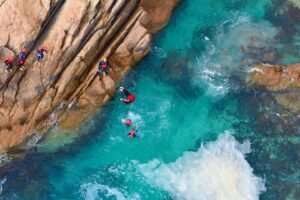
What To Expect In A Coasteering Adventure?
Expect a physical and mental challenge. Thrill seekers who participate in coasteering can expect a mixture of the following when hitting the coastline:
- Rock climbing
- Rock hopping
- Scramble climbing
- Leaping
- Belly flopping
- Jumping from cliffs
- Adventure swimming
- Unique fauna, flora, and marine life experience
- A permanent smile
What Equipment Is Needed For Coasteering?
Most coasteering companies will provide the client with a standard kit which includes a safety helmet, wetsuit, and a buoyancy device such as a life jacket.
According to a popular Pembrokeshire coasteering company, Celtic Quest Coasteering, the following kit is the perfect balance of accessories and equipment when hitting the coastlines:
- Wetsuit (4-season wetsuit with reinforced seat (lumbar), knee, and forearm protection)
- Helmet (Choose one that is designed for watersports)
- Buoyancy aid (Choose a comfortable fitting PFD)
- Wetsuit gloves (Choose a double-fitted pair with grippy palms)
- Wetsuit socks (Choose a pair that can be worn inside of your coasteering trainers)
- Footwear – Here, your choices include wetsuit boots (split or rounded to
- e) canyoneering shoes, specially made aqua shoes, old trainers with good thread, or any protective shoe that provides a good grip on wet and dry rocks.
- Old shorts (offers protection to the seat area of the wetsuit)
- Rope (throw line and climbing rope) for extreme locations and situations
- A communication device (mobile or hand-held VHF)
Safety Tips For Coasteering
Coasteering has a certain element of risk, no matter the difficulty level of a specific coastline. Nature equals risk, and coasteering is about exploring nature in an unusual and often risky way. The best and safest way to plan a coasteering mission is to book a tour with a reputable provider.
A reputable coasteering provider would have meticulously mapped out a course that’s both challenging, extremely fun, and on the safe(r) side. If you decide on a solo coasteering mission, please take heed of the following safety tips:
Study The Weather And Ocean Conditions
Before heading out on your adventure, it would be best to research the predicted weather conditions for your excursion date. If 100-mile winds, rain, and rip tides are predicted, then canceling the trip is probably best.
Safety First
You might feel that a wetsuit, helmet, old trainers, and a life jacket makes you look goofy. Coasteering is doing goofy oceanside things compared to the normal beachgoer, so suck it up and protect yourself.
Tell A Relative Or Friend
When you go coasteering by yourself, ensure that someone knows where you’re heading and inform them of your possible route. That way, the search party knows where to start looking for you if something happens to you.
Test The Course
Nothing beats finding a new cliff to jump from. The thrill of the new experience is second to none. But before you make the jump, test the waters first. Ensure that no rocks or other obstructions are hiding underneath the water surface. Ensure the water is deep enough to handle your summersault, and only then bomb away!
Don’t Be A Hero
Adrenaline plays a big part in a coasteering adventure. Don’t let adrenaline tell you things that your mind and body would never believe under normal circumstances. Have fun and take risks, but don’t try things that can potentially put you in a wheelchair.
The Best Coasteering Locations Around The World
With thousands of miles of available coastlines that can be used for coasteering, you might wonder where the best coasteering experiences lie in wait. Dust off your bucket list and make room for the best coasteering locations worldwide.
- Pembrokeshire (Wales): The birthplace of coasteering is the wild and enchanting coasts of St. Davids in Pembrokeshire, where surfers of the 80s had to scramble and climb rocks to get to popular surfing spots. Be sure to check out the caves in St. Noni Bay. Jumping into The Blue Lagoon in Abereiddy Bay is a fun experience.
- Dorset (United Kingdom): Dorset is a cliff-jumping haven. Jurassic Coast is a beautiful stretch of challenging coasteering environment, including a Purbeck stone quarry called Dancing Ledges. Here you get to explore multiple caves, with one containing historic fossils.
- Cape Town (South Africa): Various spots among the Cape Peninsula offers excellent coasteering opportunities. Check out Simon’s Town, Hout Bay, and Hermanus on the east coast.
- Crete (Greece): Who doesn’t want to explore the cave where Zeus was born? The Greek Island of Crete features beautiful marvels such as Mount Ida, with various cliffs and pools forming a challenging coastline fit for any bold adventurer.
- Arrabida Natural Park (Portugal): The popular park close to Lisbon is a coasteering dream, and prominent areas to go coasteering are at Figueirinha, Galapinhos, and Portinho da Arrabida beaches. Also, see Peneda-Gerês National Park in northern Portugal, and don’t miss out on a visit to the Azores archipelago with its volcanic islands.
- Ngari Marine Park (Australia): Head on down to Margaret River in Western Australia for the country’s best coasteering experience. When visiting the protected marine reserve, wildlife, coral reefs, and challenging cliffs await your arrival.
- Kas (Turkey): The small coastal town in southern Turkey is a paradise of boulders and high cliffs, making it a favorite destination of many coasteering adventurers. It’s also one of the best scuba locations in the world, where visitors get to experience swimming with turtles.
- Corsica (France): The island of Corsica can only be described as paradise. Limestone cliffs, expansive forests, and crystal-clear water ensure an exhilarating coasteering experience. Be sure to visit Plaqe de Palombaggia, Iles Lavezzi, and Escalier du Roi d’Aragon when visiting the island. Other coasteering marvels include Calacuccia, Bavella, and Corte.
- Newquay (United Kingdom): Secret caves with mountainous cliffs make Newquay a perfect coasteering location. Expect hidden coves, whirlpools, and deep pools of water when navigating the challenging rocky features found at the main beaches.
- Ballintoy (Northern Ireland): Coasteering is all about facing the elements and fear. When you visit the North Antrim Coast in Ballintoy, you get to face the mighty North Sea. The coastline is littered with small islands and large rocky cliffs ideal for cliff jumping.
- Isla Plana (Spain): Explore rock formations where the European continent comes to an end. Beautiful island with enough natural structures to keep the coasteering fanatic busy. Make sure to turn at Cueva Del Agua, a magical little cave that branches into multiple underwater cave formations.
- Kahekili’s Leap (Hawaii): Named after the cliff-jumping king of Maui, the spot is believed to be where King Kahekili jumped 63 feet from Kaunolu cliff without making a splash! The jump is considered dangerous due to the waters below being on the shallow side.
Coasteering Vs. Cliff Jumping: What’s The Difference?
Red Bull cliff jumping competitions have made the sport of cliff jumping famous. Cliff jumping, or cliff diving, is a sport where athletes jump or dive from a specific cliff while performing tricks in the air before diving into the ocean below, with judges scoring the athletes to eventually declare a winner.
When no camera crews and judges are present, jumping off a cliff is simply that. People love to test themselves, and since time memorial, people have been jumping from cliffs into bodies of water to get the adrenaline flowing.
Cliff jumping can occur anywhere a cliff and water meet, for example, the stunning Havasu Falls in Arizona. In contrast, coasteering involves jumping from cliffs into the ocean.
Coasteering falls into the category where people willingly jump from cliffs into ocean water while exploring a stretch of coastline as part of an adrenaline adventure. Coasteering is typically done in groups by booking a session with a coasteering company with a guide leading the expedition safely across a mapped-out course.
coasteering tours involve wearing protective equipment as standard procedure, whereas private cliff jumping sessions are often done without any safety equipment.
Coasteering For Beginners: Tips And Tricks
If you’re a beginner in the coasteering world, the following tips and tricks might come in handy when going on a coastline adventure.
Book An Organized Coasteering Tour
Coasteering will always present a certain element of danger as you are testing yourself against nature, and we know that nature is an unpredictable foe.
It’s advised to book a coasteering tour with a coasteering company where you get to share the experience with other adventure seekers who will be there to help each other should an emergency arise.
Using an experienced coasteering adventure company, you get a guided tour of the best spots along the coast and inside info on how to navigate the rocks and cliffs while floating into a cave you never knew about.
Use Safety Equipment
Putting on safety equipment is highly recommended if you prefer solo coasteering missions or enjoy doing it with friends. Yes, it’s fun jumping a cliff with shorts only but navigating slippery
rocks, ocean tides, waves, and caves can result in a bruising encounter every so often.
Wearing a protective helmet, wetsuit, footwear, and a personal flotation device enhances the experience as you can be more confident in not getting hurt by rocks and other elements.
Adding protective gloves and a head warmer underneath the safety helmet can further protect the beginner. The more protection you add, the less you worry about scuffs and water temperature.
Group Coasteering Is The Safest Experience
Exploring the coastline alone can be a beautiful experience; however, if anything goes wrong, you’re alone. Watch the movie 127 Hours; you will quickly realize that there’s safety in numbers.
Is Coasteering Safe? Risks And Precautions To Take
As mentioned earlier, coasteering involves taking risks. How are you going to reach a normally inaccessible cave system? You dive into the ocean at high tide, grab onto a group of friends who are attached to a safety rope, and swim into the cave mouth.
That’s coasteering for you. Taking the risk to experience nature in a way that many people will never do. The risk of falling while climbing rocks and jumping from cliffs is real, and injuries, like any other sport, are a reality.
You should be fine if you take precautions such as protecting yourself with the right safety gear, booking a tour with a professional coasteering company, and respecting weather conditions when it’s not ideal.
The risk of getting injured while coasteering is always present, so if you’re part of a coasteering group, listen to the guide’s instructions at all times. Don’t do something you’re uncomfortable with, but don’t miss out on the opportunity to face your fears.
Watch how others climb, scramble, jump, and swim. Then follow the lead of the people with the biggest smiles.
Conclusion
Coasteering allows the participant to experience a section of the seashore from a different angle. By climbing and jumping rocks, scrambling along cliffs before jumping into the ocean beneath, coasteering forces you to climb, scramble, and jump out of your comfort zone and face mother nature head-on.
With the right safety equipment and a guide from a reputable coasteering company, it’s often a safe way to get the adrenaline flowing. The best thing about coasteering is that no age limit applies. It’s an extreme adventure for young and old.
Luke Morris is an avid athlete and the driving force behind Surfhungry, a vibrant online platform dedicated to sharing the joy and passion of surfing and water sports with enthusiasts around the world. With a deep-rooted love for the ocean and a lifelong commitment to riding waves, Luke’s journey as a surfer has inspired him to create a community where like-minded individuals can come together to celebrate their shared passion.