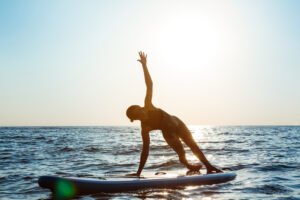

Nothing can replace surfing, and no exact movement replicates what we do when surfing a wave. However, we don’t all have the luxury of surfing all day, every day–dedicating our entire lives to improving our surfing. I know how it is. Life gets in the way, responsibilities crop up, and finding time to surf and chase swells falls by the wayside.
But don’t stress; this doesn’t mean you can’t improve your surfing. There are countless ways to help you stay fit, flexible, and stronger when you can’t get in the water. While I would highly encourage you to surf as much as possible, if you live far from the Ocean or just can’t find the time, it’s time to start doing surf-specific training.
In this post, we dive into land-based surf training; from what can be done to most accurately replicate surfing, the key fitness components you should focus on on land, to the importance of mobility and stretching in surfing. We’ll also discover how to create a land-based surf training program. A lot goes into getting fit for surfing, so let’s get down to it.
Table of Contents
Replicating Surfing on Land – Is it Possible?
Because of the tiny movements you make in surfing and an ever-changing ocean, it’s super tricky (even with all the technology we have at our fingertips) to replicate the moves in the ocean. I think one of the best ways to do it is simple: watch surf movies and try and replicate the body movements you see in clips.
Do this in your room when no one’s looking because it looks ridiculous. But this way, you get your body and mind used to the positions you need to perform certain maneuvers. I used to do this as a kid all the time! I also used to walk down the street pretending a bush was a long tube, adopting an upper-body tube stance as I walked along. And yes, I’m not afraid to say I still do this, aged 26.
Additionally, mobility routines and stretching exercises can help mimic surfing movements. Putting your body in the same positions you do in surfing will help your flexibility and muscle memory. Despite this, training outside the water doesn’t have to focus on surf-specific movements. Training with “gimmicky” surf-specific routines can have an adverse effect! Just look at the best surfers in the world to see how they train; take Nate Florence and Gabriel Medina; in their training, they perform explosive, power-based body weight exercises in circuit-style sessions.
Surf Workouts
We have several fitness-based components in surfing, including power, strength, cardiovascular fitness, and flexibility–all essential in good surfing. Whenever top surfers are training, they focus on these aspects. Here’s how they relate to surfing.
Strength
The stronger you are, the easier surfing will be. Paddling, pushing through turns, duck diving, and how long you can surf for. Muscular strength and endurance are slightly different muscle-based but equally essential fitness components. While muscular endurance helps you surf for longer (and be able to practice more), muscular strength and power will give you the ability to push through turns and throw spray.
Power
All the maneuvers we do in surfing are fast and explosive; therefore, power is critical. Successful tour surfers have power in their game, big legs, strong cores, and the ability to torque and throw their boards around. Even basics such as popping up or performing an off-the-top are quick (fast twitch) movements, and power-based exercises help you perform them better.
Cardio
Cardiovascular training is essential for surfing. The fitter you are, the longer you can surf, the easier paddling and riding waves will be, and the more waves you catch. More waves = more improvement. If you don’t surf all the time, cardiovascular training such as running, cycling, and swimming will undoubtedly help you feel better in the water. Even if you surf a lot, this type of training helps you keep motivation and froth levels high when the waves suck (which is more often than not).
Flexibility
Flexibility and mobility is the most crucial factor to consider when it comes to surfing well. Everything in surfing requires flexibility, from paddling (shoulders), popping up (hips), and top turns (hips, ankles, back). If your muscles are tight, you won’t just feel sore from surfing but will be limited in the maneuvers you can perform. The Championship Tour surfer is super flexible, and this is no accident.

Mobility & Stretching
Rather than focusing on land-based surf replication, stretching will be more beneficial in helping you surf better. A good stretch routine (while watching a great surf movie to see how surfers move) is a great way to stay limber and flexible. I recommend starting a daily stretch routine first thing in the morning, making some flowing, fluid movements to get the blood flowing, and then into a great yoga routine. Establishing this long-term routine can help you feel better when you do get to surf.
Post-surf stretching is also super important! If you surf, then sit at a desk all day, it leads to stiff muscles and soreness. A recipe for injury! But stretching, even for 30 minutes, post surf, can work wonders in helping your body feel good for the next session.
How to Create a Surf-Specific Workout Routine
The best surf-specific routine focuses more on developing; strength, power, cardio fitness, and flexibility than trying to replicate what you do in surfing completely. These things combine to make surfing easier and less tiring when you get in the water.
- Make stretching a habit (both morning and post urf), A movement-based, flowing routine in the morning and a deep post-surf stretch session.
- Try and do 3 x strength bases sessions per week. (Adapt depending on how much you surf that week). Perform bodyweight exercises such as push-ups, lunges, dips, squats, jumps, and spider craws. These are dynamic movements that incorporate the entire body. These are great for strength and muscular endurance as part of a circuit.
- Cardio Sessions: If you can’t make it into the surf, go for a run, cycle, or swim. Any of these can be a great way to switch things up and stay fit for your next surf.
- Listen to your body and adapt your training accordingly. Consider how much you’re surfing and how your body feels. You never want to be training instead of surfing (if you can get in the water), and pushing it too far can lead to injury!
- Establish a regular stretching routine every morning and after each surf. Make it a habit!
Additional Land Based Training
Additionally, you can do some balance training using equipment such as an Indo Board. This sort of replicates all the muscle movements you do when surfing. Indo boards can be a fun way to add balance competent to a training or mobility session.
Final Thoughts on Land-based Surf Training
So there we have it, land-based surf training you can do to help you surf. While these things definitely can’t replace surfing itself for helping you improve, they can make your next surf a lot easier. Strength, power, cardio, and flexibility combine to help you surf. So get strong, conduct powerful, explosive exercises as part of your weekly routine, stretch every day, run when you can’t surf, watch surf movies, and copy the movements at home–just make sure no one is looking!

Luke Morris is an avid athlete and the driving force behind Surfhungry, a vibrant online platform dedicated to sharing the joy and passion of surfing and water sports with enthusiasts around the world. With a deep-rooted love for the ocean and a lifelong commitment to riding waves, Luke’s journey as a surfer has inspired him to create a community where like-minded individuals can come together to celebrate their shared passion.