Choosing the Right Surfboard Fin

Choosing the Right Surfboard Fin

Surfboard fins are crucial in every surfer’s performance. Choosing the right fin has a significant impact on maneuvering, surfing, paddling, and popping out. Throughout the years, surfboard fins have been providing stability, thrust, control, and drive for surfers. It helps the surfer to stay in the right direction and accelerate during small or big waves. Choosing the right fin for a particular surfer can be overwhelming. Therefore, they must take a look at this exclusive article to gain expert tips when it comes to surfboard fins. Surfboard Fin Types: Your Detailed Guide What is the difference between a swappable (Removable) and a glassed-in fin? Obviously, glassed-in fins are permanently laminated in the surfboard. It brings out a smoother performance compared to using a removable one. Its laminated fin affects the way that the board in overcoming both small and big waves. Most experienced surfers prefer to use this for better performance. However, this fin is challenging to repair. Swappable fins are screwed into the surfboard. It can be easily removed and replaced using the small inset screw. For beginners, installing and removing this fin type can be confusing and daunting. Therefore, one must take time to learn first before buying one. And one must make sure that the screw is loose enough to replace the old fin. Afterward, center the new fin and tighten the screw using the key. What are the different box types or fin systems? #1. Dual Tab (FCS and FCS II) Fin Boxes FCS means Fin Control System. Since the 1990s, it became one of the most popular surfboard fins worldwide. An FCS product features two plugs or tabs that will secure the fin to the board. Recently, FCS has released a keyless Fin called FCS II. It can be easily installed in a surfboard without any grub screws or keys. #2. Single-Tab (Futures) Fins Single-tab Fins, also known as Future Fins, are more user-friendly compared to FCS. It is easier to install and, at the same time, stronger. When a single-tab fin breaks, only the fins are affected. When the FCS fin broke, there was a considerable possibility of a broken board, too. Box Type XS S M L XL FCS Under 120 lbs. 120 – 155 lbs. 140 – 175 lbs. 165 – 200 lbs. 190 lbs. + Future 75 – 115 lbs. 105 – 155 lbs. 145 – 195 lbs. 180 lbs. N/A #3. Three Fins (Thruster) Thruster fins work better in all ocean conditions. It provides a more stable feeling in maneuvering the board. The three fins also allow the surfer to speed up to turn around comfortably. #4. Rainbow Fin Co. The Rainbow fin is almost similar to Future fins but has smaller fin boxes. Only a small area of the base will fit in the box, and the design has a similarity to a rainbow. Some Rainbow fin products can fit into FCS and Future, which makes them versatile compared to other box types. #5. Longboard Fins Unlike other fins, only the base of a longboard fin will fit in the box. It aims to provide adjustability to the fin itself and the surfer. A surfer can have options to sit closer to the back (this position adds more control to the board) or closer to the center (this position is ideal for turning) of his surfboard. #6. Patagonia Fins The Patagonia fin system came from the famous Fletcher Chouinard. It has a unique setup since the fin is screwed and tightened from the board’s deck. Additionally, its outline is made up of small curves that can hold the fin in place tighter. #7. Turbo Tunnel The Turbo Tunnel has a more innovative design compared to other box types. It has a tub that runs through the center of the fin. It allows the fin to grip the wave tighter. Plus, it can also give the surfer a longer nose ride, quicker turn, smoother re-entries, and increased stability during the performance. This fin can also bring out better maneuver and speed. Which is better: FCS or Future Fins? Surfers prefer to use FCS fins since these products are readily available worldwide. It is an ideal option for surfers who travel a lot. However, these fins are more costly compared to Future fins. Some surfers complain about the FCS price. Therefore, they choose to have a Future fin. This product is not only easy-to-install but also durable. However, the Future fin system is not accessible in some places. Therefore, some surfers might find it hard to find a replacement for their broken Future fin. What is the essential measurement in choosing a surfboard fin? Sweep (Rake) The sweep, also known as the rake of the fin, is the measurement of “how far the front edge of the fin arcs backward”. To measure a fin’s rake, a surfer can imagine a line that continues and extends from the back up to the tip of the fin. It determines the relation of fin curves to their base. Fins with small rakes can propel the board easier. It also helps a surfer to have a more stable and predictable turn in the water. On the other hand, big rakes can allow the surfer to turn his board tighter and more playfully. However, bigger rakes do not offer more stability compared to small rakes. Toe (Splay) A fin’s toe is the angle of the box from its center stringer. Side fins that are closer to the stringer are called toe-ins. Toe-in can allow the water to pressure the outer part of the fins. This way, the board becomes more responsive to the surfer. Base (Length) The base is the length of this fin. It measures the widest point of the entire body and locks with the board once installed. Fins with more extended bases can allow the water and the surfer to move faster. Therefore, if the surfer wants to do a sharper turn, he must go for fins with a shorter base. Foil … Read more
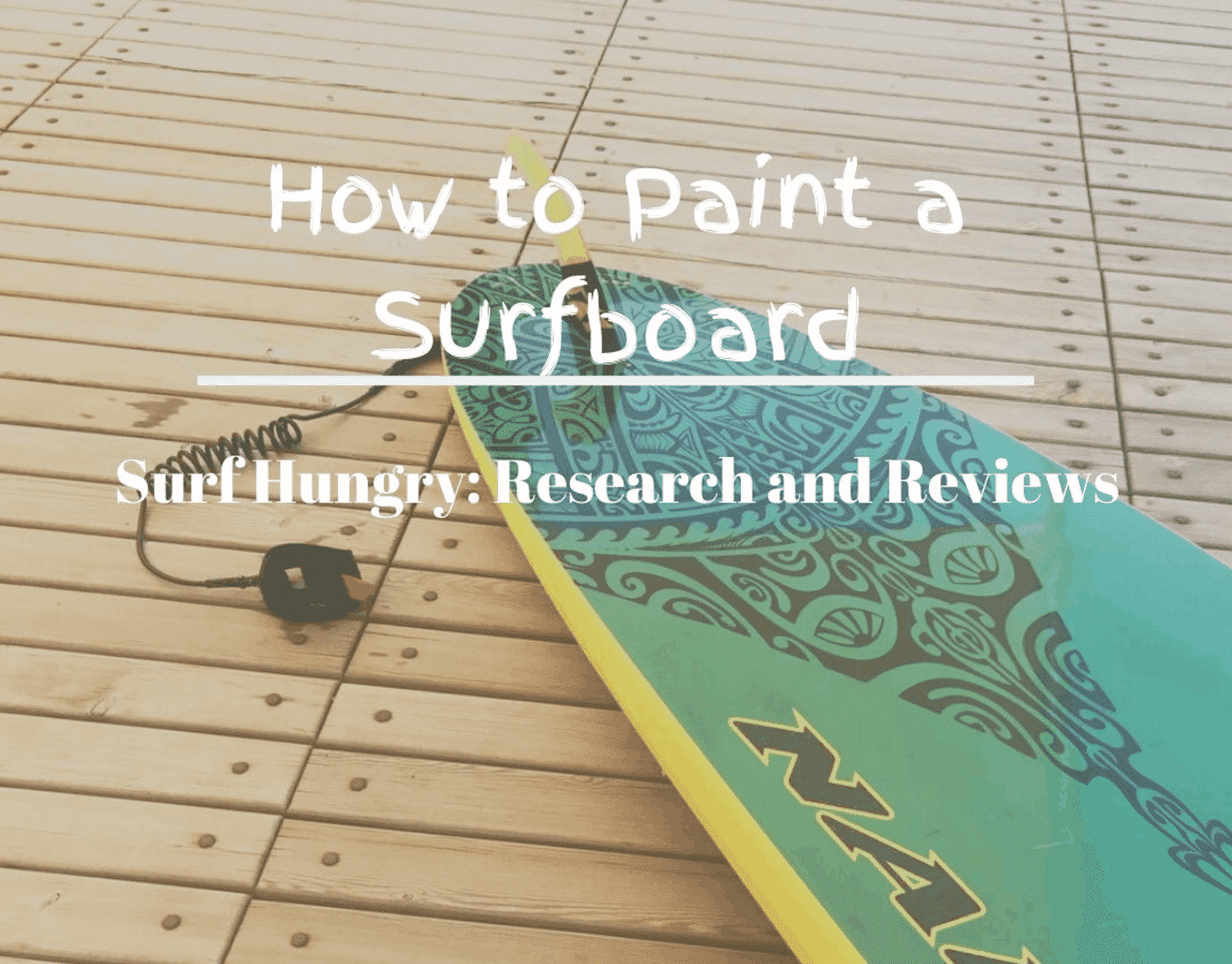
10 Easy Steps on How to Paint a Surfboard (Step-by-Step Guide)

how to paint a surfboard

Plain white surfboards are less expensive but boring. However, its blank canvas allows surfers to customize their preferred color and design. Plus, painting a surfboard is one of the fun things that come with a little effort. You just have to choose which paint works well with water and what design would you like to design. Before painting a surfboard, there are two options: Painting directly on the surfboard or painting on the foam. Painting directly on the finished board allows surfers to cover any imperfections and hide repairs while painting directly on the foam lasts longer since the fiberglass protects it. How to Paint a Surfboard? Do surfers know how to paint a surfboard properly? This article provides the easiest steps on how to give any surfboard a brand-new look. This is the same way how professionals customize their boards. #1. Prepare the needed materials. Before proceeding with painting, you must have the following materials: Acetone Sandpaper (320 grit) 1 whiteboard marker Painter’s tape or masking tape Paint pen assortment (minimum of black) Acrylic paints (desired colors) Different sizes of brush Mixing tray (for blending colors) 1 can of clear coat spray (preferably UV resistant) Gloss for a glossy board Matte or satin finish for non-glossy boards Face mask Gloves Eye protection #2. Clean the surfboard. For new surfboards, wiping the entire body is enough. But if it is an old board, make sure to dewax the board first. To melt the wax, put the surfboard under the sun for five to ten minutes. Afterward, remove the old wax using a wax comb. Spray some surfboard cleaner on a clean cloth and wipe it through the board. Make sure to remove all residue since any residue can affect the quality of the painting. #3. Rub the surfboard with acetone. The key to painting a surfboard perfectly is to make sure all wax residues are removed. If some wax cannot be removed by a wax comb, applying acetone would help. Acetone can be bought at any convenience store, and it only costs less than ten bucks. Some people use nail polish removers, but these products are not highly suggested since some of it contains added moisturizers. For that reason, it can hinder the paint from sticking well on the board. Start applying acetone on a paper towel and rub it on the board gently until no wax and stain residues are available. #4. Sand the surfboard. Once finished removing all the residues, professional surfers recommend light sanding, especially for glossy surfaces. This way, the acrylic paint can stick better. Make sure to have extra-fine sandpapers (280-320 grit) for best sanding results. Alternatively, surfers can also use an electric sander if they have one. It is easier and quicker to use compared to using sandpaper. After sanding the surfboard, wipe off the dust and make sure nothing is left. Some people do not sand their surfboards, but most experts do. Therefore, it would be better to implement the expert’s technique. #5. Draw the design’s outline. For this step, it’s time to draw the outlines and shapes using a whiteboard marker. However, if the surfer is still not sure about the design, using a pencil would work, too. It can allow him to correct any mistakes before applying colors. To keep the design neat, use a painter’s tape or masking tape to protect certain areas. Surfers must choose between the two since it works great on surfboard materials. Plus, it won’t rip or tear easily while peeling off. Make sure to mask those that need to be maintained, especially the edges and logos. Experts suggest using long strips of tape to have a smoother paint result. Alternatively, surfers can also tape down cardboard or newspaper for bigger sections that need to be maintained. #6. Paint the design’s base. It’s time to spray the acrylic paint evenly as the background color. Surfers must hold the spray paint eight inches away from the board to ensure the even coating. To achieve the smoothest results, spraying multiple layers evenly is highly recommended. #7. Start painting the designs. With paint pens and acrylic paints, it’s time to put more colors. Paint pens are suitable for a small design, while acrylic paint is best for bigger designs. Surfers can also add some dark shadowing on some designs to create an illusion of depth. Shadows can make the surfboard more attractive and engaging. If the surfer prefers color combinations, he can use the mixing tray to blend the paints. Moreover, artists suggest surfers use slighter colors, especially near the focal point of the design. It can draw eyes. #8. Use the black pen to add outlines on designs. Adding black lines can make the surfboard look brighter and defined.  Surfers can use a thick-tipped marker to outline the big designs. If he uses paint tapes, the design’s edges must be sharp enough, and there’s no need to add black outlines. #9. Dry the painted surfboard. After finishing the designs, it’s time to place the surfboard outside. It will take time for the paint to dry. Therefore, surfers must allow the board outside for at least 24 hours. This way, the paint is completely dry before removing the tape, newspaper, and cardboard. If the paint is completely dry, the surfer can pull off the tape carefully. He must not go too fast to avoid tearing. #10. Cover the finished painting with clear coat spray. Spraying a glossy or matte clear coat can prevent the paint from wearing off. It can also restore the shine and smoothness of the board’s body. After applying some clear coat, surfers must sand the board again to smoothen the surface. Make sure to use light sandpaper to keep the paint’s good quality. After sanding it lightly, wipe off the dust with a wet rag and let it dry. If the surfboard is dry, it’s time for another coating, sanding, and wiping. Surfer must repeat this part three times to make sure its painted … Read more

JK Surfboards Review: Epic Boards or Rip Off?

jk surfboards review

They have been around for years but have never taken the spotlight. Ignored too many times. An underdog in a world of balance, excitement, and speed.  The years of designing some seriously superior surfboards have finally paid off. Now, they are starting to get noticed. Riders are surprised at how they never took a look before.  Finally, these affordable sticks are taking the limelight. This corner is dedicated to JK Surfboards and their performance-style surfboards that you can kick back on and surf the weekend away with.  JK Surfboards Reviewed Jason and Kiyo designed boards that come in an assortment of colors, materials, shapes, and sizes. They have longboards and funboards for the bigger guys and shortboards and retro fish for the smaller riders. JK Surfboards covers your stick needs regardless of your ability and your surfing spot.  The Classic Noserider Longboard Surfboard  The Soul Carver  The Flow Rider Wafer Surfboard Groveler The Super Fun Board Surfboard Big Boy Fish Retro Fish Surfboard Groveler 1. The Classic Noserider Longboard Surfboard Specifications Length: 9 ft, 9 ft 2 in The stability that Classic Noserider Longboard Surfboard needs on most wave conditions is made possible by its outline which is full from nose to tail. Whether you want to come forward or do a hang ten, its roomy rounded nose with a contour spoon on the bottom makes it easy. With its minor taper through the tail, maneuvering this longboard is easy.  Designed and shaped in southern California, it has a low to moderate rocker that lets you get into the waves early with less effort. The contours are designed with a single spoon to double concave with plenty of volumes from the nose to the tail and down to the rails. Riders at any level of expertise should be able to maneuver and balance with ease.  JK guarantees that their board stands out from the rest when at the beach. Aesthetically, they are made with traditional resin swirls, and rail laps, with a matte finish that makes them look striking.  Classic Noserider is constructed with US Poly foam blanks with superior (6 oz x2 top and 6 oz bottom) Polyresin. The board is sand finished with unique color combinations that will match your surfing personality. 100% hand-shaped, it comes with a single fin setup and a 9-inch center fin.  #2. The Soul Carver Specifications Length: 6 ft 6 in, 7 ft, 7 ft 8 in, 8 ft 2 in, 8 ft 8 in, 9 ft  Fin Setup: 8 ft 8 in and 9 in – 2 +1 set up and 2 side fins and center fin 6 ft 6 in, 7 ft, 7 ft 8 in, 8 ft 2 in – 4 +1 set up or 2 +1 setup with 2 side fins and a center fin Designed and hand shaped in Manhattan Beach, Southern California, Soul Carver is a high-performance mini longboard that lets you make cutbacks and bottom turns as if you never have on your other longboards.  It can strongly hold on to bigger waves and effortlessly fly through mushy sections. The stability it presents will make you think twice about getting back on your old longboard. A must-have in your quiver, the Soul Carver longboard catches waves like a machine.  Soul Carver Longboard is constructed with Polyurethane Foam blanks with superior (6 oz x2  top and 6 oz bottom) Polyresin. It is sand finished, 100% hand shaped, and comes complete with a 2 +1 set up and 2 side fins, and a center fin. Soul Caver gives you the feel of a longboard without all that bulk. It comes in different colors to choose from – Green nose dip, blue and green swirl, and yellow and orange swirl. 3. The Flow Rider Specifications Length: 6 ft, 6 ft 2 in, 6 ft 4 in, 6 ft 6 in, 6 ft 8 in, 6 ft 10 in Fin Setup: Tri Futures fin set An “everyday board”, Flow rider will impress you with its performance in all types of water conditions. Ride it in solid 8 to 10-foot faces in 2 to 3 mush, it will make you feel overwhelmed under the feet as you take turns and sections with just the right speed.  JK created something special with Flow Rider. With the extra volume pushed to the chest area, paddling is easier, especially for boards this size. The single to double concave design can hold really well in barrel sections as it turns with no difficulty riding down the face of the wave.  Flow Rider comes with Tri Futures Fin Set. Designed in Manhattan Beach, Southern California, it is 100% hand-shaped. This sand-finished surfboard is constructed with US EPS (Expanded Polystyrene) foam blanks with superior (4 oz x2 top and 4 oz bottom) eco-friendly epoxy resin. 4. Wafer Surfboard Groveler Specifications Length: 6 ft 1 in, 6 ft 3 in, 6 ft 5 in, 6 ft 7 in Fin Setup: 5 fins set up with Futures fin boxes and 3 fins JK Surfboards’ entry for groveler sticks, the Wafer, is perfect for riding and flying around normally un-rideable water conditions. Thanks to the team that made it feel looser, it gives the riders a longboard-like performance without carrying out an extended length.  The Wafer is worth checking out. Despite its shorter and stouter shape, it gives enough balance and speed. The shape of this buoyant foam design allows it to conform with the 5-future fin setup. This combination allows beginners as well as experts to get out of the water smoothly.  JK Surfboards’ The Wafer comes in different classic stripe designs that look perfect when you want to achieve that golden era of surfing nostalgia. You can choose from 2 constructions of this board: EPS (Expanded Polystyrene) Foam Blanks and Epoxy (which are normally in stock) or US Foam blanks with superior (6 oz x2  top and 4 oz bottom) poly resin, with carbon fiber and Kevlar vector net tail patch.  5. The Super Fun Board Surfboard … Read more

How to Repair a Surfboard in 8 Easy Steps

how to repair a surfboard

Surfboards break, and it can happen at any time. Even the most careful surfers out there would be one day looking at his favorite board with a heavy heart because of the damage, and that is why you need to learn how to repair a surfboard. The good thing that nowadays is that you can repair your surfboard with ease. There is no need to go to the nearest ding shop to get your board up and working again. Fixing your surfboard has its benefits. Aside from the fact that you can save money, some remote places do not have a ding repair shop you can turn to. In this article, we will help you to repair your surfboard in eight easy steps. Here are the tips to keep in mind when it comes to repairing your favorite board. How to Properly Repair a Surfboard Materials Needed: Sandpaper Masking tape Sanding resin Acetone Razorblade Safety glasses Paintbrush Wax comb Q-cell filler #1. Cut and clean the damaged part. The first step in repairing your surfboard is to cut and clean the damaged part using a razor blade. Carefully cut the damaged part of the board. This way, you will have a beautiful, clean board surface. It will help you to rebuild the outer coating and the fiberglass effectively. Cleaning the damaged part is also essential. You might want to get rid of any remaining wax from the area that you’ve cut earlier. Using a wax comb, carefully clean the damaged part of the board. You can also use some acetone to break down other substances that are still on the surfboard after you have cleaned it up. #2. Start sanding down your board. The next step is to sand down your surfboard. You might want a smoother surface to work with when repairing your board. Make sure that your sandpaper is only around 30 to 60 grit. If the grit level of the sandpaper is too high, you will not be able to bond your board after cleaning and sanding it. #3. Start filling the gaps. When you’re confident that you have adequately cleaned the board, proceed to fill the gaps. You might want to protect the surrounding areas using masking tape. It also helps to minimize the area that you need to sand later on. If the hole is too big, filling the gaps is the best thing to do. In a mixing cup, combine sanding resin and Q-cell. Start mixing it. Add at least ten catalyst drops to your paste. And then mix again. Apply this combination on the dinged areas.  It serves as an adequate foam replacement. Keep in mind that when you’re filling the gaps, you have to pour the mixture very slowly to prevent the air bubbles from forming. You might want to use a stick to fill in every crevice, and not miss even the tiniest holes. Stop pouring the mixture when it sits above the damaged area. Then, wait for the mixture to harden. #4. Sand it down. Once the mixture that you used in filling the gaps hardened, sand it down. This way, it falls flat with the board. You can also sand down to cater to the resin coat. When sanding your board, it is best to use a sanding block. It helps to distribute the pressure evenly. The sanding block also helps to prevent coves on the board. #5. Start glassing the repaired area. You will need two circular fiberglass pieces; just make sure that the other one is a bit bigger compared to the other, and both parts are more significant compared to the repaired area. Combine the ten catalyst drops and the sanding resin. Stir it well until it’s ready to use. After that, using a paintbrush, start applying the mixture on the board. Make sure that the smaller circular piece of fiberglass is placed on the repaired area before you add more resin mixture. Wait patiently for the fiberglass to absorb the resin, and then you can repeat the process using the bigger fiberglass. Be careful and make sure that the resin is spread evenly. It is crucial that you can press the fiberglass pieces without difficulty. #6. Sand the area again. After placing two pieces of fiberglass, you may now sand the area again. Just make sure that the resin is already hardened before you sand for the third time. Look for bulges and lumps to know what area should be smoothened down with your sandpaper. Also, when you’re sanding your board, it’s a must that you don’t sand aggressively; otherwise, you will burn through the fiberglass you’ve just installed. #7. Add finishing coat. After sanding and smoothing it down, make sure to add a thin layer of resin and final drops of catalyst to the mixture. Wet sanding should be the last step in repairing your surfboard. Here you can use high grit sandpaper, say, about 600 grit level. This way, you can match the finishing of your board. If you want your board to be glossy, use a polisher and a diamond cut compound. Your board will look good as new with the help of the abovementioned materials. #8. Wait for 48 hours before using the board. When you’ve done all the steps correctly, wait for at least 48 hours before you can use the board again. Be mindful of the repaired area’s surface and make sure that it is just as smooth and as flat as the rest of the board. Let it rest for two days so that the board can adequately absorb the mixture. After that, your surfboard is ready to be used again. By repairing your surfboard, you can save both time and money. Frequently-Asked Questions (FAQs): Related Resources Electric Surfboards Hybrid Surfboards Groveler Surfboards Wakesurf Boards Funboards Bodyboards LukeLuke is an avid athlete and the driving force behind Surfhungry, a vibrant online platform dedicated to sharing the joy and passion of surfing and water sports with enthusiasts around … Read more

3 Easy Steps on Removing Wax from a Surfboard

how to remove surf wax

Let’s start with the essential question: how to remove wax from a surfboard? There are several types of surf wax in the market. They can be classified as either Warm, Tropical, Cool, and Cold. The water temperature of your surf spot will determine which type you should choose. Removing wax from your surfboard is easier than other people think. However, it can be really messy, so you must get some old newspaper or plastic first before proceeding. Every surfer wants his surf wax to be as gooey as possible. However, removing it might be a little tricky, especially when it’s your first time removing wax from your surfboard. With this article, you can surely solve your dilemma and make your board look new again. How to Remove Wax from a Surfboard Removing an old wax tends to be time-consuming and a filthy task, but in this article, there are some useful ways to help you get rid of that wax coat. #1. Prepare all the needed materials. To easily remove the wax from your surfboard, you must know and have all the required materials. In the same way, one of the best ways to soften the wax is to leave your surfboard under the hot sun for ten to fifteen minutes. If the current weather cannot soften your board’s wax, you have to use the blow-dryer. You must blow-dry a particular area first before proceeding to other areas. Pouring hot water can also help you soften the wax. However, do not keep your surfboard out for too long. Too much heat can damage your board from inside out. After you soften the wax, take your wax comb, old credit card, or any similar object to scrape the wax carefully from your board. If you notice that it does not come off quickly, blow dry it again. If the wax is soft enough, you can continue scraping and use the curved edge of your wax comb to remove the wax on your board’s rails. #2. Continue rubbing until every bit of wax is removed. You can also buy some products in the market that will help you remove the remaining wax.  You will rub it on your board after scraping. However, some surfers said that melted coconut oil could achieve the same job. Another tool that you can use is the Pickle Wax Remover. It is a chemical-free and saw-dust type of powder that works effectively to rub any waxy residue off your board. This is one of the ideal products to consider when removing old wax. Another product that you can also use is “magic dust”. It is a foam dust that is found in vacuum systems and shaping days. If you live near a surfboard manufacturer, this is a piece of excellent news for you. All you have to do is to bring a large zip lock on their factory and ask for some. If you live away from any surfboard manufacturer, a good alternative is a sawdust. After scraping, you can use this dust and rub it around your board. You can keep on sprinkling and wiping the wax until your board looks polished. #3. Do the final clean-up. You can use acetone or plain flour to achieve a wax-free shiny look.  Just dab your paper towel in acetone and rub it on your board. If you are using flour, just spread it all over your board and disperse it properly. Why Do You Need to Remove and Replace Your Surf Wax Regularly? #1. It improves your grip. A fresh wax coat is way better than that two-year-old wax job. You won’t regret it – that’s for sure. #2. You can identify the necessary fixes. Cleaning your board will help you notice some dents and damage to it. You can also check if there is a crack that needs repair. If you left this crack unchecked, it could increase the damage on your board. Therefore, leaving your old wax on your board is not a good idea. Expert Tips Another thing that you need to consider before removing the wax is to place your surfboard in the right place. It is better to have your removal session outside like in the yard, so you’ll have adequate space to work on your board. Place some newspaper or cardboard and start the process. When you do this outside, the disposal will be a whole lot easier. Additionally, wax bits are hard to remove from furniture and rugs. Therefore, it is not recommended to do this entire process indoors. If you intend to travel with your surfboard, make sure to clean off your board’s wax. If you have a cold water wax, there’s a tendency of wax melting in your bag or the water. Do not use any sharp objects in scraping your board. Avoid using scissors, a knife, or even a kitchen scraper. Do not use boiling water on your board since it might ruin it. Some hot or warm water is enough. If you are going to use any solvent to clean the wax, make sure that it’s safe to use on your board. Make time to clean your surfboard and apply a new coat regularly. It will help you maintain your grip while surfing and avoid slipping. Frequently Asked Questions Q: Is it okay to apply wax without removing the old one? A: No. Most surfers think that it’s okay to add a new coat of wax instead of removing the old one first. When you layer multiple waxes on your board, there is a possibility that your wax will not do its job very well. When you do not remove your old wax before applying the new one, the new wax will flake off while you are using your board in the water. Another thing is that the wax will smear around. You will have a hard time keeping your feet in the right position on the board. Q: What will happen if I don’t apply … Read more

Epoxy vs Fiberglass Surfboards: Everything You Need to Know

yellow and blue EPOXY VS FIBREGLASS SURFBOARDS

Surfboards are not just all about the look, color, and style. When you are a professional surfer, you know that you must choose the plank that is compatible with you. You should also depend on your level of experience for a specific type of wave. The overall material of a surfboard has a significant impact on your wave riding performance. You can find several surfboards made with different kinds of materials. In this article, we will discuss the difference between epoxy and fiberglass surfboards. We will help you decide what type of surfboard will suit you best, which will help you maintain stability on a wave, and what the best board for surfing maneuvers is. Epoxy vs. Fiberglass Surfboard We all know that the essential things about surfing are safety and enjoyment. We must enjoy the adventure and thrill of surfing while our boards make us feel safe and comfortable throughout our ride in the open sea. Two of the most popular surfboard materials are epoxy resin and fiberglass. Why do most professional surfers prefer to have fiberglass surfboards to hit the high waves while beginners prefer to have epoxy surfboards? What are the parameters to know which surfboard material will suit you best? What are the unique benefits that each material offers? Let’s find out. What is a Fiberglass Surfboard? Fiberglass surfboards are one of the best American surfboard materials nowadays. It initially made an appearance in the 1940s. For over 50 years, the combination of polyurethane foam & polyester resin has been popular among surfers. This material has a fantastic resin clarity and gloss. Fiberglass surfboards are very smooth and feel natural in the water. According to most professionals, this material has the best performance out of any other board materials. However, you must always take good care of this surfboard since it is very fragile and can easily crack if you drop them. If you choose to have a fiberglass surfboard, you will notice that the top of your board has more fiberglass than the bottom. This is because your board needs to compensate for the weight and pressure of your body. Fiberglass surfboards have polyurethane on the inner part and wrapped with fiberglass cloth. These boards have a better flex out in the ocean waves compared to epoxy surfboards. Moreover, fiberglass surfboards have an excellent shock-absorbing ability that makes the board riding smoother. Based on research, Fiberglass surfboards become useless after a short period of usage. Therefore, these boards also become additional waste in the environment. Polyurethane Boards made with polyurethane are cheaper than polystyrene and wooden boards. These boards are also more durable, which is why you can find them available on several surf shops around the world where you can rent or buy. Pros and Cons of Fiberglass Surfboards Here are some of the points that you need to consider if you are planning to buy a fiberglass surfboard. Pros #1. Perform smoother Based on research, fiberglass has a better performance in riding the waves compared to epoxy boards. The glass also gives the surfer and the board more strength to overcome any buckling. #2. Catch waves better Most professional surfers love to use fiberglass boards since it can withstand the powerful force of waves while having the best experience. However, if you are still a beginner, we suggest you to use epoxy boards to avoid any severe impacts and injuries when mistakes happen. #3. Harder and stiffer Because of the fiberglass, these boards are harder and more potent compared to epoxy surfboards. Some professional surfers prefer harder boards than soft ones. If you are one of them, the fiberglass board is the best choice for you. #4. Cheaper than epoxy boards Cons #1. Easily get dinged or cracked #2. Prone to waterlogging What is an Epoxy Surfboard? Polystyrene (Styrofoam) Surfboard designers have come up with this material last 2005. This surfboard material is three times lighter than polyurethane.  Additionally, this material is more buoyant, too. Polystyrene is a better choice of material if you want to have an eco-friendly board. It only emits a few volatile organic compounds compared to polyurethane. Epoxy surfboards have polystyrene foams and coated with an epoxy resin. It became popular in 2005 since there was a massive shortage of fiberglass for board making. Beginners prefer to use epoxy surfboards since these boards are lighter and easier to handle. Additionally, these boards also float better compared to fiberglass boards. For that reason, it can give the surfer a better chance of enjoying the waves. Beginners also love epoxy boards since it also has a much lesser impact and injury when they collided with the board. What are the Pros and Cons of Epoxy Surfboards? If you are planning to buy an epoxy surfboard, here are some of the points that you need to consider. Pros #1. Stronger than fiberglass Epoxy resin is 35% stronger than fiberglass resin. In that case, most surfers prefer to use this board in practice, especially for kids and teenagers. Epoxy board is also an excellent choice for you if you always surf on rocky areas. #2. Weigh less We all know that a traditional fiberglass surfboard weighs 30 pounds or more. Fortunately, this epoxy surfboard weighs a lot lighter than fiberglass boards. This is a considerable advantage in surfing. #3. Float better Due to their lightweight, epoxy surfboards can float better too. Because of their foam at the center, it can provide you a better buoyancy compared to fiberglass surfboards. When you are a beginner, an epoxy surfboard is an excellent choice for you since it will allow you to catch the wave easier. #4. Less prone to waterlogging Fiberglass boards can easily crack or ding. Therefore, the water will leak on the surfboard. When there’s a leak, the surfboard will get heavier, and it will not float well. Fortunately, epoxy surfboards are durable since they cannot get cracked or dinged. You do not have to worry that you might break it while … Read more

Longboards vs Shortboards: What You Should Know

longboards vs shortboards

If you are into the hype and thrill that surfing brings, one of the dilemmas you will face in engaging in the sport is choosing between a longboard or a shortboard. Both these types of surfing boards are great to use. But there are specific differences that you should look into before you decide on what you should use.  In this article, we will talk about the differences between using a longboard and shortboard and the pros and cons of these two types of surfboards. Longboards vs. Shortboards: The Ultimate Review Shapes and Sizes Given its name, longboards are longer compared to shortboards. Because of its length, longboards provide a number of key benefits to surfers. One would be having more stability when surfing. Since the board is long, there is more space to plant your feet on the surface area, which is pressed against the water. Thus, giving riders a more stable experience when using longboards. Longboards are excellent choices for people who are still starting with the sport. Longboards are usually 9 to 12 feet long and have a single fin and a rounded nose. However, nowadays, a lot of people opt to choose three fin setups as they help surfers make maneuvers and turn without sacrificing the board’s buoyancy and its movement on the waves. Compared to longboards, shortboards are shorter in length, which makes it harder for beginners to use. The great thing about shortboards is that their design provides more freedom for surfers to move around compared to longboards. A lot of professional surfers use shortboards as they possess an aerodynamic design and shape, giving better maneuverability among their users. Making sharp cuts into waves are more doable and possible when you use a shortboard. Aside from maneuverability, shortboards pick up more speed. So, as you hit a wave at the right angle, you can propel the shortboard into the water by using your body’s momentum. Everything is all about timing. You get to maximize your speed once you hit the wave at the right time with your shortboard. Materials Used for Longboards and Shortboards Regardless of their sizes, most of the surfboards found in the market are using some foam. The first surfboards have used polyurethane foam, in which the surfboard maker would form a plane from a blank foam sheet before a polyester resin is encased. Today, epoxy resin and a prolapse polystyrene foam are used by makers in creating surfboards, compared to polyester and polyurethane, which might be very soft for the strain where the surfer places his board under. Surfboards are using a fiberglass cloth for the construction, plus the type of process involved is based on the kind of foam and resin being used in the core. Polyurethane boards utilize foam, while the resin is applied by expanded polystyrene and epoxy boards. Surfboards using these materials are all handmade, but because of technology, more machines are put up to create hundreds or thousands of surfboards. The core of the surfboard uses a fiberglass cloth for lining, and multiple coats of resin are used for lamination. Afterwhich, the board’s surface is then given a smooth finish. Types of Waves for Longboards Longboards offer surfers a smooth cruise along the waves and catch waves without showing much effort with these boards draw very different lines. Professional surfers can do tricks while using the longboard. They can up walk up and down the board or walk right to the nose with their toes hanging over the end. If there are five toes on the nose, you call it “hang five” and if 10, of course, “hang ten!” Surfers using longboards feel like they are dancing with the waves, compared with using surfboards. If you want to learn how to surf, longboards are highly recommended for you as they are more stable, which makes it easier for you to catch some waves. Types of Waves for Shortboards Aside from the design, one of the most noticeable differences between shortboards and longboards would be the type of waves they are riding and the style of surfing a wave. Compared to longboards, shortboards allow surfers to draw faster lines, which enables surfers to go into quicker and steeper waves. Also, surfers using shortboards can do more radical aerials and turns, even if they are in the most critical parts of the wave. Paddling With Longboards vs. Shortboards Longboards have the same technique as shortboards. However, there is an alternative for surfers using longboards. They have the option to kneel on the board while using both their hands all at once to increase their speed as they propel the board forward. Surfers can also spot set waves easily. Shortboards, on the other hand, differ on how they are being paddled towards the lineup. Surfers will have to lay on their shortboards and do a front crawl stroke to move their boards into the waves and around the lineup.  Longboards are easier to paddle out than shortboards. You need to lay your stomach down on your longboard, and you can propel your board through the water. Just make sure that a big wave does not break on top of you, then you can easily navigate through the water. The History of Longboards Longboards were the first ones to be used by surfers as they were created in the 1500s. Even though longboards have been constructed from different materials, its basic form has always been the same throughout time. As popular as shortboards, longboards provide more options for surfers as they engage in this thrilling sport. If you are the type of person who likes to immerse in the classic surfing your ancestors have experienced before, then longboards are what you need. These boards, which are originally made from wood, have been existing for thousands of years now. Longboards were used by the Hawaiian royalty since they were not only used for fun activities. Longboards have been used as a spiritual tool to resolve tribal conflicts. Regular longboards … Read more

Firewire Surfboards Review: Epic Boards or Rip Off?

Firewire Surfboards Review

The brand that continues to create bold new waves in surfboard engineering is one of the names that you will most likely find in lists of best surfboard brands. Considered as one of the major players in the global surfboard marketplace, their story involved an uphill struggle for acceptance.  Firewire is the embodiment of a humanitarian brand. They take pride in their products that have a low impact on the environment. Their goal in keeping things sustainable is visible in the innovative design materials and construction techniques that deliver high-performance surfboards.  Firewire Surfboards Review Firewire putting emphasis on the background technology that goes into the surfboard design makes them enjoy a good position in the surfboard market. The latest technology they are promoting include:  Helium – cut from the lightest foam blank weighing just .8 pounds combined with a brand new rail that has been specially crafted for Helium. It uses both Paulownia wood from their TimberTEK boards and balsa wood from their FST boards.  LFT (Linear Flex Technology) – incorporates Firewire’s Springer HD. A .75” broad aerospace composite that flows down to the centerline of the board, demonstrating the next generation in the Springer technology.  TimberTEK – is the blend of lightweight EPS core (expanded polystyrene), sustainably-grown Paulownia wood deck skins, Firewire’s parabolic rail construction, and Entropy bio-resin hot coat.  Two of the boards they have that featured the technologies mentioned above have earned Firewire more than a couple Editor’s Choice Award from Surfd. Three of their designs also made it to the Top 12 Selling Surfboard Models in 2013. Let us take a peek at some of the surfboards that have made it to the award-winning category.  #1. Firewire Greedy Beaver Greedy Beaver lives up to its name by excelling across a range of conditions. Ideal for learners and those transitioning between long and shortboards, it also has so much to offer that will suit even intermediate riders.  A TimberTEK specimen, Greedy Beaver is not slow and does not surf like a longboard. Contrary to what most perceive it to be, it is not a mini-mal. Rather, it is a superior wave-catching beast that by some means works like a shortboard. If you are familiar with the discontinued Firewire Unibrow, Greedy Beaver rides better than that.  Firewire includes this surfboard in their Crossover Series. Crossover is their line that combines tremendous paddle power in a considerably short surfboard. It features contemporary outlines that boost rail to rail surfing.  Crossover surfboards like Greedy Beaver are perfect for riders who do not essentially want to surf with a longboard but also enjoy catching waves with no difficulty while throwing turns on an open face.  Just by looking at the board’s outline, you will know that it is a good paddler. Although Firewire surfboards generally are, the added width to its nose gives you extra momentum with lesser paddle strokes.  Greedy Beaver has a single to double concave that tapers down to a curved pin making it imitate the feeling of riding a shortboard. No clunky latency when you shift your weight from front foot to back with its high-performance, beveled rails.  Depending on your size and level of expertise, you have a wide range of options to choose from. Greedy Beaver dimensions range from 5’06” 29 liters to 6’10” 52.1 liters.  Testing its 6’2” surfboard resulted in catching more waves than a conventional shortboard. They are good at crumbling waves where extra paddle power is necessary to drop down the wall. But, it does not nose-dive on critical waves.  How? It is a significantly accentuated rocker that is way more indicative of a shortboard than a mal and the finely rounded tail. Push it back on the tail and you are riding a shortboard. Step up the front and slide as if you are on a mal. Perfect for everyday surfing, right? Greedy Beaver Specifications Ability: Beginner to expert Bottom Contours: Single Rails: Medium Ideal Wave Size: 2’ to 6’ Technology: TimberTEK Sizes: 5′ 06″, 5′ 08”, 5′ 10″, 6′ 00″, 6′ 02″, 6′ 04″, 6′ 06″, 6′ 08″, and 6′ 10″ #2. Slater Designs Sci-Fi Of the 7 boards in the Slater Designs range, Sci-fi has garnered the most attention, both in the eyes of viewing public and in surf shops globally. Not your ordinary surfboard, it boasts flyers, channels, and double bat tail that makes even Batman himself, proud.  You might think Firewire is overcomplicating surfboards by making it look like a performance shortboard template when it is really not. And, it is also not a fish. Firewire describes it as a glimpse into the future.  With Sci-Fi, you have to re-learn the fundamentals of flow and weight transfer. This may be because of how Sci-fi took its design complexity to a new dimension – the traditional rails, the forceful jagged tail, wider outline, and quad concave within a single concave.  This SIMA Awards winner surfboard is based on Daniel Thompson’s “Tomo.” A modern planning hull concept, Sci-fi is, in essence, a fish that has been augmented to match or even surpass the surfing potential of a performance shortboard.  Enhancing the fish design and increasing its high-performance characteristics, Tomo brought modern hybrid surfboard design into an interesting new zone – futuristic, scientific, and progressive.  Sci-fi’s design makes it tough around the corners, giving you less drag and more grip on the wave surface. It generates speed both in big waves and small. The fish design and the increased volume conveniently carry momentum. Overall, it feels that it is capable of some seriously drastic maneuvers.  Slater Designs Sci-Fi Specifications Ability: Beginner to expert Bottom Contours: Quad inside single concave Rails: Medium Ideal Wave Size: 3’ to 8’ Technology: LFT (Linear Flex Technology) Sizes: 5′ 01″, 5′ 03″, 5′ 05″, 5′ 06″, 5′ 07″, 5′ 08″, 5′ 09″, 5′ 10″, 5′ 11″, 6′ 00″, 6′ 01″, 6′ 02″, 6′ 03″, 6′ 005″, and 6′ 06″ #3. Firewire Potatonator A special surfboard, Potatonator is what you get if the Sweet … Read more

Liquid Shredder Surfboards Review: Epic Boards or Rip Off?

liquid shredder surfboards reviews

Regardless of the board length, the rail, and the rocker design, Liquid Shredder creates their FSE boards similar to fiberglass surfboards. The best part is you will not pay so much for the surfboard’s quality construction. They are the best first-time surfboard buyers because of their resale value. Definitely worth your money.  Liquid Shredder Surfboards Reviews With that in mind, here are some of Liquid Shredders’ best-selling surfboards.  #1. EZ Slider Blackball Beater Softboard 4ft 11in Blackball Beater Softboard is ready to rock and roll when you are. This soft foamie rocks with a squash tail making it ideal for novice rider that weighs up to 95 pounds and experienced riders that are about 165 pounds.  With EPE (Expanded Polyethylene) deck, EPS (Expanded Polystyrene) core, and PP (polypropylene) hard slick bottom, you can be sure the construction is sturdy and tough. EZ Slider Blackball Beater Softboards use unique fin seals designed to work with or without the fins installed. This board uses no glue and finished with heat lamination including the dual wooden stringers for added strength.  Shape: hybrid, squash tail, blunt “longboard” nose Dimensions 4ft 11 in x 21 in x 2.5 in, 35 liters Board weight: 9.4 pounds Weight capacity: 95 to 165 pounds Best for novice and experienced surfers Materials: EPE (Expanded Polyethylene) deck, EPS (Expanded Polystyrene) core, and PP (polypropylene) hard slick bottom, heat laminated Fin System: Removable twin-fin, included Stringer(s): Dual wooden Leash: Sold separately Warranty: 90-day non-commercial use Warranty through Liquid Shredder Best Feature: Advanced fabric webbing leash attachment system that eliminates board penetration #2. 5 ft 10 in Retro Fish EZ Slider Soft Surfboard Combining highly advanced technology and high-performance expectations, Liquid Shredder came up with highly maneuverable foam board, Retro Fish EZ Slider.  Its design and construction make riding swift and fun. Its cool twin-fin setup allows you to carve those wave faces with the help of the swallowtail shape. Such design gives more hold and traction for the board.  It won’t be a problem getting through slower sections. The well-rounded nose provides a lot of stability when paddling while still maintaining control in and out of your turns.  Retro Fish EZ Slider Soft Surfboard is perfect for beginners, although experienced surfers will have a blast riding this board, as well.  Shape: Fish, full-rounded nose, low rocker, swallowtail Dimensions: 5 ft 10 in x 21 in x 2.5 in Board weight: 8.5 pounds Weight capacity: 90 to 120 pounds Best for: Beginners and experienced surfers Characteristics: Superior-performance “RAD Ripper” Materials: EPE (expanded polyethylene) deck, EPS (expanded polystyrene) core, PP (polypropylene) hard slick bottom, heat laminated (no glue) Fin System: Removable twin-fin, included Stringer(s): Dual wooden Leash: Sold separately Warranty: 90-day non-commercial use Warranty through Liquid Shredder Best Feature: Highly maneuverable #3. 6ft EZ Slider Foamie Soft Surfboard Ideal for kids and novice riders, 6ft EZ Slider Foamie Soft Surfboard is a lightweight and floaty and can carry any surfer that weighs up to 120 pounds. It is stable and is sure to provide the best times while learning and getting the basics of wave surfing.   Fabricated with EPS (Expanded Polystyrene) foam blank as the core, this surfboard is crammed by a soft but firm EPE (Expanded Polyethylene) foam deck and white PP (polypropylene) bottom. This construction results in a rigid, hard, slick, and fast surfboard. Its two wooden stringers also provide the board with stiffness it requires for finest performance.  Its high technology design that is both hand-shaped and heat laminated guarantees superior performance that other foamies cannot offer. The striking bright color undeniably adds fun and delight while surfing the waves.  Shape: Classic shortboard Dimensions: 6 ft x 20 in x 2.5 in, 45 liters Best for: Beginner and experienced surfers Materials: EPE (Expanded Polyethylene) deck, EPS (Expanded Polystyrene) core, PP (polypropylene) hard slick bottom Stringer(s): Dual wooden Warranty: 90-day non-commercial use Warranty through Liquid Shredder Board weight: 9 pounds Weight capacity: 95 to 120 pounds Characteristics: Maneuverable Fin System: Removable tri-fin thruster, included Leash: Sold separately Best feature: Sharper nose-shape #4. 7ft EZ Slider Foamie Soft Surfboard Liquid Shredder keeps outdoing themselves surfboard after surfboard. With their 7ft EZ Slider Foamie Soft Surfboard, they bring new excitement and fun to the riders’ surfing experience. This board makes even the experienced surfer feel like they are taking on a new surfing venture.  Its construction, which is pretty much the same as the previous ones allow for the surfboard to go really fast. The wooden stringers underneath give the surfboard the stiffness that is not always present in other foam boards. This feature also lets the surfboard increase its speed.  To finish the high standard materials used to construct this board, 7ft EZ Slider Foamie Soft Surfboard has a textured soft foam material that prevents slipping when the board is wet, adding to the comfort it brings while riding.  Shaped specifically for fun wave riding in almost all sorts of surfing conditions, its dimension provides exceptional stability whether you are in fast, heavy waves, or even the slow and mushy ones.  Board weight: 10 pounds Best for: Beginner, novice, and experienced surfers Dimensions: 7 ft x 21.5 in x 3.0 in, 65 liters Characteristics: Seamless combination of short and longboard features Fin System: Removable tri-fin thruster, included Leash: Sold separately Best feature: Versatile Shape: Mini-Malibu fun board Weight capacity: 95 to 190 pounds  Materials: EPE (Expanded Polyethylene) deck, EPS (Expanded Polystyrene) core, PP (polypropylene) hard slick bottom; Heat laminated Stringer(s): Dual wooden Warranty: 90-day non-commercial use Warranty through Liquid Shredder #5. 8ft EZ Slider Foamie Soft Surfboard The ideal first-board for kids and those who want to start their surfing journey, 8ft EZ Slider Foamie Soft Surfboard is the perfect everyday board.  Foam surfboards are intended for beginners as they offer important features to prepare your surfing tricks and techniques. The buoyancy of this surfboard is more forgiving for errors and mistakes due to its stability.  One important core fundamentals of surfing include catching as many waves as possible in the … Read more

Quad vs Thruster Fins: The Ultimate Face Off

closeup photo of two white surfboards with quad vs thruster fins

The increasing number of surfboards in the market today are brought by shapes and sizes designed according to surfer’s preference. Aside from the profiles and dimensions of the boards, another feature that surfers look at is its fin setup. The question of whether which fin setup is better always arises especially when you are trying to let go or hold on to the board you have been riding. The thought of not having enough to too much fin setup leaves you wondering which is better, quad or thruster fins. This dilemma has been experienced not just by surfers trying to change the board they currently have but for curious onlookers too. Wondering which setup helps to do more vertical turns or gain more speed are just a few factors why snooping surfers ask. So, which is better? Quad or thruster? The Dawn of Fins To get a better idea of which setup is better, understanding how they came about and their purpose is where you should start. It wasn’t until 1935 that fins were experimented to be part of surfboards. Before fins, planks were poor in managing the ripples that waves would produce. When fins came about, it kept riders poised up the surfboard with less difficulty. Its evolution over the years brought us from the birth of single-fin to different assortments of fin setups. This improvement allowed for boards to interchange between thrusters and quads. Fins are not just an accessory to make your surfboard look professional. They are significant in defining how you ride. They account for half of your would-be performance. That means, its not just the board that lets you ride better. Fins, with their adequate set of, proper placement, and correct configuration enhance your ride, even more so satisfies you ultimately in the waves. Quad vs Thruster Fins Amongst the many fin setup for boards, quads and thrusters are the most preferred choices, especially in modern shortboards. Both can work in all conditions but it all boils down to personal fondness. They equally have advantages and disadvantages with different feelings and lines drawn on the waves. Quad Fin Setup Having superior down-the-line speed to thrusters is the quad fin setup. This is because of the removal of the center fin that lessens the drag. The added grip and speed offered by quad setup can be put to good use particularly in fast, heavy, and hollow waves. Not to mention its speed and tight turning abilities contribute to the quad’s strength in smaller, peaky, and weaker swells. It is important to take note of where to place the quad fin plugs on the tail of your board. The distance between fins and whether they are close to the tails affects how they perform. The closer the fins are clustered together and the further back they are set, the more they act like a thruster. The farther apart they sit together and the closer they are to the rail, the quicker they are down the line. It also helps to make your board become a tighter turning arc. Riding the Quad Fin Setup Speed Quad fins help hold and change direction even when they produce drag when surfing in a straight line. Shapers’ purpose in modeling the board is to channel the water through the back of the board. The water that hits the thruster’s tail fin slows you down. Water tearing out of the back tail unobstructed does not account for losing speed.  This provides more advantages in smaller surf. The bottom line is a rider with a thruster generates his speed while a quad naturally screams down the line. Sizeable Surf A greater number of big wave surfers choose quad fins when taking on risky breaks such as Jaws and Mavericks. The two fins near the rail working together are what makes the superior hold in larger surf. Outrunning a bomb is always better with a faster board with more hold. Response Aside from the ease in going rail to rail with more fins further up the board, it also helps direct the board with more control in less response time. This is because they hold a higher line in sharper waves and generate more drive through a turn. Looseness Everyone wants that fast but loses feeling while maintaining control and this is exactly what quad fins offer. The lack of the back fin which acts as thrusters make it and freer all the while allowing you to add a bit of length to your curves and helping you hold speed through turns. What riders don’t like about quad fin setups is that they can be somewhat unpredictable to ride. They are not easy to slow down especially when you are trying to stall or wash off speed. Which Quad Fin to Try? Alpha Quad Fin by Futures Controller delivers the highest performance when it comes to maintaining a great balance of spring, hold, and predictability. Its special composite design along with the help of 3M makes them great for creating a ride at the local beach as they give you greater control than a thruster configuration. Quads are ideal for: Small days for: To make flat sections To get enough speed to ride the wave Hollow days because they: Are quicker than thrusters Have fins on each side that hold better for sharp take offs Jump the line in barreling conditions where there is not much room to do turns Thruster Fin Setup The most common of fin configuration is the thrusters. Simply because they work. They are the most balanced and conventional fin setup. Thrusters are fast and they give excellent control with unbeatable balance of drive, speed, and maneuverability as you push through turns. With a lot of fins configurations, you’d wonder why thruster setup remains. Thruster setup is the go-to for surfboards because they are ideal for those super ripple days. While you can get your quad in small waves or hollow water conditions that are down the line, thruster … Read more

Feed Your Stoke. Join the Surf Hungry Crew

Surf tips, gear reviews and travel guides straight to your inbox

"*" indicates required fields

Privacy*
This field is for validation purposes and should be left unchanged.