How to Surf Choppy Waves: 11 Must-Know Steps

how to surf choppy waves

There is nothing like arriving at the beach to find the perfect conditions. Slight offshore winds with long swell periods, long clean waves rolling down the coastline, and crystal clear water. But the reality is that these conditions don’t come around too often, and a fair amount of time the water is a choppy mess. To surf choppy waves you will need to work like never before. You need to pop up faster, paddle harder, and constantly move around the break. Just because the conditions aren’t perfect does not mean you need to miss out on your surf, and in fact, surfing messy waves will be more beneficial than you think. What Are Choppy Waves? When we surf we’re looking for long clean waves that hold up well and break from a single point. These conditions often come with flat waters, low levels of winds, and big groundswell. Choppy waves are about as opposite from the perfect conditions that you can find. When waves are choppy they are a mess. They break from all over, and often in multiple different directions. In choppy conditions the ocean’s surface is bumpy due to strong winds (usually on or cross-shore), which makes paddling out, balancing on your board, and finding a good wave a challenge. In short, choppy waves are rough, messy, and disorganized, and often break in multiple directions due to strong winds. Tips for Surfing in Choppy Waves Surfing in choppy waves may not seem as perfect as surfing when the water is like glass, but there is still fun to be had. Just because it is more challenging, does not mean that choppy water is a reason to not surf. The following tips will help you master surfing in choppy water, and give you a foundation for surfing in messy conditions. 1. Find a Wind-Protected Break (If Possible) Although it is often not possible, many surfers are privileged to live around coastlines facing different directions. If this is the case, then surfing a break that is more protected from the wind will reduce the chop in the water, as well as make paddling around the bay easier. The less you need to fight against the wind, the less energy you will use up paddling. If you do not live in such an area, then a break with boulders, protected by buildings, or a point may help reduce the impact of the wind. 2. Take Landmarks Before Paddling Out It’s always a good idea to take note of where you will sit in the water and how it relates to the land. Doing this will let you know if you are drifting too far across the bay (something easy to do when you are staring out to the open sea). Because the waves are chaotic and the wind is blowing, surfing in choppy conditions can quickly leave you hundreds of meters down the beach without you realizing it. Once you have found a general area that you would like to surf in, take note of how it relates to your landmarks so that you always know where you are. 3. Don’t Wait for the Perfect Wave If you paddle out in choppy water and think you are going to just wait for the best waves to come through, then you are going to find yourself surfing very few waves. Perfect waves just about don’t exist in choppy conditions, so don’t wait for one. Surfing in messy waves is time to catch anything and everything you think you could ride. Whether it is a 30-second ride (unlikely) or a 10-second ride, you should try to catch them all. You can think of it as catching loads of small short rides to make up for the fewer, big, longer rides you would catch in better conditions. 4. Never Stay Still If you want to be a good surfer you need to get used to moving around the bay. Unless you are surfing in perfect conditions over a reef or point, the waves seldom peak at the same point. If you sit in a single spot you will miss out on many sets as they break further out, closer in, or slightly to the side. This rule is particularly important when surfing in choppy water. Because waves are breaking everywhere you will need to be constantly on the move. Catch a wave, turn around, paddle, catch a wave… There will be no resting in choppy water. You may not be able to surf for as long, but you will surely get your time’s worth. 5. Prepare to Duck Dive… a Lot Because waves are breaking everywhere you will have a lot of opportunities to catch a ride, will need to constantly be on the move, and will also need to duck dive more than you ever have before. As there is no clear wave period, you will need to dodge and dive under waves left, right, and center if you want to push through them. Prepare your breath, get through the wave, paddle, and get ready for the next. 6. Stand Up Quickly When the waves are short and break quickly you can’t take your time to get on your feet. If you do, the ride will be over before you have stood up. Practice your pop-up, not only technique but for speed. The faster you get up, the longer your already short ride will be. Even if you spend the entire session practicing popping up, it will be worth it. 7. Bend Your Knees When you take off on a wave you should expect your ride to be bumpy because of the choppy water. This, in combination with the wind, can make staying on your board a challenge. The only way to overcome this is to bend your knees. The lower your center of gravity, the more stable you will feel. You will always find benefits to crouching while surfing, but in choppy water, it’s a must. 8. Use the Right Board … Read more

What Surfboard Should I Get? Take the Quiz and Find Out (2026)

Choosing the wrong surfboard is the number one reason beginners quit surfing within their first few months. Too small and you can’t catch waves. Too advanced and you spend every session frustrated. The right board, matched to your size, ability, and local conditions, makes surfing feel achievable — even fun — from day one. This guide covers the 11 best surfboards available on Amazon right now, spanning every skill level from absolute beginner to advanced surfer. We’ve reviewed each board based on five key criteria: paddle power, stability, wave range, durability, and value for money. Not sure which board is right for you? Use the quiz at the top of this page — it asks five quick questions about your level, weight, local wave conditions, and goals, then recommends your top two or three matches from this exact list. Most people complete it in under 60 seconds. 🌊 About these recommendations: All boards have been researched based on real user reviews, surf instructor feedback, and hands-on testing notes. Amazon affiliate links are used — this means we earn a small commission if you buy through our links, at no extra cost to you. This never influences our recommendations. Quick Overview of the Best Surfboards by Category before we dive into the Full Reviews Best for total beginners: Wavestorm 8′ Classic Pinline Best budget board: Giantex 6′ Foam Surfboard Best step-up from foamie: Thurso Surf Aero 7′ Soft Top Best for small/mushy waves: Liquid Shredder Retro Fish 5’10 Most fun board: Catch Surf Beater Best intermediate egg: South Bay Board Co Huevo Egg Best performance soft-top: Softech Eric Geiselman Flash Most unique shortboard: South Bay Board Co Big Betsy   Top 11 Surfboards Reviewed (2026) #1. Wavestorm 8′ Classic Pinline 🏆 Best for Total Beginners   Skill Level Beginner Wave Range Micro to Small (0–2 ft) Volume ~70L Length 8’0″ Board Type Soft-top Longboard Rider Weight 40–100 kg Best For Learn to surf, casual fun   If you’re buying your first surfboard and don’t want to overthink it, the Wavestorm 8′ is the answer. It’s the best-selling surfboard in history — and for good reason. The combination of high volume, soft foam deck, and stable platform makes catching your first waves almost inevitable. Pros: ✓ Virtually indestructible foam construction ✓ Soft deck prevents injuries during wipeouts ✓ High volume keeps beginners afloat and paddling easily ✓ Comes ready to surf — fins, leash plug included ✓ One of the most affordable boards on the market Cons: ✗ Too stable for surfers wanting to progress quickly ✗ Heavy compared to hard boards ✗ Not suitable for overhead waves 👍 Verdict: The Wavestorm is the Toyota Corolla of surfboards — reliable, accessible, and it does the job perfectly.  Buy on Amazon: https://amzn.to/3PFZ5qY | Full Review: https://surfhungry.com/best-surfboards/ #2. Giantex 6′ Foam Surfboard 💰 Best Budget Pick   Skill Level Beginner Wave Range Micro to Small (0–2 ft) Volume ~45L Length 6’0″ Board Type Soft-top Funboard Rider Weight 30–90 kg Best For Learn to surf (lighter riders)   The Giantex is proof that you don’t need to spend a fortune to get on a wave. Built for lighter adults and kids, this board offers a durable foam deck, HDPE high-speed bottom, and a leash included — all for under €80. It’s compact enough to carry easily and forgiving enough to fall off repeatedly without consequence. Pros: ✓ Extremely affordable entry point ✓ HDPE bottom adds rigidity and speed ✓ Detachable fins make transport and storage easy ✓ Leash included — everything you need out of the box ✓ Great for kids and lighter adults Cons: ✗ Not ideal for surfers over 90 kg ✗ Less stable than longer soft-tops ✗ Can degrade faster under direct sun over time 👍 Verdict: If budget is your main concern and you’re on the lighter side, the Giantex gets the job done. Don’t overthink it — just get in the water. Full Review: https://surfhungry.com/best-surfboards/ #3. Liquid Shredder EZ Slider Foamie 🔧 Best Construction for the Price   Skill Level Beginner Wave Range Micro to Small (0–2 ft) Volume ~45L Length 6’0″ Board Type Soft-top Foamie Rider Weight 30–90 kg Best For Learn to surf, summer fun   The Liquid Shredder stands out from other budget foamies thanks to two key construction features: EZ-seal rubber edging that prevents water penetration, and wooden stringers that give the board real structural rigidity. Most cheap foamies feel hollow and floppy — this one doesn’t. Pros: ✓ EZ-seal rubber prevents waterlogging ✓ Wooden stringers add stiffness and durability ✓ Removable tri-fins let you customise the ride ✓ Buoyant and forgiving for beginners ✓ Available in multiple colours Cons: ✗ Not suitable for surfers over 90 kg ✗ Smaller size limits stability vs longer boards ✗ Leash not included 👍 Verdict: If you want a foamie that will still be in one piece after a full summer of learning, the Liquid Shredder’s construction quality makes it the smart buy. Buy on Amazon: https://amzn.to/40P06PY  |  Full Review: https://surfhungry.com/cheap-surfboards/ #4. South Bay Board Co Guppy Soft Top 👦 Best for Kids & Lightweight Beginners   Skill Level Beginner Wave Range Micro to Small (0–2 ft) Volume 40–80L Length 6’0″–8’0″ Board Type Soft-top Funboard Rider Weight 30–68 kg Best For Learn to surf, kids, family sessions   Designed specifically for lighter riders, the South Bay Guppy comes in two sizes and features a heat-laminated soft deck that cushions every fall. The carry handle is a genius touch — kids can haul it to the beach independently, making it a family favourite. The squash tail and round nose provide excellent stability for first-timers. Pros: ✓ Built-in carry handle — kids can carry it themselves ✓ Two size options for different ages and weights ✓ Heat-laminated deck for extra softness and durability ✓ Squash tail gives good directional stability ✓ Bright colours kids love Cons: ✗ Weight limit of approximately 68 kg ✗ Not suitable for adult beginners over that threshold ✗ Shorter fins limit performance as skills develop 👍 Verdict: … Read more

Stay Protected with the Top 9 Best Surf Hats | Reviews

Best Surf Hats | Review

Surf trips aren’t complete without rash guards and wetsuits. But, there’s one thing that many surfers forget when it comes to sun protection – your face and your head.  You might assume that just because you are sporting that full, thick, and layered hair, that your head is protected. It isn’t. The sun rays can still work through the strands and burn your scalp to a crisp. In addition, the bright sunlight can be harmful to your eyes and the UV rays to your face.  One of the popular reasons why some surfers tend to forget surf hats is the difficulty in keeping them on the whole time they are surfing. This should never be an excuse. After all, skin problems can be pretty scary. In this article, we’ll talk about the best surf hats and:  What a surf hat is? What makes a good surf hat? Why you should wear a surf hat? What Is A Surf Hat? A surf hat is your most straightforward protection against the sun. Like ordinary hats, it provides the necessary physical barrier between your skin and the sun.  Surfers with hats may seem pretty unappealing. Basically, surf hats are linked to grouchy old longboarders. Then, hats can be flimsy and uncomfortable. Not to mention they can get blown in the strong ocean winds.  Another reason why some surfers won’t wear them is its way of obstructing their lateral vision making surfing less intuitive. It is easy to ditch the hat because of these reasons.  Not the surf hat. Over time, the surfing experience combined with intelligent approaches and technology made surf hats a practical part of your surf ensemble. In this article, we’ll discuss different surf hats appropriate for your every ride.  Factors to Consider When Choosing a Surf Hat Selecting the ideal surf hat involves considering several key factors to ensure optimal performance and protection: UV Protection The harsh sun rays can wreak havoc on your skin, making UV protection a non-negotiable feature in any surf hat. Look for hats with UPF (Ultraviolet Protection Factor) ratings to shield yourself from harmful UV radiation. Material The choice of material greatly impacts the hat’s performance and comfort. Opt for lightweight, quick-drying fabrics like polyester or nylon, which offer excellent moisture-wicking properties to keep you cool and dry throughout your surf sessions. Fit and Comfort A well-fitted surf hat should snugly hug your head without being too tight or restrictive. Adjustable straps or drawstrings ensure a customized fit, preventing the hat from flying off in gusty winds or powerful waves. Durability Durability is paramount, especially in the demanding conditions of the ocean. Look for hats constructed from sturdy materials with reinforced stitching to withstand the rigors of saltwater exposure and constant wear. What Makes A Good Surf Hat? While the answer to this question is a matter of opinion, there are some factors that most surfers can agree on. A good surf hat provides sun protection during a hot sunny day or warmth during cold rides. It offers a stay-put technology but comes at a price that won’t make you think twice.  A good surf hat can withstand any elements while maintaining style and fashion. It should not impede your ride. Instead, it should let you focus on what truly matters – the waves. The best surf hat is stylish, durable, and affordable.  Top 9 Best Surf Hats Reviewed Even an old trucker hat can help you against the sun’s harmful rays. But why be contented with a loose hat if there is one specifically intended for the sport you love most. Here are 9 of the best surf hats: Dake Surf Cap W20 – Best Overall  FCS Essential Surf Bucket Hat – Best Bucket Type Surf Hat Kaiola Surf Hat – Best in Style  Patagonia R3 Yulex Cap – Best to Pair with Wetsuits Billabong Surf Bucket Hat – Best for Men O’Neill Eclipse Bucket Surf Hat – Best Extended Protection  Dakine Kahu Surf Hat – Best All-Day Comfort Surf Hat  B07BV139HB” title = “O’Neill Sport 2mm Cap – Best Wind-Proof Surf Cap  FCS Essential Surf Cap – Best for Keeping It Light  #1. Dakine Surf Cap W20 – Best Overall  W20 is a refreshing but straightforward surf cap from a reputable brand Dakine. It is a good starting point for any surfer who has not worn any headgear in the water before. Built like the classic baseball cap, it is light and doesn’t feel intrusive. The Dakine Surf Cap W20 is easy to get used to after minimal adjustments.  This surf cap offers features that will make you remember to wear it every surf. It has a 50+ SPF rating which you may consider an advantage, especially when paddling out at midday or when the sun is shining strongly.  W20 won’t keep your head or ears all covered without ventilation, thanks to its mesh coverings over the ears. This feature should help you hear while you are out in the water. Its moveable brim lets you turn it upwards for a broader peripheral vision, especially when readjusting your position.  #2. FCS Essential Surf Bucket Hat – Best Bucket Type Surf Hat If you’ve been surfing for a while, you might have heard of FCS and what they mean – quality. They are well known for their range of revolutionary fin technologies. But, they’ve also ventured into some other refined surf accessories. This surf hat is one of them.  The FCS Essential Surf Bucket Hat is designed to stay secure in the surf while protecting against the sun’s harmful rays and other elements. The generous 360-degree brim and multiple sizes available are the main reasons they make it in the best surf hats list.  Its different sizes give you the perfect shape and fit for your head. This feature is crucial if you plan to surf in rough surf spots where the set can throw you around quickly. The brim won’t easily dislodge since it fits your head correctly. Moreover, it is wide … Read more

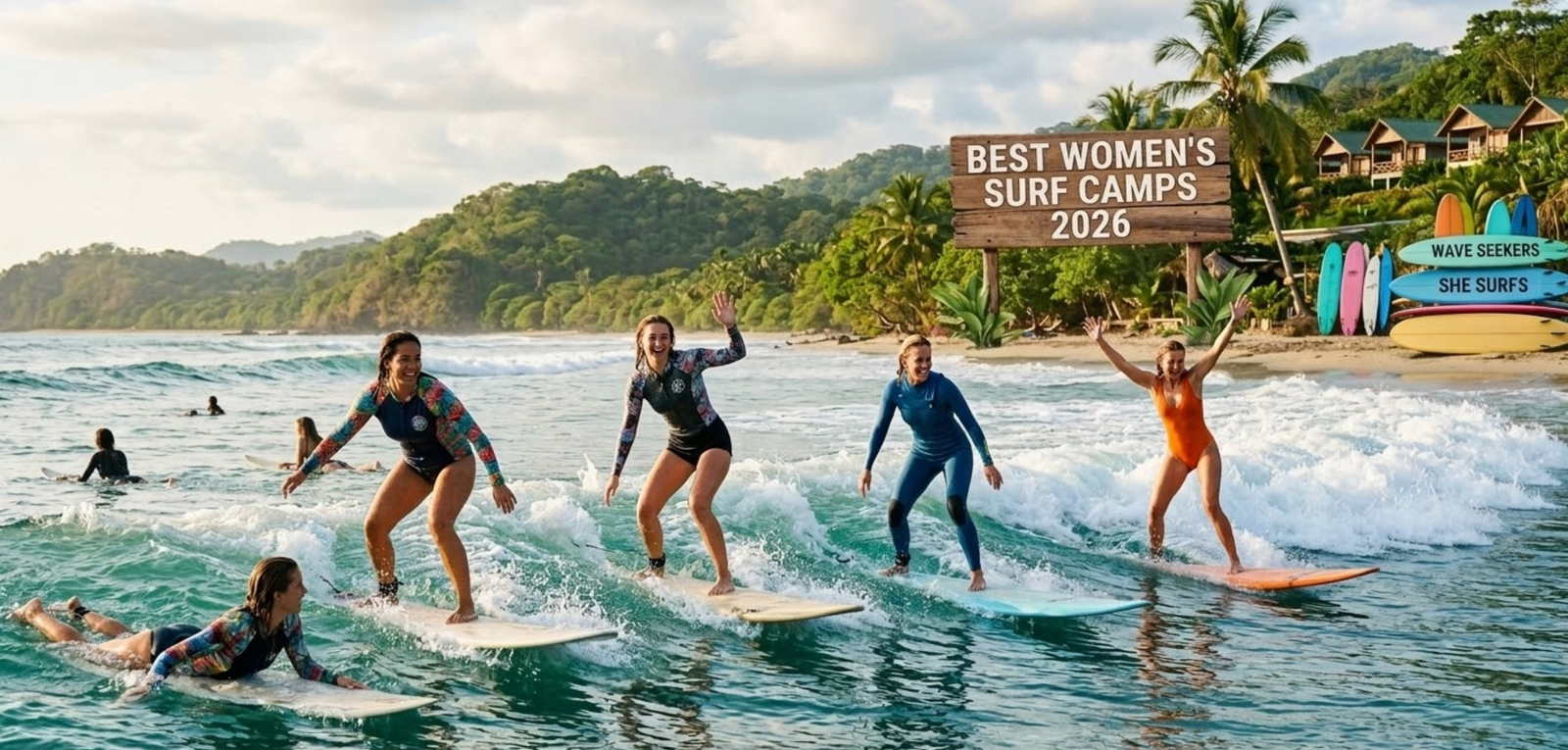
Best Women’s Surf Camps for 2026

Looking for the best women’s surf camps in 2026? Nothing compares to the feeling of planning and looking forward to a surf travel adventure in a womens surf camp, one that brings women from all walks of life together to share their passion for surfing. These camps or women’s surf camps offer a supportive and safe environment to grow and learn their surfing skill and unwind. If you love surfing, whether you are a complete beginner or an expert, a womens surf camp provides you access to top-notch equipment and facilities to revamp your skill. Beyond surfing, these camps offer a range of mindfulness and wellness activities like yoga, spa, etc. Read on to learn more about the top women surf camp to visit in 2026. In this guide, we compare the top women’s surf camps worldwide — including pricing style, skill level suitability, accommodation type, sustainability focus, and wellness add-ons like yoga and spa experiences. You’ll also be able to request availability directly from selected surf camps through our partner form. Best Beginner Surf Camps for Women If you’re new to surfing, choosing the right camp can make or break your experience. The best women’s beginner surf camps focus on safe conditions, structured coaching, and confidence-building, rather than throwing you into challenging waves too quickly. Beginner-friendly camps typically offer: Soft, sandy beach breaks (ideal for learning) Small group coaching with high instructor attention Step-by-step progression (pop-up, paddling, wave timing) All-inclusive packages with equipment included Many women find that women-only surf camps are especially effective for beginners, as the environment tends to be more supportive, less intimidating, and focused on progression at your own pace. If you’re starting from scratch, prioritize coaching quality over destination. A good instructor in average waves will help you progress faster than perfect waves without guidance. Women’s Surf and Yoga Retreats For many travelers, the best women’s surf camps are no longer just about surfing—they’re about total mind-body reset. That’s where surf and yoga retreats come in. These camps combine daily surf sessions with yoga, mobility work, and wellness practices designed to: Improve balance and flexibility for surfing Speed up recovery between sessions Reduce stress and mental fatigue Create a more holistic travel experience In 2026, surf + yoga retreats are one of the fastest-growing segments in surf travel, especially among women looking for both adventure and wellness. Best Surf and Yoga Retreats from This List Soul & Surf (Portugal) – Strong focus on sustainability, mindfulness, and daily yoga integration Surf Goddess (Bali) – Luxury experience with spa treatments, yoga, and high-end accommodation Surf With Amigas (Costa Rica/Nicaragua) – Combines performance coaching with daily yoga and adventure activities Chica Brava (Nicaragua) – Offers a balanced mix of surfing, yoga, and relaxation If your goal is not just to improve your surfing—but to reset mentally and physically—these retreats offer significantly more value than standard surf camps. Top 8 Womens Surf Camps Catching a wave rejuvenates the mind and body. Whether it is a combination of physical activity or ocean therapy, surfing is an excellent way to unwind. Even if you need to learn how to surf, professional guides at these camps will educate you on how to catch your first wave. Below are some of the best women surf camps to consider visiting across the globe!   Surf Camps Location Best For Skill Level Yoga/Wellness Sustainability Focus Chica Brava Nicaragua Sisterhood & All-inclusive Beginner–Intermediate Yes Moderate Surf Diva California, USA Beginners Beginner Optional Low Surf With Amigas Nicaragua, Costa Rica, El Salvador Adventure + Coaching All Levels Yes Moderate Soul & Surf Portugal Eco-conscious surfers Beginner–Intermediate Strong focus High Las Olas Surfing Mexico Personalized coaching All Levels Yes Moderate Surf Goddess Bali Luxury camp Beginner–Advanced Strong Moderate Mahina Hawaii Oahu, Hawaii North Shore experience All Levels Yes Moderate Rapture Surfcamps Multi-country Social surf experience All Levels Optional Strong Chica Brava                                 Typical Price Range: $2,750 – $2,950+ per week The Villa: ~$2,750 per person Cloud Farm: ~$2,950 per person Room upgrades + private options cost more. Best Season: Dec – Apr (dry season)Notes: All-inclusive surf coaching, meals, yoga, massage, small groups. The Chica Brava is one of Nicaragua’s best women’s surf camps. Chica Brava camp, located on over 500 acres of tropical reserves, brings the sisterhood to the sea. It also comes with a large 1200 feet pool just above the bay. A trip to this women’s surf camp Nicaragua is an excellent way to deal with stress and relax. You can get an all-inclusive experience at this camp, including meals, accommodations, and surf lessons. The main focus of this csmp is to provide women with a supportive environment that is safe to learn and improve their surfing skills while connecting with other like-minded women. Furthermore, Chica Brava is a destination to get a peek at some wildlife, including Sloths, Monkeys, Bugs, and so much more. At Chica Brava, you will reconnect with nature. Other activities you can consider getting at Chica Brava include a yoga session or a massage wrapped in one package. Overall, Chica Brava is a destination many recommend, as it will truly get you feeling Zen at the end of the day. Request availability through our partner form below. Surf Diva                                 Typical Price Range: $230 – $350+ per clinic / weekend Women’s Surf Clinics: ~$230 per person for 2‑day clinic (intro) Best Season: Year-round, beach conditions vary seasonallyNotes: Not a traditional week‑long retreat; more focused on weekend clinics and lessons in La Jolla. Consider adding a related Hawaii/Maui Maui Surfer Girls one‑week retreat for fuller travel pricing. Next on our list of desirable destinations to add to your list is this Surf Diva. This women’s surf camp inCalifornia offers an immersive experience for any surfer looking to improve their skills. Based in La Jolla, California, this camp for women is … Read more

Best Surf Camps in Hawaii: Top Picks for Beginners to Advanced

Best Surf Camps in Hawaii, best beginner surf spots in hawaii

Looking for the best surf camps in Hawaii? You’re in the right place. As the birthplace of surfing, Hawaii offers world-class waves, expert instructors, and immersive surf camp experiences for every level—from complete beginners to advanced riders. In this guide, we break down the top surf camps in Hawaii, including Oahu, Maui, and Kauai, with pricing, skill levels, and what makes each one unique. There are tons of surfing schools that offer surf camps scattered all over these famous islands. In these places, you can have the opportunity to meet like-minded surfers, book private lessons with your friends and family, and immerse yourself in its surf towns’ culture. Who Should Book a Surf Camp in Hawaii? Beginners looking to learn in a structured environment Intermediate surfers wanting to progress faster Travelers who want an all-inclusive surf experience Solo travelers looking to meet like-minded surfers Joining a surf camp is also a great way to build a strong surfing foundation. As well as go for hassle-free adventures in one of the most beautiful destinations in the world.  Quick Comparison: Best Surf Camps in Hawaii Surf Camp Location Price Level Best For Kauai Surf School Kauai $$$ All levels Private coaching North Shore Surf Girls Oahu $ Beginner+ Fun/social Go Nuts Hawaii Oahu $$$$ All levels All-inclusive Pata Sudaka Oahu $$$ All levels Surf + Yoga Maui Sports Adventure Maui $$$$ All levels Premium experience   Here’s why you should book a surf camp in Hawaii… There are so many things to do in Hawaii. There’s snorkeling, sightseeing, yoga retreats, exploring the local cuisine —  the list just goes on! And the easiest way to explore all that while enjoying surfing is to go on multi-day immersions that only surf camps can provide.  With the volcanic islands influencing wind directions, Hawaii has consistent swells all year round. You’ll also find here some of the biggest wave spots in the world, such as the Banzai Pipeline in Waimea Bay.  The best surf camps in Hawaii are located across three main islands: Oahu, Maui, and Kauai. Each offers different wave conditions and surf experiences: Oahu: Best for variety and famous surf spots like Pipeline Maui: Ideal for beginners and consistent waves Kauai: Perfect for nature lovers and quieter surf Although surf competitions are held in these locations, the waves here aren’t just for professionals and advanced surfers. There are also beach spots in this area that are suitable for beginners and those who are looking to progress their skills to intermediate levels.  Surf camps in Hawaii specialize in creating tailored packages according to your skill level, needs, and preferences. They also offer packages with reasonable costs from affordable to luxury experiences. These include full-board meals consisting of local cuisine, transportation with transfers, and community immersion wherein you discover more about the Hawaiian culture.  In surf camps, learning surfing is also more structured. The activities and lessons are organized by the hour, leaving you with lots of downtime to explore Hawaii by yourself or relax and enjoy the island’s beaches. Last but not least, booking a reservation during surfing’s peak season will allow you to see pro surfers. Every winter, different surf events, and competitions are held in Hawaii; however, this may also mean crowdier beach areas.  Top 5 Best Surf Camps in Hawaii Experience all-inclusive surfing packages in the following surf camps listed below: Kauai Surf School North Shore Surf Girls Go Nuts Hawaii Pata Sudaka Surf Trips Maui Sports Adventure Kauai Booking surf lessons in Kauai is the best option if you’re into dramatic and lush landscapes. Known as the second oldest among the main islands of Hawaii, this island is a tropical destination filled with tropical rainforests and breathtaking mountain ranges. It’s perfect for people looking for surf camps that offer both adventure and relaxation. 1:  Kauai Surf School Prices: $400 a day for 1 person; $275 a day for 2 persons; $225 a day for 3 to 4 persons; $200 a day for 5 to 8 persons Location: Poipu Beach, Kauai (Outrigger Kahuna Plantation) Skill level required: Beginner to Advanced  Website: www.kauaisurfschool.com You only learn from the best with Kauai Surf School. For over 20 years, they’ve been teaching surfing to students from different parts of the world.  This surf camp believes that the key to growth in surfing is by building a strong foundation. For that reason, their instructors consist of Billabong team riders who spend days teaching their students about water safety and different surfing techniques.  Kauai Surf School’s programs and lessons give chance to explore the beauty of the ‘garden island’. Some days in the surf camp consist of learning surfing, while others are for snorkeling, hiking, and immersing in local communities.  There are five different surf camp programs available here. Each varies depending on how many you are in your group and whether you want private or shared surf lessons. First, there’s the No Ka Oi Private Surf Camp which offers more privacy than the others. With this one, no other surfers can join your group. This private camp contains customized built-in programs with unlimited coaching for a day (minimum booking of six days). Gourmet meals from breakfast to lunch are also offered, including transportation needs like tours and airport transfers.  Next is the Learn with a Pro, a shared surf camp that can accommodate 8 to 12 surfers in a group. Although it’s more fun, there’s only a little room for surf training and improvement with this because of the instructor-student ratio.  On the other hand, The Wahine Camp is an all-girls private surf group. With this one, the ladies can also enjoy Pilates, Zumba sessions, and massages.  The Ohana surf camp is for families looking for a more private option to spend time together. This surf camp is not joined by other groups. Lastly, we have the Surf Escort surf camp for intermediate to advanced riders. This one offers a whole day of training in any of the best surfing spots in Kauai.  Oahu … Read more

Best Modern Surfboards (2026 Review): Top 7 Models for Every Skill Level

Choosing the right surfboard can dramatically impact how fast you progress. Modern Surfboards has become a popular choice for beginners and intermediate surfers thanks to its balance of performance, volume, and affordability. The brand focuses on longboards and mid-length surfboards designed to make paddling easier, improve stability, and help surfers catch more waves. Best Modern Surfboards – Quick Picks Best for beginners → Modern Double Wide SLX Best mid-length → Modern Falcon PU Best longboard → Modern Golden Rule PU Best all-rounder → Modern Love Child Top 7 Best Modern Surfboards Reviewed If you’re struggling in looking for the best longboard for your skill-level, here’s a Modern Surfboard review to help you decide which one to buy.   Board Skill Level Wave Range Type Volume Key Strength Potential Limitation Modern Falcon PU Beginner–Intermediate 1–6 ft Mid-length High Balanced performance + easy paddling Not ideal for steep waves Modern Love Child Intermediate–Advanced 1–8 ft Hybrid (mid-length/cruiser) Medium–High Versatile fin setups + maneuverability Less stable for true beginners Modern Highline PU Beginner–Intermediate 1–5 ft Shortboard hybrid Medium Easy turning + lightweight feel Lower volume vs others Modern Double Wide SLX Beginner 1–6 ft Funboard Very High Maximum stability + wave-catching Bulky for advanced surfers Modern Retro PU Beginner–Intermediate 1–4 ft Longboard High Classic glide + stability Limited maneuverability Modern The Boss PU Beginner–Intermediate 1–5 ft Longboard High Easy wave entry + smooth turns Less responsive in critical waves Modern Golden Rule PU Intermediate–Advanced 1–8 ft Longboard High Performance longboard + speed Requires better control   #1. Modern Falcon PU Surfboard 🏄 Stability: ⭐⭐⭐⭐☆ (4/5) ⚡ Speed: ⭐⭐⭐⭐☆ (4/5) 🎯 Maneuverability: ⭐⭐⭐⭐☆ (4/5) 🌊 Wave versatility: ⭐⭐⭐⭐☆ (4/5) 👶 Beginner-friendly: ⭐⭐⭐⭐☆ (4/5) 👉  Overall Score: 4.2 / 5 The Modern Falcon PU is a versatile mid-length surfboard designed for surfers who want a balance between stability and maneuverability. It performs well across a wide range of conditions, making it a strong option for progression. This surfboard comes with FCS II or Performer Medium fins, which contributes during acceleration. Plus, you can use it with ease on a wave-height of 1 foot to 6 feet. It features a rolled vee to vee double concave-outline as its contours, making it hassle-free to control despite any wave-condition. The medium to full rail adds convenience during smooth transitions. Also, the rocker makes sure the lift and paddling speed maintain exceptional balance while riding it. Aside from that, the full outline of this surfboard makes it easier to drive for snappy turns, especially small waves. Plus, it offers ample volume for the buoyancy. Surfers also admire how this surfboard gives an excellent ride, regardless if you’re a newbie or an expert in the sport. Aside from that, it can accommodate a surfer that weighs over 220 pounds. When it comes to the sizing, this board is available from 6 feet to 8 feet. What makes it more interesting is that it follows the longboard-type, yet it’s shorter than typical. The durability of this surfboard will not be a disappointment as it uses a premium-quality of polyester material with exceptional finishes. It also uses components, including Silmar resin, Bennet foam, and Hexcel fiberglass. #2. Modern Love Child Surfboard 🏄 Stability: ⭐⭐⭐⭐☆ (4/5) ⚡ Speed: ⭐⭐⭐⭐☆ (4/5) 🎯 Maneuverability: ⭐⭐⭐⭐⭐ (5/5) 🌊 Wave versatility: ⭐⭐⭐⭐☆ (4/5) 👶 Beginner-friendly: ⭐⭐⭐☆☆ (3/5) 👉 Overall Score: 4.0 / 5 Are you looking for a unique surfboard? Modern Surfboards doesn’t fail in providing a line of exceptional boards, from performance to quality. One of the best options to consider is Modern Love Child Surfboard. It features a vee-double-concave-shape, which makes it hassle-free to control at any wave condition. You’ll enjoy riding it, regardless if you encounter a 1-foot to 8-foot wave-height. Also, it measures 6 feet and 4 inches to 8 feet, adding convenience in maneuvering it. There are three fin set-ups available for this surfboard, such as the quad, 2+1, and single. Either of these fin-systems contribute to the board’s full agility. The design of this board is one of its main advantages. The bottom deck comes in white with black details, while the top part features a wooden style, which surfers admire more. This surfboard comes from an excellent quality of Epoxy Bamboo material in sandwich construction. The woven fiberglass, thin bamboo sheets, and epoxy resin cover the EPS core for optimum protection. Plus, it’s solid materials don’t compromise comfort while riding it. Aside from that, it also comes with a low rocker, which lets the board accelerates smoothly. Turning will never be too hassling because of its pintail-design. Plus, the deck gives excellent stability, which is favorable to beginners. Intermediate and professional surfers also take advantage of this board’s outline to enhance their balancing skills further. Since it’s a mix of a longboard and a cruiser, riding it adds fun to their surfing experience.   One of the best features of this surfboard is the design. The top deck comes in white color, yet the frame features a marble-design. As you go over the bottom part, it has a full marble-style, making it very appealing. However, if you prefer a meek style, it’s also available in all white. This board comes from an excellent quality of polyester material, making it very durable. It’s damage-resistant, thanks to its lamination. It’s not only sturdy but also adaptive to any surfing-condition. Aside from that, this board is very stable since it features a curved squaretail-design and a longboard’s mid-section-outline. It makes it convenient for surfers to turn from side to side. Plus, the outline provides an ease to surfers to execute tricks. Maneuvering this board will never be a hassle because it’s available in smaller sizes than the Falcon. The sizing ranges from 5 feet and 8 inches to 6 feet and 8 inches. Also, it can hold up to 209 pounds without compromising the board’s performance. If you want to make it agile, you should consider installing fins, and this board comes with a three-fin set-up. You can either use the Tri … Read more

The Art Of Longboard Surfing: Tips

The Art of Longboard Surfing

Longboard surfing is an immensely popular surfing discipline that follows a different “rule set” to regular surfboarding. If you’re considering taking up the art of longboard surfing, this article provides some great tips for mastering this classic style. Longboard surfing is the oldest form of surfing, and although it’s experienced several changes over the millennia, the “heart” is the same. Longboarding lacks the aerial displays of other surfing but requires excellent balance, patience, practice, and a healthy respect for the ocean. Longboard surfboards often have a stigma of beginners’ boards; however, the unique discipline is immensely popular amongst new and experienced surfers alike. These boards allow you to surf in water other surfers can’t while looking elegant and stylish on the waves. Below we’ll look at how to perfect your techniques for longboard surfing to show short-boarders what it’s all about. What Is Longboard Surfing? Although longboarding and regular surfing share many similarities, longboarding has a deep-set history and an entirely different “feel.” The movements are elegant, the pace is slow, the tricks involve less flipping and zigzagging around the wave and more fancy footwork, and the image is immaculate. Longboard surfing (as the name implies) involves riding waves on a longer and (usually) wider surfboard than those used in competitions. Longboards are surfboards over 8′, but most longboards start at 9′ and reach 12′. However, there are some 14′ boards. Longboards usually have rounded noses. One of the best ways to explain longboard surfing to a newcomer is that it’s like dancing with the waves (as opposed to other surfing, which is like attacking the waves). Unlike shortboard surfers, longboarders are at home in gentle swells (between 1 and 3′), in water that is ankle-deep to the swells at the back. Why Would You Use A Longboard Surfboard? Longboarding focuses on a sustained ride, gracefully gliding along the wave. At the same time, shorter surfboards (like thrusters and fish) are better suited to quick turns, higher speeds, flips, and other aerial maneuvers. Thanks to their length, longboards are easier to paddle and balance on, making them ideal for beginner surfers trying to learn the tricks of the trade. However, longboard surfing is not limited to beginners. Many riders who prefer the “soul surfing” experience stick with longboarding, which has its surfing subculture. Longboards are also ideal for calm water conditions when the swell is too small for shorter boards. How to Choose the Right Longboard Surfboard The first step to becoming a longboard surfer is to select the correct board. An important value when choosing a surfboard is its volume (measured in liters) which is a product of the board’s length, width, and height (i.e., if you filled up the board, how much liquid it could hold). Longboards are usually in the range of 50 to 100 L. Aside from the physical dimensions, there are different longboard types on the market, each designed to meet a specific goal, and choosing can be tricky as they don’t perform in the same way. The Different Longboard Surfboard Types There are two main types of longboard surfboards, the nose rider/classic longboard and the performance longboard (there are also a couple of hybrid surfboards). The type of longboard you choose depends on what you want to surf, the conditions you are most often faced with, your physical build, and your experience level. Classic, Single Fin Longboards These are the traditional longboards. They are ideal for calmer water, where the swell is small to average-sized. These boards are fantastic for all skill levels, and while you won’t perform any aerial maneuvers, you’ll cross-step, nose-ride, hang, and “dance” across the board. They are incredibly stable and are the easiest boards to catch waves on, thanks to their rounded nose, wider bodies, flatter curves (rocker), rounded rails, and greater volume. The single-fin design is ideal for holding your course and “riding out” a wave. These boards are also called ”noserider longboards,” thanks to the technique of walking to the front and standing on the surfboard’s nose. Performance Longboards Performance longboards differ from their traditional counterparts in their fin setup. While traditional logs (longboards) have a single fin, performance longboards have a “thruster” setup where three fins are arranged in a triangle “pointing” to the rear of the board (two lateral fins and a central fin further back). The thruster setup is the most commonly used fin arrangement because of its effectiveness and all-purpose use. These setups are ideal for maximizing balance, control, and speed. Alternatively, performance longboards may have quad fins (two lateral fins on either side, one pair outside, the other slightly further back and inside) or a 2+1 setup (like a thruster, but the lateral fins are shorter). These longboards are narrower than nose riders and have a sharper curve (rocker). These boards are better suited to larger swells and steeper and faster waves thanks to their design. These boards cater to experienced surfers, as beginners will find them more challenging to ride. Hybrid Longboards A hybrid surfboard borrows elements from other boards. Some examples of hybrid longboards include: The Gun The gun is a surfboard adaptation with a pointed nose and a narrower body than traditional longboards. Between 6 and 10′, these boards are for catching large waves (giving them the name “elephant gun” – the surfboard for hunting large waves). These boards require more skill than a traditional longboard but are faster, more maneuverable, and work better in bigger water. Most surfers won’t fully appreciate a gun’s potential, as they were designed to face the biggest waves. These boards are ideal for brave/crazy, experienced surfers who enjoy pushing themselves to the limit. Funboard/Malibu-Mini The funboard is a hybrid between a long and a shortboard. These boards have fantastic maneuverability, good balance and are easy to paddle. They are between 6’5” and 8’5” (just big enough to be considered longboards). Most have a rounded nose, a wide body, rounded square tails, and a thruster fin setup. These boards are slightly wider than … Read more

Top 10 Best Towable Tubes for 2026: The Ultimate Guide

Top Best Towable Tubes for 2025: The Ultimate Guide

Imagine this: the boat’s engine roars to life, the water stretches out before you, and laughter fills the air as your towable tube takes off across the waves. Whether you’re skimming the surface at high speeds or enjoying a leisurely ride with family, towable tubing is the ultimate way to turn a day on the water into an unforgettable adventure. Soaring through the waters at top speeds while hanging on to an inflatable tube heightens up the good times in lake and beach parties. With a rope merely being your connection to another boat, it gives thrills from young kids to fearless adults.  If you are one who has never tried riding on being towed by another boat, then you are missing on quite a lot of fun. Towable tubes make the ride exciting since you can share the amusement with not just one – sometimes even up to 5 people at the same time.  But not all towable tubes are created equal. The right one can mean the difference between a bumpy ride and a smooth, thrilling experience. That’s why we’ve put together this guide to the best towable tubes for 2026. Whether you’re a thrill-seeker, a family-focused rider, or someone looking for a bit of both, you’ll find the perfect match here. Let’s dive in and explore the features, options, and tips to help you choose the ultimate tube for your next aquatic adventure! Top 10 Best Towable Tubes Reviewed Ready to make waves? We’ve rounded up the best towable tubes for every type of rider, from adrenaline junkies to families seeking a fun day on the water. These top-rated options offer a mix of comfort, durability, and excitement. The market is full of options behind floats for boats. Whether this is your first time to purchase a towable tube or you are looking for an upgrade, picking one can still be confusing.  A good day on the waters is what we want for you, so we’re sharing our insight with 10 of the best towable tubes in the market. Read about the main features, pros, and cons to assist you in deciding which tube is the best for your need.     1. Mach 3 Towable Tube by Airhead – Best Overall Specifications: The best towable tube in today’s market, Mach 3 by Airhead, has a cockpit design that keeps the riders from slipping off the tube while on the move. This ride is safe for kids as they can fit perfectly inside it.  Mach 3 is Airhead’s best-selling product among all their towable tubes. It should not be a surprise considering it guarantees any air leaks and is equipped with all of the patented safety valves needed.  This towable tube comes with six (6) neoprene handles for guaranteed safe riding. This technology allows you to enjoy a good ride without skidding or hurting your hand. Durability is unquestionable with Mach 3. With the PVC (Polyvinyl Chloride) bladder and double-stitched nylon cover, it ensures long-lasting usage.  Mach 3 is designed for three (3) person towable tube. However, it can also be used for a single or double passenger. A single rider will have to occupy the middle seat. Double riders should sit on both left and right for balanced seating. The cockpit design water tube makes it trustworthy even for kids.  You will surely enjoy summer adventures with Mach 3. With water tubes well-balanced, it won’t throw passengers off the ride. No wonder, it is Airhead’s best-selling.  Pros Cons The speed safety valve for fast and easy inflating and deflating Linings may be sharp Heavy-duty construction for durability May be bulky and hard to store Paddled and non-slip handles   Allows for perfect grip     2. Airhead Super Mable Towable Tube – Best for All-Around Fun Specifications: Airhead’s Super Mable is one of the most popular towable tubes due to its versatility and stability. With its lounge-style design, it offers a smooth ride and a comfortable experience for up to two riders. Whether you are sitting or lying back, the Super Mable provides excellent support for riders of all ages. Super Mable is equipped with four heavy-duty handles with neoprene knuckle guards, allowing for a secure grip even in the most intense rides. Its durable construction, including a double-stitched nylon cover and a strong PVC bladder, ensures the tube will last through multiple seasons of water fun. The Super Mable also features a patented Speed Safety Valve, making inflation and deflation quick and easy. This is the perfect choice for those looking for a stable and fun ride on the water. Pros Cons Heavy-duty full nylon cover for durability Heavier than some other towable tubes Dual tow points for different riding styles Can be difficult to flip over if capsized Comfortable EVA foam seating pads   Side walls provide extra security   3. SportsStuff Big Mable Towable Tube – Best for Family Fun Specifications: The Big Mable by Sportsstuff is designed for family-friendly adventures on the water. With its extra-wide and stable design, this towable tube is perfect for riders who want both comfort and fun. This two-person lounge tube comes with four ergonomic handles, as well as neoprene padding for a soft and comfortable grip. The durable PVC bladder and tough nylon cover ensure that Big Mable can withstand a lot of use, providing you with long-lasting enjoyment. With its wide ride and easy-to-use towing system, the Big Mable is ideal for anyone looking for a relaxing yet exhilarating experience on the water. Pros Cons High backrest and sidewalls for extra comfort Requires a powerful boat for high speeds Dual tow points (forward or backward towing) Can feel heavy when wet Durable nylon cover with EVA padding   Multiple grab handles with knuckle guards   4. WOW Watersports Thriller Towable Tube – Best for Thrill Seekers Specifications: The Thriller Towable Tube by WOW Watersports is made for those who crave high-speed thrills and adventurous rides. Its deck-style design offers a low profile, allowing for sharp turns … Read more

The Ultimate Pre-Surf Routine: Body, Mind, and Perfect Timing for Every Session

Surfers (from total beginners to weekend chargers) often show up to the beach with a noisy mind, a stiff body, and a vague plan—then wonder why the first 20 minutes feel sketchy. The ocean doesn’t care if you’re stressed, caffeinated, or rushing; it just keeps moving. A few simple rituals can help you arrive calm, prepared, and tuned in, so you surf better and make safer choices. The quick take A good pre-surf routine does three things: it reduces risk, steadies your nerves, and primes your body to paddle and pop up smoothly. You don’t need a complicated ceremony—just a repeatable sequence you can do even when you’re late. If you remember nothing else: check conditions, warm up shoulders/hips, and take 60 seconds to breathe on purpose. Start with the ocean, not your ego. Before the stretches, before the hype playlist—look at the water like you’re reading a mood. Sets: Are there lulls and pulses? Where are waves breaking consistently? Currents and channels: Where’s the water moving? Where are people paddling out successfully? Entry/exit: If you get worked, where do you safely end up? Your honest comfort zone: Today is not the day to “prove” something. A small table of rituals (choose what fits your day) Think of this like a menu. You can mix and match, but keep it consistent enough that your brain recognizes: we’re surfing now. Ritual What it supports When it’s most useful Slow deep breathing Lowers panic, improves focus Nerves, crowded lineups Shoulder + thoracic warm-up Easier paddling, fewer tweaks Cold mornings, long paddles Hip/ankle mobility Faster pop-ups, smoother stance Stiff lower body, tight wetsuit “Plan the session” glance at conditions Safety + smarter positioning New spot, shifting peaks Light caffeine (optional) Alertness, motivation Dawn patrol; avoid if it spikes anxiety Short intention (“one thing”) Confidence and clarity When you feel scattered Morning momentum that actually carries into the lineup How you start your day often decides whether you show up hurried and reactive—or steady and ready. A tiny dose of optimism can be surprisingly practical: it makes you more patient in crowds, more consistent in your breathing, and less likely to spiral after a wipeout. One easy place to borrow ideas is simply starting your day with some positive input. A few simple options (pick what feels natural, not cheesy): Read a short inspirational passage (one page, not a whole book) Write three gratitude bullets (fast, messy, honest) Sit for 2 minutes and notice your breath without “fixing” it Take a short walk outside before screens Write one sentence: “Today’s session will be successful if I ______.” The point isn’t perfection—it’s setting your nervous system to “open and alert,” not “braced and frantic.” The 10-minute shore routine (a simple how-to) Use this when you want structure without overthinking. Look for hazards first (60 seconds). Identify current direction, rip channels, and your exit zone. Loosen your neck and shoulders (90 seconds). Gentle circles; then scapular squeezes (pull shoulder blades down/back). Open your chest and upper back (90 seconds). Hands behind head, rotate slowly side to side; a few big breaths. Prime hips and ankles (2 minutes). Leg swings, slow air squats, calf raises—nothing aggressive. Do 20 seconds of “pop-up rehearsal.” One slow, clean pop-up. Then one at normal speed. Breathe like you mean it (60 seconds). Inhale 4, exhale 6. Longer exhales signal “we’re okay.” Pick one intention (10 seconds). Examples: “Relax my shoulders,” “Commit to the takeoff,” “Stay wide of the pack.” Final conditions check (60 seconds). Confirm where you’ll paddle out and where you’ll sit. Then go. A surfer’s “quiet mind” kit for managing anxiety Surf anxiety is normal. It can show up as shallow breathing, tense paddling, rushing takeoffs, or bailing early. A useful trick: don’t argue with the feeling—give it a job. Name it: “I’m amped.” (Not “I’m doomed.”) Slow the first paddles: Treat them like warm-up strokes, not a race. Use a reset cue: Touch the wax, adjust the leash, or dunk your face—something that anchors you. If coffee helps you feel awake and confident, great. If it turns your nerves into a hummingbird, consider half-caf, tea, or saving caffeine until after you’ve been in the water for a few minutes. A practical online resource worth bookmarking If you surf anywhere with shifting sandbars, jetties, or punchy shorebreak, rip-current literacy is not optional—it’s part of surfing well. NOAA’s rip current safety page is a clean, non-dramatic overview you can skim in a few minutes and actually remember. It explains what rip currents are, how to spot warning signs, and what to do if you’re caught (including the common-sense reminder to stay calm and conserve energy). Sharing it with a friend who’s new to the ocean is also a low-key way to keep the whole crew safer.  FAQ How long should a pre-surf ritual take? Anywhere from 3 to 15 minutes. Consistency matters more than length—your brain learns the sequence and starts “downshifting” into focus. What if I’m short on time? Do the essentials: quick conditions scan, shoulder warm-up, 60 seconds of breathing, and one clean pop-up rehearsal. Should I always check tides and currents? If you can, yes—especially at unfamiliar spots. How do I check surf conditions quickly? Many surfers use surf reports and forecasts to get a fast read on swell, wind, and tide context, then confirm it with their eyes at the beach. Surfline is one widely used option. Conclusion A pre-surf ritual isn’t superstition—it’s a repeatable way to arrive prepared, calm, and capable. When you check the ocean first, warm your key joints, and regulate your breathing, you’re more likely to surf with confidence and make safer decisions. Keep it simple enough that you’ll actually do it on messy days. Then let the water take it from there.LukeLuke is an avid athlete and the driving force behind Surfhungry, a vibrant online platform dedicated to sharing the joy and passion of surfing and water sports with enthusiasts around the world. With a deep-rooted love for the ocean … Read more

Best Cheap Surfboards (2026 Buyer’s Guide – Tested & Reviewed)

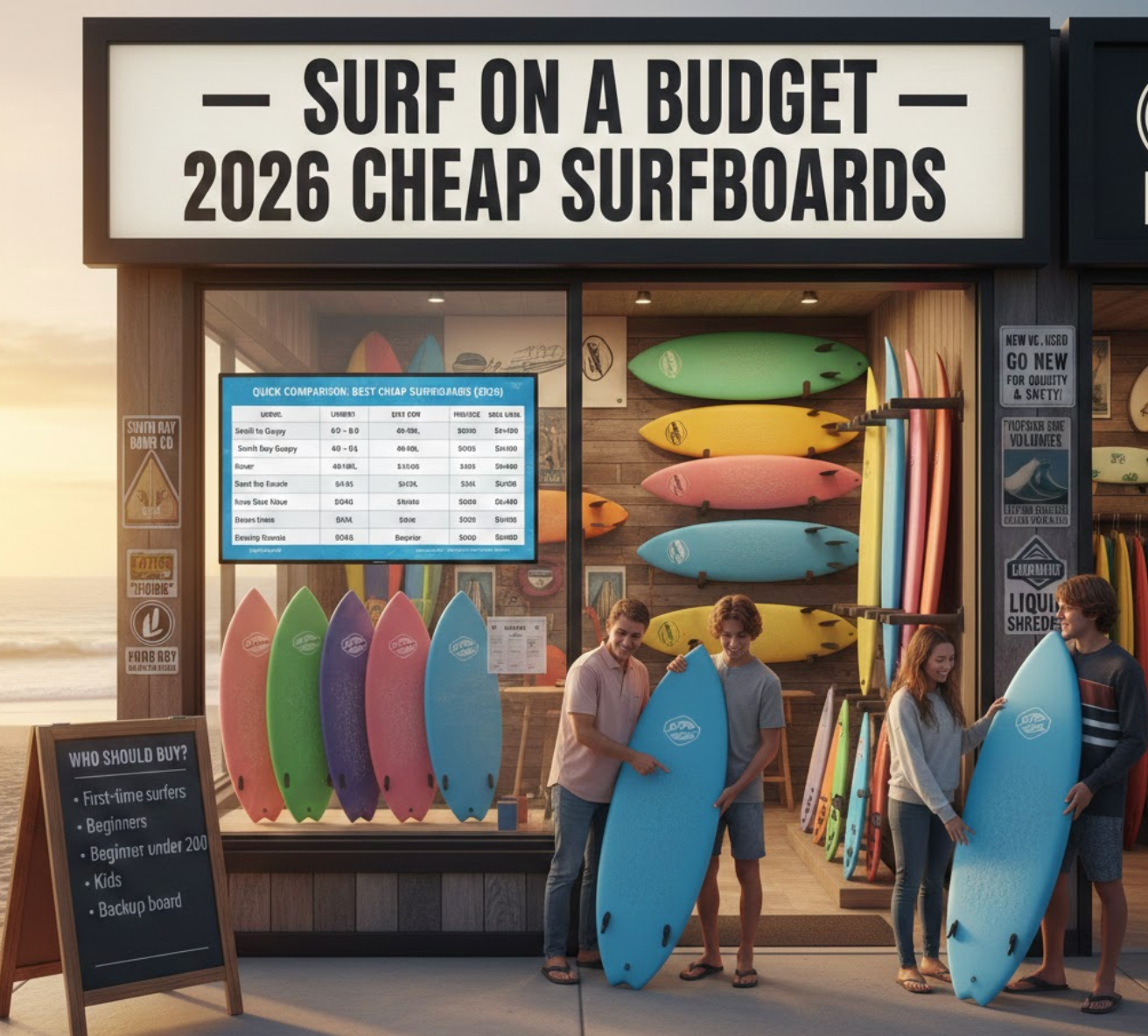
What is the best cheap surfboard in 2026? The best cheap surfboards for beginners cost between $200–$500 and offer high volume, soft-top construction, and stable fin setups. Top affordable brands include South Bay Board Co, Thurso Surf, and Liquid Shredder. The right choice depends on your weight, wave type, and skill level. Yes. You can find more advanced types of surfboards in garage sales, e-commerce stores, and other shops, but if you are a beginner, it will be beneficial for you to buy a new one. Luckily for you, because most beginner surfboards are not as expensive as the ones used by your favorite surfer. Who Should Buy a Cheap Surfboard? First-time surfers learning fundamentals Beginners under 200 lbs looking for stability Intermediate surfers wanting a summer small-wave board Parents buying a board for kids Surfers who want a budget-friendly backup board Is It Better to Buy Used or New in 2026? Unlike the brand new surfboard, you cannot guarantee the quality of used surfboards, whether it is an entry-level type or advanced. If you opt for a used surfboard, you have to settle for the ones with dents and damages that can affect your performance and learning process. Used surfboards can be cheaper upfront but may have: Waterlogged foam Hidden dings Delamination Warped fins or boxes For beginners, a new soft-top surfboard is usually the safer investment because it reduces injury risk and ensures structural integrity. Thus, it is still better to settle for the brand new, but the best cheap surfboards. Quick Comparison: Best Cheap Surfboards (2026)   Model Length Volume Best For Price Range Skill Level South Bay Board Co Guppy Soft Top 6’0 – 8’0 40–80L Lightweight beginners & kids $300–$400 Beginner South Bay Board Co Huevo Egg 4’10 37L Small summer waves & playful sessions $350–$400 Intermediate Thurso Surf Lancer Fish 5’10 34L Progressing surfers & small waves $350–$450 Intermediate Liquid Shredder EZ Slider Retro Fish 5’10 41L Beginner-friendly fish shape $250–$350 Beginner–Intermediate South Bay Board Co Big Betsy 5’5 31L Speed & performance in a compact board $350–$450 Intermediate Thurso Surf Aero Soft Top 7’0 60L Beginner-to-intermediate transition $300–$400 Beginner–Intermediate Liquid Shredder EZ Slider Foamie 6’0 45L Kids & first-time surfers $200–$300 Beginner   Top 7 Best Cheap Surfboards Reviewed In this section, you will learn that you do not have to splurge to get a new surfboard. You will see several branded products out there that you can use to enjoy and learn surfing. South Bay Board Co Guppy Soft Top South Bay Board Co Huevo Egg Thurso Surf Lancer Fish Liquid Shredder EZ Slider Retro Fish South Bay Board Co Big Betsy Soft Top Thurso Surf Aero Soft Top Liquid Shredder EZ Slider Foamie #1. South Bay Board Co Guppy Soft Top Best For: Lightweight beginners & kidsSkill Level: BeginnerLength: 6’0 – 8’0Width: 21–22 inchesVolume: 40–80 LTail Shape: SquashFin Setup: ThrusterPrice Range: $300–$400 Pros Soft top cushions falls, great for learning Suitable for children and adults under 150 lbs Comes with carry handle for easy transport Cons Shortboard shape may limit advanced maneuvers Not ideal for heavier surfers The South Bay Board Co Guppy Soft Top is one of the best cheap surfboards that you can use if you are a beginner who weighs 150 pounds or less. This board comes in two sizes, which are the 6’0 and 8’0. Because of this, children and adult beginners can use this surfboard. It got its inspiration from Guppy shaped classic funboards with a deck that is highly durable and soft. Even if you make mistakes on your maneuvers many times, you will never end up giving up because of the soft cushion that prevents you from having injuries. Despite being a shortboard, the Guppy is exceptionally user-friendly. It provides speed, performance, and stability that new surfers will love. This surfboard comes with a carry handle, making it easy to carry everywhere that even your kids will love taking it with them. #2. South Bay Board Co Huevo Egg Best For: Small summer waves & playful sessionsSkill Level: IntermediateLength: 4’10Width: 21 inchesVolume: 37 LTail Shape: SquareFin Setup: QuadPrice Range: $350–$400 Pros Affordable entry into egg-style boards Generous volume allows effortless paddling Handles up to 200 lbs Cons Small size may feel unstable for beginners Limited for high-performance tricks The South Bay Board Co Huevo Egg can be small to your eyes, but if you are an intermediate to a pro-level surfer, you will love the price of this surfboard. Unlike the most advanced pro-level egg surfboard, the Huevo is one of the cheapest. It does not cost more than 400 USD. The Huevo is one of the perfect additions to your quiver if you are looking for a cheap surfboard that can ride the small waves in summer. After all, you do not like to spend a lot of money on surfboards that you will only use for casual surfing. That is why the Huevo provides the best monetary value when it comes to the price. Despite its small size, the Huevo is thick with a rounded nose and broad square tail, making it a reliable option for pop up. It can also provide effortless paddling because of its generous volume. What makes this egg more impressive is that it has the capacity of a 200-pound weight. #3. Thurso Surf Lancer Fish Best For: Progressing surfers & small wavesSkill Level: IntermediateLength: 5’10Width: 20 inchesVolume: 34 LTail Shape: FishFin Setup: TwinPrice Range: $350–$450 Pros Stable fish shape, easy to maneuver Comes with leash and twin fins Smooth performance on small waves Cons Fin screws may loosen Not a full step-up board for pro surfing Thurso Surf Lancer is one of the best fish surfboards that you should try if you grow tired of using your longboard, and you are ready to level up your skills. Luckily for you, because it is a soft-top fish that is unique and user-friendly. It allows you to practice your performance while maintaining your stability in the waters. If … Read more

Feed Your Stoke. Join the Surf Hungry Crew

Surf tips, gear reviews and travel guides straight to your inbox

"*" indicates required fields

Privacy*
This field is for validation purposes and should be left unchanged.