
Body Surfing: How to Ride the Waves with Your Own Body

Body Surfing

While surfing is commonly accepted as among the world’s most exhilarating and enjoyable extreme water sports, many argue it cannot compete with body surfing. The thrill of catching a wave without using buoyant devices such as bodyboards or surfboards remains unmatched. After some practice, body surfing is relatively easy for anyone to master, as this article will demonstrate.

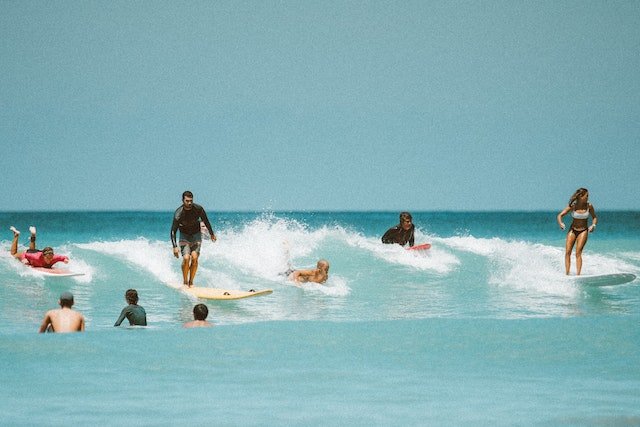
To bodysurf, find an optimal wave, usually breaking near the shore. Once you have identified an appropriate wave, wait for it to approach before swimming toward it. Allow the wave to lift your body slightly while kicking your legs to maintain balance and extending your arms to direct yourself. 

Over the previous few decades, body surfing has continued to distinguish itself from traditional surfing, developing into a highly competitive global sport. To the inexperienced individual, body surfing can seem intimidating; however, rapidly progressing is not uncommon with the correct understanding, timing, technique, and confidence. However, a few vital factors all beginners must keep in mind.

Body Surfing For Beginners

Body surfing is the same as traditional surfing, except for a surfboard. If you have ever caught and ridden a wave without using a surfboard, you have unknowingly body-surfed.

Despite body surfing being easier to learn than traditional surfing, obtaining the optimal technique, timing, and skills requires several hours of practice. The best waves for bodysurfing are usually between one and three feet high, allowing surfers to ride the wave directly toward the beach.

It is worthwhile noting that most experienced surfers agree that body surfing is easier to learn, advance, and master as it requires no equipment or powerful waves. Instead, body surfing will require you to position your body in front of the wave before it breaks.

Your body position and momentum before the wave reaches you are vital. An incorrect body position will likely result in you missing the wave or being harshly dumped by it. The best way to body surf is to align yourself with an appropriate oncoming wave before gently swimming toward it.

Once your chosen wave gains momentum, you can catch it by pushing off the seabed’s surface and lurching your body in the same direction the wave travels. For inexperienced body surfers, it is recommended to hone the correct technique in shallower waters where you comfortably stand before progressing to deeper waters with significantly more powerful waves.

Body Surfing

How Difficult Is Body Surfing?

Body surfing is considered by many to be easier to learn than traditional surfing, longboarding, or kayaking, as it does not necessitate any equipment.

However, body surfing can be incredibly challenging and frustrating for people without sufficient swimming skills or the ability to accurately read oncoming waves. Yet, with several hours of dedicated practice, body surfing can be easy, enjoyable, and satisfying.

An often-overlooked benefit of learning how to body surf is how it permanently enhances surfing and swimming skills while simultaneously allowing you to thoroughly understand how waves function, build up, and break.

Anyone can learn how to body surf within an hour or two. Once you have mastered catching a wave without using a surfboard or accompanying flotation device, you will rapidly progress due to improved confidence, enhanced ability to read waves accurately, and overall swimming skills.

Health Benefits Associated With Body Surfing

Body surfing is closely associated with numerous health benefits as the water sport is among the best workouts imaginable.

While you may not notice how hard your body is working during your body surfing sessions, the extreme water sport is known to significantly benefit muscular endurance, strength, and cardiovascular fitness.

Furthermore, how the body moves while body surfing will indirectly benefit your overall balance and flexibility, balance and flexibility are crucial to body surfing as the extreme water sports necessitate a specific body position to successfully catch smaller, less powerful waves.

At the same time, if you do not have any of the required physical characteristics associated with body surfing, you will obtain them within the first few hours of practice. Once you can repeatedly catch waves without a flotation device, you will inadvertently and permanently enhance physical and cardiovascular fitness while benefitting your general balance and flexibility.

Body Surfing Vs. Surfing: Similarities And Differences

While there are many similarities between body surfing and traditional surfing, they are considered two separate extreme water sports.

The main and obvious difference between body surfing and traditional surfing is the requirement of a flotation device. Purchasing, maintaining, and utilizing a modern surfboard can be expensive; however, you can body surf without any accompanying equipment, making it appealing to millions of people globally.

Moreover, body surfing usually occurs in shallower waters closer to the shore. This allows extreme water sports to be additionally accessible for anyone, as various forms of surfing equipment are not readily accessible to most beachgoers.

In addition to a pricy surfboard, surfers must buy other equipment such as wax, a wetsuit, and a vehicle big enough to comfortably carry the costly extreme water sports gear. Body surfing can offer a similar experience and thrill to traditional surfing, yet it is usually significantly cheaper for most beginners.

Body Surfing

Body Surfing Tips And Tricks: How To Advance Your Skills

Despite many inexperienced body surfers experiencing some form of frustration during the learning phase, most will rapidly progress once they have the hang of it.

If you are comfortable regularly catching waves without using a flotation device, there are numerous tricks to learn, which will unquestionably make the entire experience more enjoyable. After learning the basics, the best skills to master are known as the dolphin dive, the turtle roll, and the spin.

The best and most advanced body surfing tips and skills to try are:

  • Learn how to bodysurf and navigate bigger beach breaks.
  • Attempt to navigate powerful shore and reef break waves.
  • Learn to let powerful waves dump you while holding your breath and submitting to the water’s movements.
  • Utilize forceful rip currents.
  • Master the duck dive timing technique.
  • Identify, catch, and ride massive beach breakers.
  • For the best and most confident body surfers globally, master the art of riding under the barrel of an enormous wave.

While the mentioned advanced body surfing moves may seem daunting to inexperienced individuals, they are straightforward to master if you put in the required effort. At the same time, body surfing is an incredibly enjoyable water sport, making the learning phase enjoyable.

While you enjoy your time in the water, you will indirectly advance your skills to the point where you can comfortably catch bigger, steeper, and more powerful waves. The bigger, more powerful waves will dramatically enhance your body’s surfing experience, making the process incredibly enjoyable, thrilling, and exhilarating for millions globally.

There is always more to learn regarding body surfing, as those people with creative and adventurous minds will find countless ways to advance their skills, cultivate new tricks, and continuously improve their enjoyment levels while in the water.

Conclusion

Body surfing is among the world’s most popular extreme water sports due to the undoubted thrill, enjoyment, and exhilaration it has always been associated with. Learning how to body surf can be challenging, although it is straightforward to master after practicing for a few hours. If you have never body surfed, take this as a sign to get into the water and experience one of life’s greatest experiences.


Surfing In Costa Rica: A Complete Guide

Surfing in Costa Rica

Surfing in Costa Rica is like riding an exhilarating wave of adventure surrounded by natural bliss! It’s where the majestic Pacific meets tropical shores, creating a paradise for wave riders worldwide. Breathtaking surf spots, and year-round swells, beckons both beginners and seasoned to take the boards and get gnarly. So, what’s there to know about surfing the waves in Costa Rica? Among the most popular spots to surf in Costa Rica include Tamarindo, Witches Rock, and Pavones. Sharing the coasts with the lively surfing culture, you will find that the Pacific Coast offers ideal waves from May to October, while the Caribbean Coast gets more action from November to April. Surfers here know that each spot has its own personality and rhythm. And Costa Rica’s coasts boast an abundance of incredible surf spots waiting to be explored. The country is blessed with two coasts that offer tons of great surf spots to choose from, and this guide will provide you with insider tips to ride awesome waves and make your experience unforgettable. Where To Surf In Costa Rica Being a surfer’s dream, Costa Rica boasts over 800 miles of coastline and countless waves to choose from. So, if you’re looking for a mellow beach break, a hollow reef break, or a long point break, you’ll find it somewhere in this tropical paradise. Here are some awesome tips and recommendations to help you plan your epic surf trip. Costa Rica Surf Map: Top Surf Spots To get a bird’s eye view of the best spots to surf in Costa Rica, check out this handy surf map (Surfline) showing the location and data of the country’s most famous and popular waves. That aside, note that Costa Rica has two main coasts: the Pacific and the Caribbean. The Pacific coast has more surf spots and more consistent waves throughout the year, while the Caribbean coast has fewer spots and more seasonal waves that depend on storms and hurricanes. With the Pacific as the most popular, its coasts can be divided into four regions: North & South Guanacaste, Central Pacific, and South Pacific. Each section has its own vibe, climate, and surf conditions. Here are some of the need-to-know highlights of each area: North Guanacaste: This is where you’ll find some of the most iconic surf sites in Costa Rica, such as Witches Rock, Ollie’s Point, Playa Grande, and Tamarindo. This region is known for its offshore winds, dry weather, and world-class waves ranging from beginner-friendly to expert-only. It’s also a popular tourist destination with many amenities, nightlife, and activities.   South Guanacaste: The south is where you’ll find some of the most attractive and secluded beaches, such as Avellanas, Playa Negra, Marbella, and Mal Pais. This region is known for its laid-back atmosphere, lush vegetation, and uncrowded waves that can be fun for all levels, with a consistent spread that could accommodate a whole army of wave riders.   Central Pacific: This is where you’ll find some of the most accessible and diverse surf spots, such as Playa Jaco, Hermosa (north), Esterillos, and Manuel Antonio. This region is known for its warm water, rainy weather, and consistent waves ranging from small and playful to big and powerful. It’s also a convenient place to stay, with plenty of accommodation options, restaurants, shops, and attractions.   South Pacific: Just south is where you’ll find some of the most remote and adventurous surf spots in Costa Rica, such as Dominical, Uvita, Matapalo, and Pavones. This region is known for its tropical rainforest, abundant wildlife, and epic waves that can be long and perfect. It’s also a challenging place to travel to, with limited infrastructure, services, and crowds. Best Surfing Spots For Beginners In Costa Rica For those eager to hang ten and ride the waves in a safe and stoked atmosphere, Costa Rica’s got your back with a rad lineup of beginner-friendly spots. You’ll be looking for gentle, playful waves that break over a sandy bottom, making them easy to catch and ride. Moreover, you would also find nearby surf schools, camps, shops, and instructors around the area to help you learn the basics or up your surfing game. Check out these epic waves where beginner surfers can paddle out and catch their first epic vibe in Costa Rica:   Tamarindo: Known to be among the most popular surf towns in Costa Rica and a great place to learn how to surf, the main beach has several peaks that offer small and friendly waves for beginners. Also, take a boat trip to nearby spots like Witches Rock or Ollie’s Point if you want to challenge yourself with bigger waves.   Playa Cocles: This is one of the best surf spots on the Caribbean coast and an excellent place to learn how to surf when the swell is small. The beach has a wide sandbar that creates soft waves perfect for beginners. You can also relish the laid-back vibe of the town and the area’s spicy beauty.   Nosara: Among some of the most beautiful surf towns in Costa Rica, it’s a great place to learn how to surf. The main beach, Guiones, has a long stretch of sand that offers multiple peaks that suit different levels of surfers. The waves here are usually smooth and well-formed, thanks to the offshore winds.   Manuel Antonio: This place is stunning and a total hotspot in Costa Rica, making it a terrific choice to kickstart your surfing journey and catch some epic waves surrounded by jaw-dropping beauty. The main beach has a wide and flat sandbar that creates gentle waves ideal for beginners. Little Hawaii: Costa Rica’s World-Class Surfing Destination Prepare for an adrenaline-pumping challenge at Little Hawaii, a world-class reef break in Playa Avellanas. This secluded gem in South Guanacaste demands skill and courage, with long paddles, strong currents, and waves reaching up to 18 feet. But the reward? Unforgettable rides on powerful right-handers. Surrounded by sm epic scenery—think green hills, palm trees, and crystal-clear water—you can … Read more

Traveling With Wakeboard Gear | Pro Tips

Traveling with Wakeboard Gear

Wakeboarding can be a lot of fun, and part of that fun is taking it with you when you travel. There are so many great wakeboarding spots around the world that it wouldn’t be right not to take it with you. But there are many risks involved, like the possibility that it could get stolen or damaged in transit. So, how can you travel and keep the wakeboard gear you store so beautifully at home, safe on the road? Airlines have different rules about transporting wakeboard gear, and it could incur additional costs in some cases. You should check the airline’s baggage policy before you travel and, if possible, take it as carry-on baggage to keep it safe. You can also put it in a regular bag to protect it. Navigating through airline policies and ensuring your gear arrives intact can improve your overall traveling experience. Let’s look at some tips and guidelines for traveling with wakeboard gear, specifically when taking your wakeboard on a plane. Can I Bring a Wakeboard on a Plane? Most airlines will permit you to take your wakeboard on a plane, but you shouldn’t just assume that would be the case. There are a few reasons why it could be risky: Some airlines charge an additional fee for sporting gear. There are a few that could charge $100 or even more as a special baggage fee, which could increase your travel costs significantly. It’s possible that your wakeboard could get damaged by the baggage handlers if you don’t pack it properly (and sometimes even if you do). Wakeboards are expensive pieces of sporting equipment, so theft isn’t out of the question either. So, how can you avoid these issues? Here are a few tips.   Check The Airline’s Policies If you plan to travel with your wakeboard, check with the airline first. Before you pay for your ticket, go through the baggage policies or ask your travel agent about it. Some will charge an additional fee to transport your wakeboard or may have special packing requirements. Many wakeboarders get past the additional fee by declaring the wakeboard as a waterski since surfboards tend to cost more to take on board a plane than waterskis. There are even users in online forums who declared their wakeboards as golf clubs to save a few dollars. This is not recommended, though, as many airline officials can be pretty strict about their baggage rules.   Use A Special Wakeboard Bag Transporting your wakeboard is much easier (and safer) with a proper wakeboard bag. There are various kinds, but when it’s for traveling, you should opt for a suitable bag with sturdy handles and plenty of padding. Whether you’re carrying it with you or checking it, the board can easily get damaged. A robust and padded bag will help avoid the scratches, dents, and dings that can occur on planes. Pack Your Wakeboard Strategically When packing your wakeboard gear, take care to place your wakeboard, bindings, and other accessories strategically. You can add padding by placing towels or clothing around your kit to create a cushioning layer, reducing the risk of damage caused by shifting during transport. Distribute the weight evenly to prevent unnecessary strain on any particular part of the wakeboard bag. You can also use this technique in another type of carry case. For example, if you have a suitcase that’s large enough, you can easily add padding with pillows, clothing, or towels to protect it. Just don’t try to hide the wakeboard this way since it will be clearly visible to security staff.   Consider Carrying Your Wakeboard with You It’s an unfortunate fact that airlines don’t always take care of our luggage as we expect them to. We don’t see what happens after we check our bags, and mistakes can happen. Even though less than 1% of baggage gets lost or damaged by airlines, you don’t want your wakeboard to be part of that statistic. A simple mistake can cause someone to drop your wakeboard or place another heavy item next to it in just the wrong position, causing damage. Even worse, prying eyes could notice your wakeboard and decide that it could fetch them a few spare dollars at the local pawn shop. That’s why it’s a good idea to carry your wakeboard gear with you if it’s at all possible. Not all airlines allow this and require you to check any sporting goods, so look closely at the airline’s baggage policies. You can also ask the baggage clerk if it would be possible to carry it on the plane with you, and it’s surprising how many of them will allow it.   The Alternative: Don’t Travel with Your Wakeboard Gear As we can see, there are ways to take your wakeboard and gear on a plane, but it can be quite a hassle. Yes, we tend to be attached to our sporting equipment, and a wakeboard is no exception. It just feels better to use your own board. But is carrying your wakeboard with you really worth the risk? The additional costs and possibility of damage or theft aren’t always justifiable. Most wakeboarding hotspots allow you to rent boards and gear, often at a fraction of the price of transporting the equipment on a plane and without the risks. It might be worth searching the web for wakeboard rental options at your destination and finding out if it would be viable. It’s also a good idea to read some reviews of the establishments to find out if they take proper care of their equipment before you make your final decision. You don’t want to leave your gear at home just to find that the rentals are low quality or damaged, which will tarnish your travel experience considerably.   Conclusion It’s always risky to travel with your wakeboard gear, and it requires careful planning and strategic thinking. You should seriously consider simply renting equipment at your destination rather than traveling with it. Still, if … Read more

Surfing In Peru: Discovering The Best Waves

Surfing In Peru

While most people are familiar with Hawaii, Bali, or even South Africa, most people don’t know about the surfing treasure that is Peru. So, when planning your next big surf expedition, if you’ve experienced the “usual” spots, why not consider surfing in Peru and discover the best waves in South America, Peru’s coastline stretches roughly 1500 miles along the Pacific Ocean, producing some of the longest waves in South America. While most of the coastline is great for surfing, the top surf spots in Peru are Mancora, Playa Chicama, Waikiki, and Punta Hermosa -provided you’re an advanced surfer. Peru is most famous for its incredible archeological treasures. However, Peru is a wondrous surfing destination thanks to the local currents and rugged coastlines. Below we’ll look at the best surfing spots, when the surfing season starts, surfing’s history in Peru, and how the surf culture looks. Peru Surfing Season: When To Catch The Biggest Waves Peru is good for surfing throughout the year. Providing visitors with a choice of summer or winter. Most visitors to the Peruvian shores prefer the summer months, December through February (remember, Peru is in the Southern Hemisphere), as these months guarantee warmer water and air temperatures. However, surf conditions are adequate from October to March (spring until early fall). Consequently, those interested in surfing the biggest of the big waves in Peru should head to southern Peru during the colder months (March to August), when Pico Alto rears its (up to) 35-foot face! These waves are only for experienced big-wave surfers, as many well-surfed individuals have broken bones here. Another perspective is that Peru experiences two surfing seasons. The south swell season is between March and November (winter), producing consistent, larger waves. The north swell season is from November to March (summer months). Although the waves are less consistent, the water is warmer.   Surfing Events And Competitions In Peru Although Peru is not yet world number 1 for surfing, it has had some recognition from the global surfing community over the years. Peru has hosted several surfing competitions, including: Peru International Surfing Championships This annual surfing event ran in February or March between 1956 and 1974. The competition took place in Lima and was a tremendous success (with many international surfers) thanks to the likes of Carlos Dogny. The World Championships In 1965, Peru hosted this competition organized by the International Surfing Federation. Peru’s Felipe Pomar claimed gold in some tricky water. ISA World Longboard Surfing Championship Although the longboard surfing event is usually part of the ISA World Events, in 2013, it was a separate competition hosted in Peru. World Surfing League In 2017, Peru hosted two qualifying events:   Rip Curl Pro San Bartolo Peru Men’s QS 1,000 Jeep Pro San Bartolo Peru Women’s QS 1,000   Where more than 100 athletes from different countries competed for a qualifying spot, Peru also hosted qualifiers in 2012. The Pan American Games in Lima Peru hosted these games in 2019, where surfing was one of many events. Peru took home (or kept) 7 medals. The Peru National Surf Circuit Peru’s surfing events are not only tied to international competitions. This national event is held annually and showcases the best surfers in Peru. There are various events, including longboarding, regular surfing, and stand-up paddle boarding across the most popular of Peru’s beaches. Peru Surfing History: From Ancient Origins To Modern-Day Destinations While many hold that the origins of surfing trace back to Polynesia (and eventually Hawaii), significant evidence points to ancient Peruvian surfing long before the Hawaiians and probably the Polynesians. Historians believe that the early peoples of the area (roughly 4000 years ago) rode on “caballitos de totora” (little reed horses), which predates the Incas in the area (part of the Mochica and Chimu cultures, or potentially the 1000 BC Viru culture). As their name suggests, these flotation devices are constructed from reeds tied together. There are two variations, a fishing boat (with a storage area) and a wave riding/surfing model. Riders of these “reed horses” stand up or kneel and use a cut bamboo pole to move around on the ocean (like stand-up paddleboarding) or catch the waves. Although less popular than a few millennia ago, some Peruvian anglers build and surf on their “caballitos.” Although related, these reed boats are considerably different from modern surfboards. The modern iteration of surfing arrived in Peru from Hawaii in 1942, when Carlos Dodgy established the Waikiki Club in Miraflores. A unique feature of Dodgy’s club was that it catered to the rich and opulent demographic. Butlers, attendants, board carriers, and luxurious accommodations were commonplace at the club. Since its re-introduction, surfing has become a popular pastime for many Peruvians, surfing alongside traditional reed horses (especially in Huanchaco). Peruvian Surfers’ Contribution To The Sport Although Peru’s coastline lends itself to fantastic surfing, the sport’s popularity and global interest in Peru relate to the impact Peruvian surfers have, showcasing to the world. 2004 Sofía Mulanovich put Peru back on the surfing map when she won the World Title (coming first in 3 out of 6 events). Although Sofia is one of the most famous Peruvian surfers, she’s not the only one contributing to the sport. Others include:   Felipe Pomar – 1965 World Surfing Champion and surfing legend.   Joaquin Mirá – Quesada, Francisco Aramburu, and Miguel Plaza – were the first to ride the Pico Alto (Tall Peak) in 1965.   Cristobal de Col – in 2016 earned his Guinness Book of Records spot thanks to the 34 carved turns he made while riding the longest wave in Peru at Chicama.   How Peru’s Coastline Affects Surf Conditions Peru’s surf conditions are created through the workings of the Humnbolt (or Peru) current, bringing cold water from the Antarctic. With the colder water come cold southwest winds, which whip up the waves. The roughly 1500-mile coastline experiences mostly tropical-dry and subtropical-desert climates. The coastline creates many point breaks, producing wonderful left-handed waves. Thanks to offshore reefs, Peru … Read more

Surfing: How To Pop Up: A Step-By-Step Guide

Surfing: How to Pop Up

As a beginner surfer, there are many things to learn and master before you comfortably ride most waves. One of the essential skills you’ll need to learn is how to “pop up” because you’re only bodyboarding without it. Fortunately, this article provides a step-by-step guide on how to pop up for those embarking on a surfing adventure. The key to a successful pop-up on a surfboard is your position on the board, correct foot and hand placement, a balanced stance, and practicing the movements until they are natural. Core strength, balance, and coordination are essential for mastering the various pop-up techniques. Once you’ve learned how to paddle the board, the next important technique to learn is how to pop up. Although this beginner’s technique is fundamental to surfing (especially on a longboard or foam surfboard), it is tricky to master. This article focuses on the push-up and slide method for popping up. Start In The Right Position Fundamental to executing the pop-up technique is starting in the right position. Picture this. You’ve paddled out through the surf and joined the lineup. You’ve waited patiently (it’s a busy day), and it’s finally your turn. You paddle hard; the wave starts pushing you. In your excitement, you stand up, but alas! You’re too far back, and your board stalls. How could you avoid this? By being aware of your body’s position on the board before standing up. Where You Lie On The Surfboard Is Essential While paddling out to the waves requires certain body positioning (so you don’t fall off when going over/under waves and swells), once you’re in position, ready to catch a wave, you’ll need to lie on your stomach again in a way that maximizes your paddling capabilities. I.e., lie where you can paddle quickly with your arms so that the wave catches and drives you along. You want to lie far back enough that the surfboard’s nose is in line with, or just above, the water. Too low and you’ll nose dive; too high, the back of the board sits too low in the water, creating drag. Unfortunately, this drag results in the wave not pushing you along sufficiently. You’re too far back if your surfboard’s nose is 30° (or more) above the water. Lying in the correct spot takes practice. As a beginner, you won’t always get it right. If you surf with friends/a group, ask for pointers as you wait for waves (unless you plan on an out-of-body experience, seeing yourself from the side is challenging). Another great way to learn about the ideal position is to ride a few waves lying on a surfboard (like a bodyboarder). Although it may feel embarrassing, you’ll learn where to position yourself and what it feels like when a wave takes you. Preparing For Pushing Up On A Surfboard Once you’re correctly positioned and the right wave approaches, start paddling! You’ll paddle between four and eight strokes to move fast enough to catch a wave. Enough speed is essential for a pop-up, and part of the correct position is moving ahead of the wave. If uncertain, give an extra one or two paddles to ensure you travel with the wave. Once the wave takes over, put your hands (palms down) on the board with your fingers pointing to the surfboard’s nose. They should be next to your pectoral region. If you’re on a longboard, position your feet with the toes down on the surfboard’s tail (most beginners start on longboards, as they are easier to balance and the wave catches them quicker). Congratulations, you’re ready for a push-up! Push Up and Slide Your Feet Although there are four different pop-up methods, the push-up method is the easiest for beginners to master. This technique is ideally suited to longboards and large foam boards. Once you’re moving along with the wave and your hands are in position, push your body up and away from the board, pivoting on your toes on the surfboard’s tail. Slide your feet underneath yourself when your body is above the surfboard (your arms are stretched to their maximum, giving you as much space as possible). As strange as it sounds, the best method for this slide is to bring your back foot (if you stand regular, then your right foot, if you stand goofy, then your left foot) forward first. Your back foot should end roughly in line with your other leg’s knee. Once the back foot is in position, you’ll move the “soon-to-be” front foot forwards and place it between your hands with your knee bent under your chin (ideally, you want to land with your front foot roughly in the middle of the surfboard). Now you’re ready to stand up. Take your hands off and step up. Note: Although you can move your front foot into position first, you risk landing too far back on the board, which would cause you to stall and fall. Tips On Perfecting The Push Up And Feet Slide It’s important to push with the same force on both hands; otherwise, you might tip the board one way.   Keeping your hands on the board while sliding your feet helps you maintain your balance and speed (by keeping the nose sufficiently down).   Try not to grab onto the rails (side of the board). Your hands under the board create drag and could cause you to topple over.   You’ll need to be able to push your body up and hold it on your hands and toes, so a degree of physical strength (arms, core, legs, etc.) is necessary. You’ll hold roughly 80% of your body weight on your arms, freeing up your legs to move forward.   Look ahead of you when pushing up. If you look at your feet, you’re likely to fall.   Don’t worry about trying to move both feet and land them on the surfboard simultaneously. Rather, focus on sliding the backfoot into position, followed by the front foot forward.   When you’ve … Read more

Common Surfing Injuries: What You Need to Know

Common Surfing Injuries

If you enjoy adrenaline, speed, water, and risk, surfing may be the sport for you. But before you get in the water, it is always good to know about the possible injuries you may sustain, and understanding how to avoid them is equally important. Though one of the biggest fears for anyone catching waves may be shark-related, some injuries are much more common. Below, we discuss them in detail. The most common surfing injuries include dislocations, concussions, and head injuries, but may also include more specific injuries such as “surfer’s ear.” Though you may be unable to avoid them all, using the right equipment and practicing body awareness may help reduce the risk of serious injury. Whether you’re newer to the sport or a veteran surfer, knowing the injuries you may sustain and how to avoid them is valuable information to keep yourself safe and prepared in any situation. Let’s look in more expansive detail at the most common surfing injuries. We’ll also give you more detail on how to avoid these injuries and ensure you stay safe the next time you go chasing waves. Common Surfing Injuries Though there are more injuries that you may sustain while surfing, the list below is some of the most common ones. Surfer’s Ear Surfer’s ear, though common under surfers, isn’t a surfing-only injury but gets caused by prolonged exposure to cold water. Due to repeated exposure to water under 66°F, the ear’s bone develops growths that, while not initially harming the person, may cause other problems such as hearing loss, water getting trapped, and a build-up of thick or dry skin in the ear, along with recurring infections. Head Injuries And Concussions There are many possible ways that head injuries may occur while surfing, one of the most common being a surfboard hitting a surfer. With this in mind, some after-effects may include dizziness, confusion, and blurry vision. If a surfer sustains repeated head injuries, there may also be a chance of serious cognitive issues. Though concussions and other head-based trauma are common under surfers, there is also a chance that a concussion may result in loss of consciousness, with studies showing that up to 9% of participants have lost consciousness due to head trauma while surfing. Shoulder Dislocations As with many other sports, surfing also carries the possibility of dislocation, with shoulder dislocations being some of the most common. Shoulder dislocation may happen for many different reasons but putting your shoulder back into place as soon as possible is imperative since relocating after a dislocation can become more painful if you wait. You may be able to use one of these many techniques to fix your shoulder if you have the help of others; however, in severe cases when surgery is needed, it must get followed with immediate rehabilitation to ensure you can continue surfing. Ankle And Knee Sprains Another set of common surfing injuries are spraints, usually ankle or knee spraints, that may occur due to a wave hitting you too hard or slipping off your surfboard. Unfortunately, this is a common surfing injury since it is easy to have one foot slip off your surfboard while the other remains on the board; with the added pressure from a wave, it is easy for your foot or leg to go in the wrong direction. Cuts And Lacerations From Fins And Other Equipment Cuts and lacerations are the most common surfing injuries and can happen because of your or someone else’s surfboard or equipment or even because of rocks you can’t see or steer clear of. Though some of these may not be serious surfing injuries, it is always best to examine them to ensure you do not get an infection that may keep you out of the water for an extended time. Sunburn And Skin Damage Whether you were out for too long and sustained sunburn or have redness or rashes due to your wetsuit or chafing, these injuries can be very annoying, though they may not be the most severe. You can use several things to protect yourself from getting injured this way, but they are still some of the most common surfing injuries and can make your surfing experience less than optimal. Though most of the skin damage you may sustain as a surfer is minor, there are reports that surfers may be up to three times as likely to develop melanoma, a form of skin cancer. How To Prevent Surfing Injuries And Stay Safe In The Water Below we discuss some ways to avoid injuries and stay safe in the water. Wear Protective Gear, Including Helmets And Rash Guards Protective gear is essential while surfing, and it is best to remember that having fun in a way that will not lead to injury is much more important than looking good. If you want to enjoy surfing for a long time, using protective gear such as helmets to protect you against head injuries and rash guards to help prevent rashes is vital. Many people also recommend using full-length wet suits to help prevent sunburn and the possibility of developing melanoma. Practice Good Surfing Technique And Body Awareness Bad technique and not practicing good body awareness can cause many common surfing injuries discussed above. Whether you’re newer to the sport or have been surfing for years, good technique and body awareness are essential for keeping yourself and other surfers safe. If you use the correct surfing techniques, you lower the chance of sprains, dislocations, and head trauma due to collisions, and body awareness can also help you avoid cuts. Warm Up Properly Before Surfing Another great way to avoid sprains, tears, and dislocations is doing warm-up exercises before you get on your board. Some essential areas to warm up and get loose before you get into the water are your arms and shoulders, legs, glutes, ankles, and neck and back, if possible. You can find some great exercises here if you want to ensure your body is ready … Read more

Surfing Travel Insurance | Protecting Your Trip & Gear

Surfing Travel Insurance

The list of surf trip costs is endless, from flight tickets to accommodation, transport, food, travel gear, and a new board or two if we’re lucky, and that’s not to mention any coaching and extra activities. But one thing often overlooked, particularly on a budget surf trip, is surf travel insurance—an annoying additional cost but one that is just as essential as your plane ticket.  We’re all guilty of it, right? “Ahhh, it’ll be fine; I won’t need insurance; that would be a waste if nothing goes wrong.” On surf trips, everything is, and hopefully will be, fine until it isn’t. Surf trips, by nature, are unpredictable, and there are countless opportunities for things to go awry.  But when things go to sh*t, they go to sh*t very quickly, and paradisical dreams can turn into life-threatening nightmares in seconds. If you’ve got no cover to back yourself up in emergencies, then you not only put yourself in a dangerous (and potentially life-threatening) situation but under a mountain of debt you’ll be paying back for years to come.  However, with a small pre-trip payment, you can prevent such situations and give yourself the peace of mind you won’t finish the trip with a $10,000 medical bill, injured or stranded. Surf travel insurance can also cover you for other surf trip mishaps, such as delayed flights and lost or stolen baggage. In this article, we dive into everything you need to know about surf travel insurance, from what to look for, the essential criteria, why you need it, and the best companies to buy policies from. We have a heap to get through, so let’s dive in.  Why Do You Need Surf Travel Insurance?  If you’ve been on a surf trip, you won’t need me to tell you how many things can and inevitably will go wrong. From severe injuries and emergency evacuations to stolen boards and delayed flights, surf travel insurance helps you in countless ways:  Serious Injury Death  Minor surf accidents  Traffic collisions (Bali mopeds)  Delayed flights  Broken surf equipment  Lost or stolen baggage  Natural disaster  But while the list of potential surf travel mishaps is long, not all surf travel insurance companies cover these things. Instead, you’ll have to look at specific policies to see what is and isn’t covered on your respective policy. Always check your policy wording carefully, and no matter what insurance you get, here are the essential criteria for any surf travel insurance policy.  Essential Surf Travel Insurance Criteria  Medical Expenses  This is the big one. Medical expense coverage is crucial for any surf trip. Whether going on a mellow longboarding vacation to Sri Lanka or chasing slabs deep in the Australian desert, medical expenses cover your medical bill should you get injured.  For example, if you’ve fallen off and hit the reef at Ulutwau, gotten cut up, and potentially broken a bone, you need to go to the hospital to get checked out and have a cast put on. That doesn’t come free for foreigners in Indonesia. With medical expenses covered by your policy, you can get the care you need without worrying about paying for it immediately.  To hammer the importance of this home, I was once on a surf trip to Lakey Peak, Sumabwa, a relatively remote Indonesian surf paradise. One day we were eating lunch, and a surfer was being paddled in from the surf, having badly broken his leg and needing urgent medical attention and pain relief. His friends informed us, and everyone else at the camp, he was an American with no travel insurance!  They did a whip round to get as much money together as possible, which I’m sure didn’t completely cover the cost of his hospital transfer and treatment. This is exactly the situation you want to avoid, and for the sake of a few extra dollars, it’s stupid not to get insurance.  Medical Evacuation  For serious injuries and life-threatening situations, medical evacuation insurance is needed. Hopefully, you’ll never need this, but when you do, you’ll be super thankful you had it! Let’s say you’re on a surf trip to the Mentawaiis (if you’ve been there, you’ll know how frickin remote it is). You get a head or spinal injury from hitting the shallow reef and need urgent care.  The closest hospital is Padang–usually a 4-hour boat trip, but you need a helicopter to airlift you to the hospital in Padang. Padang isn’t the biggest city, and if the hospital there isn’t equipped to deal with your injury, you’ll need to be transferred to Singapore or Kuala Lumpur! Yep, that’s a lot of flying, and costs soon rack up. Medical evacuation covers these costs essential.  Personal Liability  Another vital aspect of your surf travel insurance coverage is personal liability. In short, this means an injury you cause to someone else. It doesn’t matter how good a surfer you are in crowded line-ups; it only takes a misread of an oncoming section to run over someone. Personal liability coverage helps cover their medical expenses if you injure or seriously hurt them. This is essential for helping them get the care they need (regardless of their insurance) and gives you the peace of mind of not having to pay for their medical expenses.   What Does Surf Insurance Typically Cover?  What’s covered in your insurance policy will depend on who you purchase cover with, and not all policies will cover the same thing. For example, you’ll want to cover bases such as medical expenses, evacuation, and personal liability, but often things such as baggage delays, damage to equipment, trip cancellations, etc., are things you buy as extras on top of your policy. Well worth considering.    Types of Surf Travel Insurance  For surf travel insurance, there isn’t a specific company that operates as a sole surf travel insurance provider. Therefore, you must look for extreme sport and adventure travel companies that offer surfing insurance. These companies provide travel insurance for backpackers traveling long term (6 months +), extreme sports … Read more

How Many Times Per Week Should You Surf?

How Many Times a Week Should You Surf

It sounds dreamy, right? Surfing all day, every day, tropical paradise, not a care in the world! An endless surf trip. However, such a lifestyle is much more difficult and less fun than it may seem. Surprisingly, there is such a thing as too much surfing. For most of us, surfing is a fun pastime, and it should be exactly that. Still, when surfing starts negatively affecting other areas of your life, such as your career, family, and relationships, you must ask yourself some serious questions.  In contrast, feeling like you don’t surf enough and stagnating can also take the fun out of surfing. If you can only surf a handful of times in a month and take one surf trip a year, being able to surf how you want to surf is tricky and frustrating. But whether you wish to improve or just enjoy surfing, there must be a perfect balance.  A balance between surfing enough to satisfy your appetite and still having time to thrive in your personal and professional life. This article explores this balance. We dive into all the aspects involved with achieving a healthy relationship with surfing and establishing a surf frequency to suit you. There is no one answer to finding the ideal amount of surfing; it’s all down to you.  The Benefits & Risks of Surfing Daily  It’s tricky weighing up the benefits and risks of surfing every day. And while surfing all day every day sounds amazing, it takes a massive toll on your body! (Let’s face it, we’re not all John Florence and can’t all surf for ten hours daily). However, surfing as much as possible has both positives and negatives.  Benefits  Progress  The best way to get better at surfing is to surf as much as possible. You can do all the out-of-water training in the world, eat healthily, and watch every surf movie ever made, but unless you’re in the water surfing, there is nothing you can do to 100% replicate surfing. Therefore, progression will be limited. You only have to look at the best surfer you know and see how much time they spend in the water. Chances are the best surfers you know are out there at any chance they get!  The more waves you surf, the more you expose yourself to different conditions, familiarise yourself with equipment and gather more surfing/ocean reference points. Everything you notice, whether it be how a wave breaks to where to push through a turn, are all references that build up the more your surf.  You’ll develop stronger muscle memory when performing maneuvers through sheer repetition, and the more you surf, the more opportunity you’ll have to practice such maneuvers.  Enjoyment  Let’s face it, we surfers are a greedy bunch, and the more waves we can catch, the happier we are. We’re all guilty of it, taking waves off inferior surfers, getting “one more” wave, and staying out for another 2 hours; it’s part of our nature! While this may seem selfish, the more water time and barrel vision you can clock up significantly affect surfing enjoyment; just imagine it, two weeks straight of getting barreled every day–euphoria.  Risks  Injury  If you’re not super fit, surfing every day all of a sudden can easily lead to overexertion and injury. You can’t go from sitting at a desk for 8 hours per day to surfing all day and expect your body to say, yep, that’s ok; I feel great! Just think back to your last surf trip; you’ll know first-hand how sore and tired you feel after that first day. Surfing with sore and tight muscles only takes a tweak in an awkward position to blow out a knee or twist an ankle.  Being Surfed Out  If you’ve ever been on a surf trip for ten days or more, you know how hard it is to surf all day for that long. It doesn’t matter how good the waves are or even how much your surf; surfing for more than 5 hours a day is hard, let alone for consecutive days! Even the world’s best need rest days. Surfing too much can also majorly affect your surf motivation, leading to passing up sessions you would have previously been frothing for.  So while this is one of the better surf frequency issues, you can surf too much. And surfing as much as possible (as a long-term goal) isn’t necessarily ideal either. For example, if you got paid to surf, whether creating content (like me) or surfing professionally, going surfing can feel like a full-time job, which is a strange feeling because it’s the best job in the world, right? But if you add finances and pressure to anything, it can feel more of a chore than a fun past time.   So how do you do it? How do you strike that perfect balance between surf, rest, family, and your professional life? How do you combine these aspects to achieve a healthy life and a good relationship with surfing? Let’s find out!  Surfing for Optimal Progression  Whether you’re surfing for enjoyment or progression, there are a few considerations that will affect how much you progress in surfing. Water time, conditions, equipment, and enjoyment are the main ingredients for facilitating surf progression.  Water Time  I know I said above that getting surfed out can be detrimental to your surfing, but the fact remains the more time yous end surfing, the better you get. However, randomly surfing and repeating the same mistakes and bad habits will stagnate your surfing, resulting in the opposite effect. Instead, you want to combine lots of water time with focused sessions, where you consciously go out and work on specific maneuvers. Add in some video analysis coaching, and you have fast-tracked surf progression.  Fitness  Knowing your fitness level is massive in finding your optimum amount of surfing. And if you want to improve, it’s in your interest to get fit in and out of the water. If you can’t make … Read more

The Ultimate Guide to Yoga for Surfing

woman in black tank top and black leggings doing yoga on blue yoga mat on water, yoga for surfing, she is doing yoga to improve surfing

Surfing and yoga are not an unusual duo. You may have noticed yoga & surf retreats all over popular surf travel destinations. While surfing and yoga may seem unrelated, the two have much in common. Taking up yoga for surfing will do wonders for your on-water surf capability, fitness and skills. Consistent yoga will help ease aches and pains from long sessions, increase paddle strength, improve balance, and prevent injuries. Aside from the physical benefits of yoga to your surfing skills, there is the mental side of yoga. Doing yoga helps you focus on your breath, which tends to calm the body making it super useful if you have a wipeout or dive through a wave. The benefits of yoga are numerous, and in this guide, you will understand why surfers do yoga. 8 Best Types of Yoga for Surfing Originating from India, Yoga is an ancient practice that dates back to 3000 BCE. Its practices involve deliberate stillness, balancing, stretching, and breathing periods. The benefits of yoga are widely documented. But does yoga help with surfing? Yes, yoga helps with surfing; regardless of whether you practice it on a paddleboard or dry land, it offers incredible benefits. Here are some types of yoga you can practice improving your surfing performance. 1. Yoga for Surfing: Warrior 1 – Virabhadrasana In yoga, there are different types of warrior poses, but what differentiates them is the alignment of your hips. In warrior 1 or virabhadrasana, your hips are facing front. As such, you will have a deep stretch in your rear leg. With your front leg bent almost at a 90-degree angle, it also helps activate the muscles in your front leg. Also, keep your front knee secure and stable when trying to get in this position. When practicing the warrior 1 positioning, lift your hands to get more into this stretch and ensure your shoulders are relaxed. Generally, this pose is great for surfers to practice as it helps your hip become more flexible and increases your stability. 2. Yoga for Surfing – Warrior 2: Virabhadrasana II Warrior 2 is another great pose; it improves your balance, works up your hips and groin area, and opens up your chest. From a standing position, place a foot in front and a foot behind at about 5 feet apart. And as you bend your legs deep into the front knee, try to keep your knee in line with your big toes. Also, when practicing the warrior 2 pose, raise your arms at shoulder level and relax your neck. Furthermore, engage your lower belly as you drop your pelvis while ensuring your lower back is straight as possible. Repeat this move on both sides and hold it for 10 to 15 seconds. And while you are in this position, lightly inhale and exhale while ensuring your quadriceps are parallel to the ground. 3. Yoga for Surfing: Pigeon Pose – Eka Pada Rajakapotasana The pigeon pose is one of the most challenging pilates for surfers, but it is efficient if you want to open up your hips and get a deeper stretch. This pose targets your hip flexors and is great for increasing mobility, which are excellent features for surfers. In the pigeon pose, the front leg is bent and lying flat on the yoga mat, while the back leg is straight and being you. Your chest should be relaxed but in a proud position. The pigeon pose is a classic yoga position that offers a fantastic stretch for your glute muscles. As a surfer, this pose aids in improving the flexibility of your hip area. If you aren’t very flexible, using blocks for this pose will be nice. 4. Side Plank Pose – Vasisthasana The side plank pose is another incredible pose that will help strengthen your wrist, shoulders, and abs. It also helps with improving your overall balance. To start with this pose, get into a side plank position with one arm on the ground and the other straight up. Keep your shoulders and core activated and engaged as you get in this position. Also, ensure your body is aligned with a neutral neck. When done well, this pose activates your side core muscles and gets a stretch at the same time. This pose is a good combination because you work out every body part and improve core strength. And if you’d like to make this pose more advanced to help your next surf session, lift your upper foot and hold it with your raised hand. 5. Cobra Pose – Bhujangasana The cobra pose is a great way to increase the spine’s flexibility and relieve pain in the lower back. It involves laying on your stomach with your hand next to your cheek. Ensure your legs are at your back and a hip-width distance. In that position, your hands should be pressed down to lift only your upper body from the ground. And as you lift from the ground, spread your shoulders outwards, and your chest held high. This pose looks similar to how you will lay on a surfboard. When in the cobra pose, have your chest up and slightly bend your back while you try to keep length in your lower back so there is no uncomfortable pressure. Compressing your spine and arching in the spine are common, especially after surfing, so this pose is great to practice before and after surfing. 6. Locust Pose – Shalabhasana The locust pose is more like the inverse of the cobra pose. It is the perfect pose for surfers trying to improve their paddling ability. It involves exhaling and lifting your head, upper torso, legs, and arms away from the floor. In the locust pose, you should rest on your belly, front pelvis, and lower ribs. In this position, you must keep your toes touching as you stretch to reach your legs. At first, reaching your leg seems challenging, but with practice, it gets easier. Remember not to spread your legs apart in this … Read more

What Is a Swell — And Why Do Surfers Love It?

What is a Swell

Did you know that instead of avoiding heavy storms, surfers get ecstatic before and after they occur? During days as such, the waves and swells are guaranteed to be at their gnarliest!  You see, a good surfing session depends on perfect wind and wave conditions. At the crack of dawn, surfers wake up to check the beach, and when consistent swells break perfectly to the shore, they know that the waves are going to be big and rideable all throughout the day. But how do you think they are able to differentiate the swells from the good and the bad? This guide contains all you need to know about swells, including how they happen and when you can expect them to occur. You’ll also learn how to foresee good surf days even without reading surf forecasts. Let’s start! What are swells in the ocean? Waimea Bay, Banzai Pipeline, and Teahupo’o — these three surfing spots have one thing in common and it’s where you can find the biggest swells in the world. In these locations, swells are able to reach a maximum height of 10 to 12 meters (32 to 40 feet).  Ocean swells are a group of smooth, long, surface waves created by strong winds. Contrary to what you might think, swells did not come from local winds. Instead, they were generated from weather systems thousands of nautical miles away from the shore where they break. To give you an idea of how swells are formed, imagine yourself holding a stone, and this stone you’ll eventually drop inside a small container filled with water. The stone represents the storm — the bigger it is, the stronger the storm it’s representing. The water, on the other hand, is the ocean.  As you drop the stone, you’ll notice that it’ll create ripples as soon as it reaches the water’s surface. The ripples represent the swells that move away from the ‘storm’.  That said, ocean swells occur when there’s a tropical depression or storm happening somewhere in North Atlantic or North and South Pacific. As the strong winds blow across the water’s surface, the winds transfer their energy towards the water. This creates crests that form the swells later on.  Once these swells are generated, they will be impossible to stop. They will travel for days towards the shore away from the wind that created them. As they move, they perturb the water underneath and interact with the waves and currents. They also pass through and absorb other swells, which then create uniform swell lines.  Meanwhile, the long swells are often the result of short wind waves and swells that are generated by stronger winds travelling as a group at the same speed. Because of the combination of the wind and water’s energy, the swells are able to travel miles away from their origin.  When these swells reach an island, they bend around it and spread out in between its channels. Once they’re spread out, they dissipate and finally break into the shore. How Big Swells Form There are certain factors that determine the size of a swell — the wind’s speed, its intensity, the uninterrupted distance it covers across the water without changing direction (also known as fetch), and the water depth. The gnarliest swells indicate that a big storm or typhoon had taken place somewhere on the planet. A study shows that swells found in California were created by the severe storms coming from Siberia that travelled across the Pacific Ocean in a northeastern direction.  But take note that these swells don’t arrive there the same day the storms occur. In fact, it takes about 10 days for the swells to arrive and break to the shore given that they are 1,000 kilometers away from it. And if the storm has a sustained wind speed of 50 knots that lasts for at least 3 days, it can create the most outrageous swells that are able to reach 50 ft. in height.  High-energy swells, on the other hand, peak during the winter season. Accompanying them are strong surges and currents, including cold water. During winter swells, we recommend wearing winter wetsuits that can help regulate your body temperature in low temperatures. Surfing on Swells  If you want to make the most out of your surfing sessions, you need to know how to read swells and understand some terminologies. The first things we’re going to discuss are the differences between a groundswell from a wind swell and a swell from a simple wave.  When a swell travels, it passes through other swells and absorbs them. As it happens, the combined swells create a more consistent and smoother series of ocean waves. On the other hand, a wave is more of a general term that refers to a moving disturbance in the water. A groundswell is a long-period group of swells that propagate as they travel. An example of groundswells is typhoon swells generated by a depression that’s travelling from east to west. Groundswells don’t lose energy, so they become consistent and powerful by the time they reach the shore. They also have a swell period that lasts 12 seconds or longer, making groundswells an ideal condition for surfers.  Meanwhile, wind swells are also referred to as windseas. They are generated from local winds and are commonly found in the Baltic, North, and Mediterranean seas. These swells are short-lived and messy, and because they lose energy as they travel, they only produce weak swells with a wave period of only 10 seconds or below. This is the reason why it’s hard to surf on them. Swell period The swell period is the number of seconds it takes for two successive crests to pass through a definite point such as a buoy or piling. The longer the duration there is in between them, the stronger and larger the wave usually is.  Long swell periods travel much faster and harness more energy. Swells as such are found in popular surfing spots like Waimea, where … Read more

Feed Your Stoke. Join the Surf Hungry Crew

Surf tips, gear reviews and travel guides straight to your inbox

"*" indicates required fields

Privacy*
This field is for validation purposes and should be left unchanged.